
Space Memes

Posts tagged with Space
The Lunar Popularity Contest

The Lunar Popularity Contest
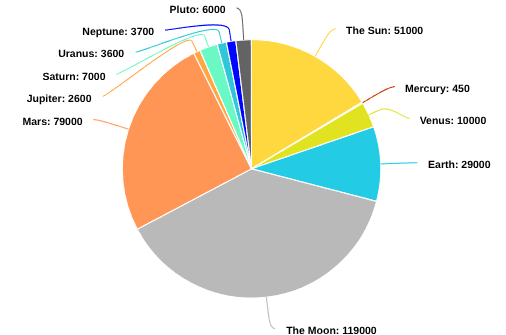
Saturn showing off with 274 moons like that one colleague who keeps adding authors to their paper. Meanwhile, Mercury and Venus sitting there with zero moons, the academic equivalent of "my dog ate my research." Jupiter's 97 is respectable but still looks like amateur hour next to Saturn's moon-hoarding tendencies. The gas giants are basically running a celestial moon pyramid scheme at this point.

The Moon's Time-Traveling Photons

The Moon's Time-Traveling Photons
The cosmic comedy of light delay! This meme pokes fun at the fact that light from the Moon takes about 1.3 seconds to reach Earth. One astronomer proudly announces seeing the Moon "at 20:00:00" while their friend, armed with just binoculars, drops the astronomical truth bomb: "What you saw was the Moon at 19:59:58.7." Talk about splitting light-seconds! Next time you're moongazing, remember you're actually looking at the Moon's past—a tiny time traveler's paradox right in our night sky. Technically, we never see the present Moon... just its slightly outdated selfie.

You Always See The Moon In Delay

You Always See The Moon In Delay
The cosmic joke that nobody tells you about astronomy: light from the Moon takes 1.3 seconds to reach Earth. So technically, you're always looking at the Moon's past! This meme brilliantly captures the moment when an amateur astronomer with fancy equipment points out "The moon at 20:00:00!" while their friend, squinting through binoculars, drops the physics bomb: "No no, what you saw was the moon at 19:59:58.7." Talk about splitting light-seconds! Next time someone invites you to "see the Moon right now," just respond with "actually, that's physically impossible" and watch your friend list shrink at the speed of light.

If The Sun Is Bigger Than Pluto, Why Isn't Sun A Planet?

If The Sun Is Bigger Than Pluto, Why Isn't Sun A Planet?
Someone's been skipping their astronomy lectures. The image shows an orange (labeled "Sun") next to some smaller fruits/objects (planets), with Pluto being practically microscopic. Size isn't the determining factor for planethood—otherwise my department head's ego would qualify as a celestial body. Stars are massive balls of plasma undergoing nuclear fusion, while planets are just rocky/gaseous objects orbiting stars. By this logic, I should ask why my coffee mug isn't classified as a teacup despite being larger than my colleague's teacup. The astronomy department would have a collective aneurysm reading this.

Buncha Dumbasses Indeed

Buncha Dumbasses Indeed
The perfect response to moon landing conspiracy theorists who don't understand basic rocket science. The Saturn V rocket had multiple stages that separated during ascent—not because Hollywood needed better props, but because physics demands shedding mass to reach orbit efficiently. Imagine thinking rocket engineers designed multi-stage rockets just to fool you personally, rather than to, you know, actually reach the moon. Next they'll claim gravity is just a government plot to keep us all down.

Which One Sounds More Threatening?

Which One Sounds More Threatening?
The scientific jargon paradox strikes again! While "asteroid near Earth" sends Mr. Krabs into panic mode, the far more scientifically complex "unusual geomagnetic storm of sunspots" barely registers on Squidward's concern meter. Truth bomb: geomagnetic storms can actually cause massive electrical grid failures, satellite disruptions, and communication blackouts that would make our tech-dependent society absolutely crumble. Meanwhile, most near-Earth asteroids are just cosmic pebbles that burn up in our atmosphere. It's the perfect illustration of how scientific terminology can either trigger mass hysteria or fly completely under the radar depending on how accessible the language is to non-specialists. The more syllables, the less we panic!

Which One Sounds More Threatening?

Which One Sounds More Threatening?
Nothing strikes fear into the hearts of humanity quite like fancy science words! The media knows exactly what they're doing here. "An asteroid came near Earth" sounds like a casual cosmic drive-by, but throw in "unusual geomagnetic storm of sunspots" and suddenly everyone's building bunkers. The irony? That "terrifying" solar activity happens constantly and rarely affects us beyond pretty auroras and occasional GPS hiccups. Meanwhile, an asteroid near-miss could actually be the opening scene of humanity's series finale. It's like being more scared of the word "rhinovirus" than someone saying "there's a tiger in your kitchen."

The Great Planetary Identity Crisis

The Great Planetary Identity Crisis
The planetary classification wars continue! This chart brilliantly satirizes how the definition of "planet" is surprisingly subjective. From the 2006 demotion of poor Pluto to the philosophical "what if space itself is a planet, duuude?" existentialist take. The "Spiteful" category is peak astronomy pettiness—counting only Pluto as revenge for its demotion. Meanwhile, the "Regolithic" definition would make practically everything a planet, because who doesn't have a little dirt and ice? My favorite has to be the "Empiricist" who only counts planets they've personally observed. Classic scientist move: "If I haven't seen it with my own eyes and equipment, does it really exist?"

Cosmic Social Distancing: A Stellar Necessity

Cosmic Social Distancing: A Stellar Necessity
The cosmic truth we never appreciate on road trips! While one passenger is having an existential crisis about stellar distances, the other is blissfully enjoying the view. Thank goodness stars are very far away! If Proxima Centauri decided to take a shortcut through our solar system, we'd have bigger problems than "are we there yet?" The gravitational chaos would turn Earth into cosmic roadkill. Next time someone complains about the 4.3 light-year distance to our nearest stellar neighbor, remind them it's actually the perfect social distancing. Any closer and we'd be dealing with planetary orbits doing the celestial equivalent of a 12-car pileup.

Yo, Why Are There Dipoles In Space?

Yo, Why Are There Dipoles In Space?
The cosmic pun game is STRONG with this one! The meme shows a magnetic dipole field of a neutron star (or pulsar) with someone asking "yo, why are there dipoles in space?" followed by the handwritten "dipoles in space?" – which sounds exactly like "da poles in space" when said out loud! It's basically a dad joke that escaped Earth's gravitational pull! Magnetic dipoles are actually super important in astrophysics – they're created when charged particles move in loops, generating those beautiful arcing field lines you see in the image. Neutron stars have INSANELY strong magnetic fields that would literally tear apart your atoms if you got too close. But sure, let's focus on the wordplay! 😂

Black Hole: Marinara Or Bolognese?

Black Hole: Marinara Or Bolognese?
The cosmic joke that keeps on giving! In astrophysics, "spaghettification" is the actual scientific term for what happens when matter gets stretched into thin strands as it approaches a black hole's event horizon. Some hungry physicist clearly named this phenomenon while waiting for their lunch break! The extreme tidal forces near a black hole literally pull atoms apart vertically while compressing them horizontally—turning you into cosmic pasta before you're completely devoured. Next time you're falling into a supermassive black hole, at least you'll know you're becoming part of the universe's most extreme Italian restaurant.

Cosmic Middle Finger: The Universe's Feedback System

Cosmic Middle Finger: The Universe's Feedback System
Space rock giving us the finger? That's not a meteor - it's a RUDER-oid! 😂 These cosmic formations look suspiciously like they're flipping us off from millions of miles away. Imagine NASA's press conference: "We've discovered intelligent life and apparently they have the same obscene gestures!" Even the universe has attitude! Scientists would be torn between publishing groundbreaking research and censoring their asteroid photos for public viewing. If aliens are watching us, this might be their subtle way of commenting on our climate policies!