
Safety Memes

Posts tagged with Safety

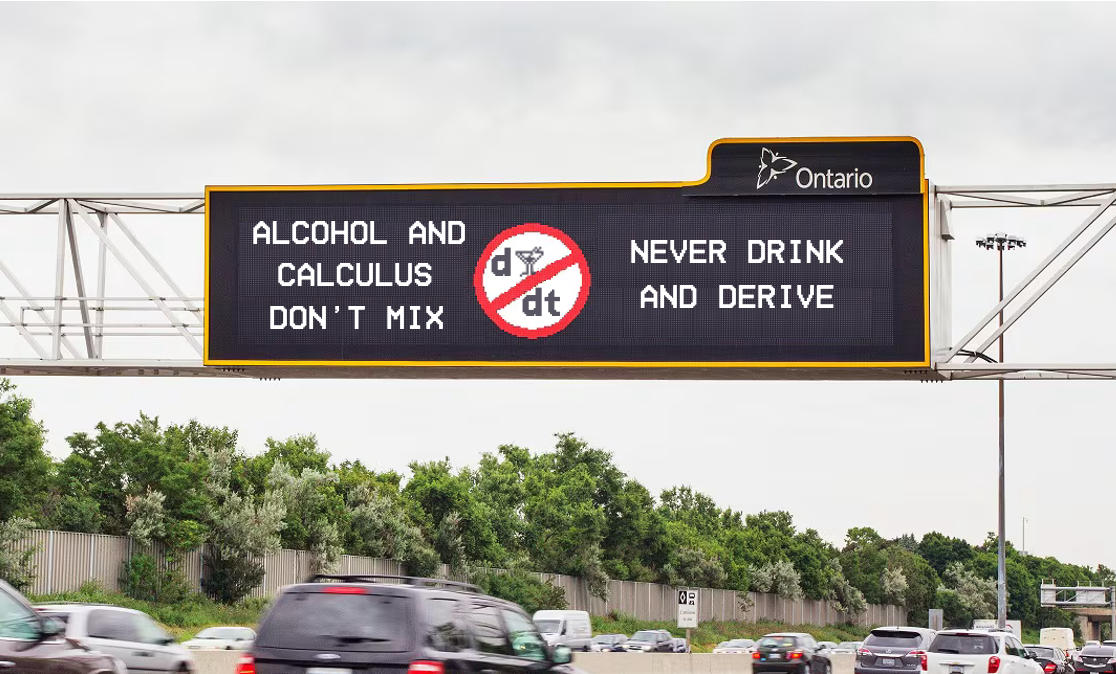
Alcohol And Calculus Don't Mix

Alcohol And Calculus Don't Mix
This highway sign is pure mathematical genius! It cleverly transforms the classic "don't drink and drive" PSA into a calculus pun by showing "d/dt" (the notation for derivatives) in a prohibited circle with "NEVER DRINK AND DERIVE" alongside it. The derivative operator is what we use to find rates of change—but your ability to find those rates might change dramatically after a few drinks! Solving for the limit as sobriety approaches zero is definitely not recommended for your GPA or your driving record. The function of your brain with respect to time becomes rather discontinuous when alcohol enters the equation!

Hopefully It's Just Diluted NaOH

Hopefully It's Just Diluted NaOH
Chemistry pun reaching dangerous levels! "Dropping the bass" in music gives you a fun beat drop, but "dropping the base" in the lab transforms you into a horror movie protagonist. That NaOH (sodium hydroxide) is seriously corrosive stuff—it'll dissolve your proteins faster than a DJ dissolves the crowd's inhibitions. The terrifying face on the right perfectly captures that moment when you realize your skin is experiencing saponification in real-time. Pro tip: Always wear gloves when handling bases, unless you're going for that "melted villain" aesthetic!

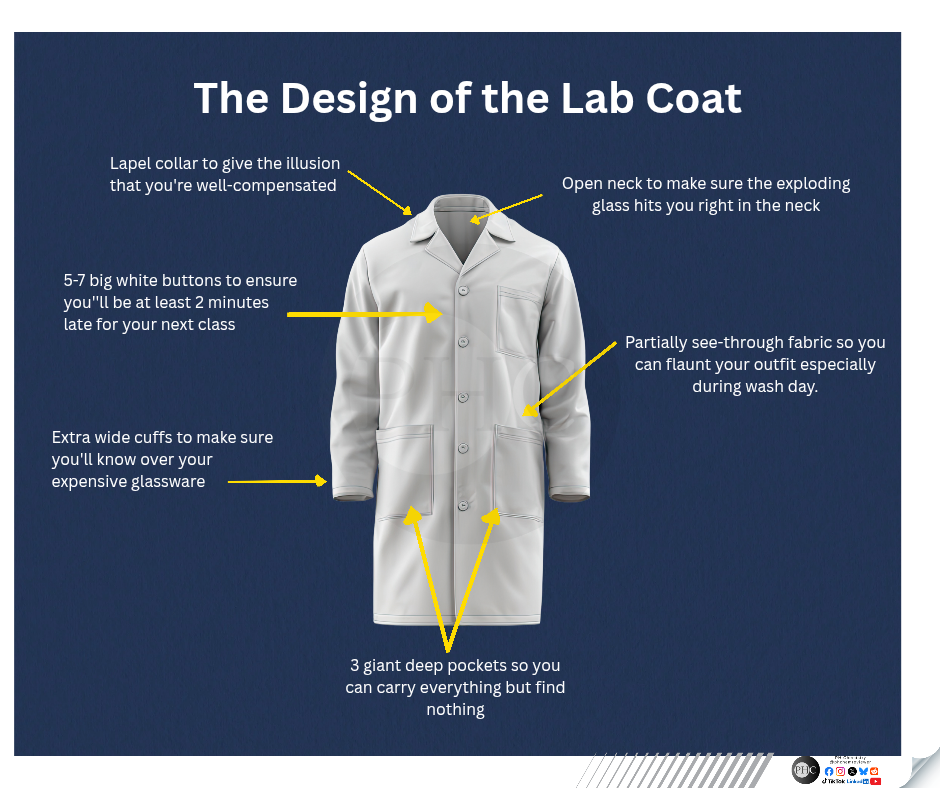
The Design Of The Lab Coat

The Design Of The Lab Coat
Ever wondered why lab coats seem designed to maximize chaos? 🧪 The truth is finally revealed! That open neck design isn't for comfort—it's strategically positioned for maximum glass shard collection during inevitable explosions. Those giant pockets? Perfect for storing absolutely everything while ensuring you'll never find what you need when you need it! My favorite feature has to be those extra-wide cuffs—nature's way of ensuring your $500 glassware gets a proper introduction to the floor. And don't get me started on those buttons that somehow take 2+ minutes to fasten, guaranteeing you'll be fashionably late to every lab meeting! The semi-transparent fabric? That's just so everyone can admire your outfit choices on laundry day. Science fashion at its finest! 👨‍🔬👩‍🔬

Hope No One Reads This

Hope No One Reads This
Whoever wrote that "9 feet is a safe distance from a nuclear blast" clearly never heard of the Hiroshima explosion that vaporized people within a 1-mile radius! 😂 This is like saying you can survive jumping into the sun if you bring sunscreen. Nuclear physics doesn't care about your personal space bubble—the blast radius of even a small nuke is measured in MILES, not feet. Next they'll tell us you can dodge a tsunami by standing on tiptoes! This is why you don't trust random search results for survival tips!

Behold: The Inventor Of The Motorcycle

Behold: The Inventor Of The Motorcycle
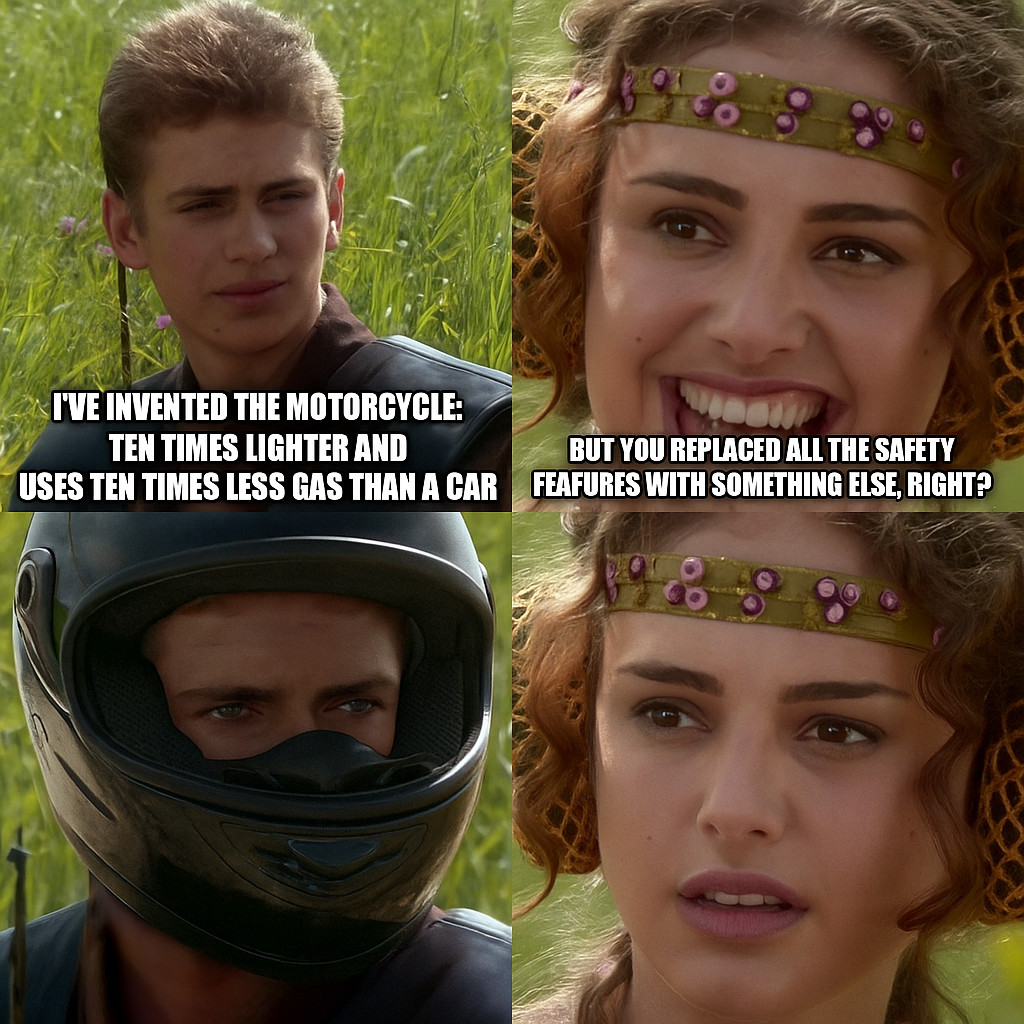
Classic engineering tradeoff in action! Sure, motorcycles are marvels of efficiency—lighter, more fuel-efficient, and arguably more fun than cars. But that efficiency comes with the small, insignificant cost of *checks notes* removing every single safety feature. It's the perfect embodiment of that engineering principle we all know and love: "You can have it good, fast, or safe—pick two." Motorcycle inventors basically said "We choose good and fast" while safety quietly sobbed in the corner. Her face in that last panel is every safety inspector who's ever had to deal with an enthusiastic engineer's "revolutionary" design.

Et Tu Michael? The Beryllium Betrayal

Et Tu Michael? The Beryllium Betrayal
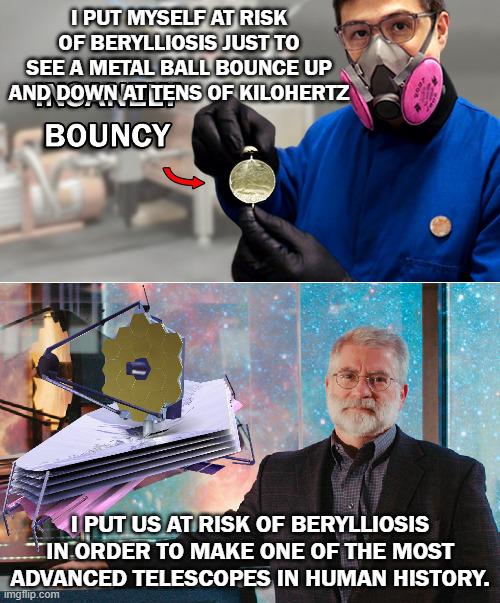
The ultimate scientific sacrifice play! Top panel shows a lab technician risking berylliosis (a nasty lung disease caused by beryllium dust inhalation) just to watch a metal ball oscillate at kilohertz frequencies. Meanwhile, bottom panel features James Webb Space Telescope engineer Michael Menzel who used beryllium for the telescope's mirrors—potentially exposing the team to the same health risks, but for arguably more noble reasons: creating humanity's most powerful eye into the cosmos. The perfect encapsulation of risk assessment in science—is your experiment worth potential lung damage? For JWST, history will say yes. For watching a bouncy ball? Maybe reconsider your experimental priorities!

Et Tu, Beryllium?

Et Tu, Beryllium?
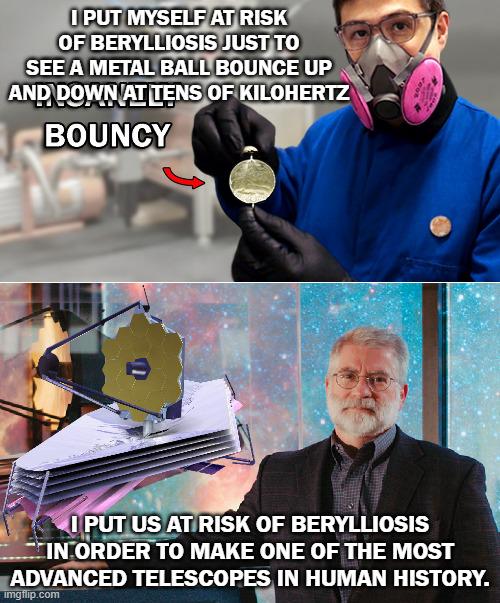
The classic scientific trade-off: risking berylliosis (a nasty lung disease from beryllium exposure) for either watching metal balls vibrate at kilohertz frequencies or building the James Webb Space Telescope. Scientific progress marches on—through questionable safety protocols! The top researcher gets his kicks from a bouncy metal ball while the bottom one (who looks suspiciously like JWST scientist John Mather) built a $10 billion telescope using the same dangerous material. Different goals, same respiratory hazard. The things we do for science would make OSHA representatives weep.

The Scientific Risk Assessment Protocol

The Scientific Risk Assessment Protocol
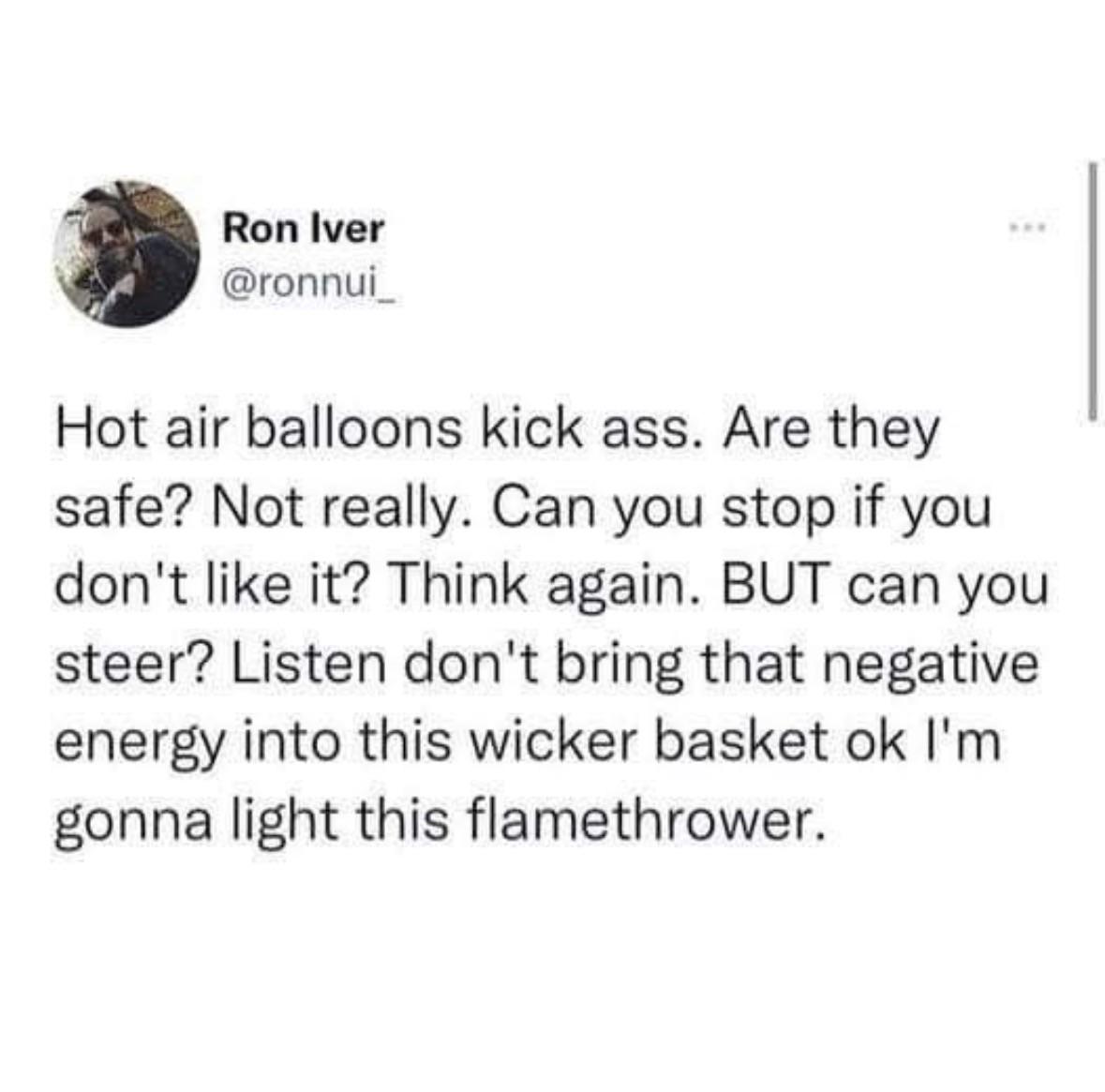
This perfectly captures the risk assessment methodology of every scientist who's ever said "hold my beaker." The transition from acknowledging danger to dismissing safety concerns to threatening to ignite a flamethrower is essentially the scientific method in its purest form. Just like how we casually handle hydrofluoric acid after the first-year grad student gives us a five-second safety briefing. The beautiful physics of buoyancy and thermodynamics that make hot air balloons work is completely overshadowed by the primal joy of floating in a wicker basket powered by fire. This is research funding meetings in a nutshell.

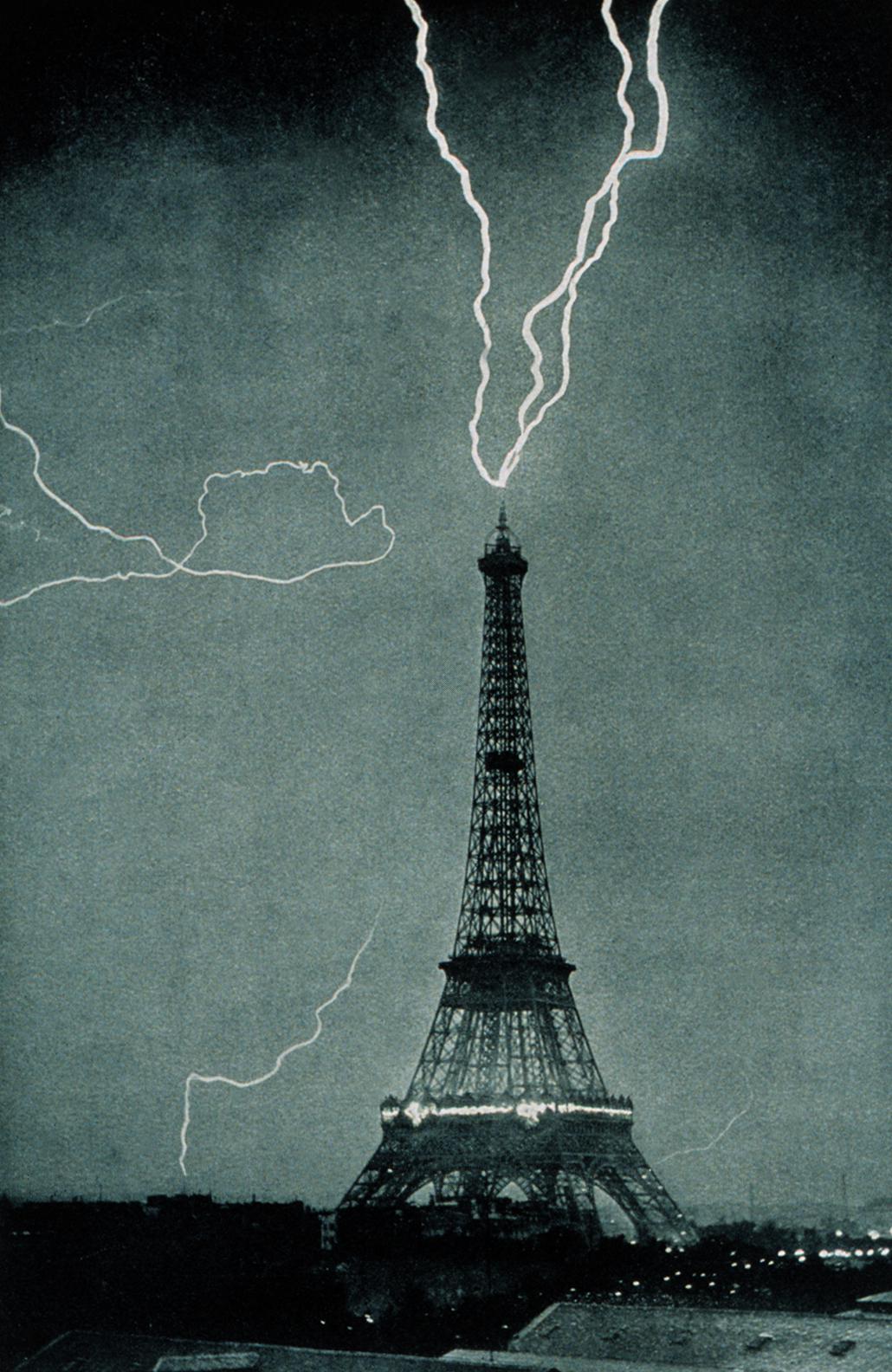
The Shocking Truth About The Eiffel Tower

The Shocking Truth About The Eiffel Tower
The Eiffel Tower isn't just a pretty face—it's basically a 1,000-foot lightning rod with style! Gustave Eiffel was playing 4D chess while everyone else was playing checkers. The entire metal structure forms one giant conductor that channels lightning straight into the ground through dedicated grounding rods. The genius part? The tower's design creates a "Faraday cage" effect—electricity flows around the outside of the structure, leaving visitors inside completely safe. It's like having an invisible force field that says "not today" to 300,000 volts. Next time you're sipping champagne at the top during a thunderstorm, thank physics for keeping you from becoming a human light bulb!

The Perfect Substance's Fatal Flaw

The Perfect Substance's Fatal Flaw
The eternal struggle of materials science: finding the perfect substance that doesn't also try to murder you. For every revolutionary compound with incredible properties, there's a safety data sheet that reads like a horror novel. Asbestos insulates beautifully until your lungs revolt. Lead pipes lasted centuries, but at what neurological cost? Mercury's fascinating properties come with the small drawback of devastating toxicity. The universe seemingly programmed a cosmic trade-off: "Make it useful or make it safe—choose one." Materials engineers just sitting there with their coffee mugs, contemplating which carcinogen might revolutionize industry next.

The Engideer

The Engideer
Finally, a species that can calculate load-bearing capacities and run away from predators at 35 mph! The hard hat really completes the professional look. Next up in evolution: deer with pocket protectors and safety glasses. Nature's way of saying "I need someone who can design a forest AND look majestic doing it." If only those antlers could double as Wi-Fi antennas—then we'd truly have the perfect biological engineer!

One-Eyed Hindsight Is 20/20

One-Eyed Hindsight Is 20/20
The warning sign that screams "lessons were learned the hard way." Nothing says "trust me, I'm a physicist" quite like oddly specific safety instructions that imply a tragic backstory. The beauty of lab safety evolution—first someone loses an eye, then someone writes a sign, then someone adds "remaining" to really drive the point home. High-powered lasers don't give second chances, but apparently they do inspire darkly brilliant signage!