
Notation Memes

Posts tagged with Notation
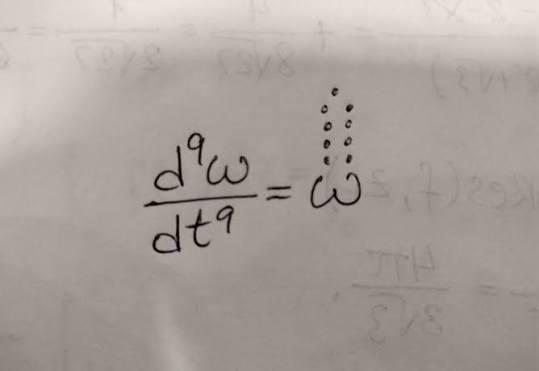
The Real Reason Newton Chose His Notation

The Real Reason Newton Chose His Notation
Newton's derivative notation strikes again with maximum chaos energy. The equation shows d q ω/dt q = ω̇ (omega with dots above it), and honestly, this is the most Newton thing ever. While Leibniz was out here inventing clean, logical notation that clearly shows what you're differentiating with respect to what, Newton was like "nah, I'll just slap some dots on top and call it a day." The joke here is that Newton's dot notation (those dots floating above the ω) looks suspiciously like he just... kept adding dots for higher-order derivatives. Need a second derivative? Two dots. Third? Three dots. It's the mathematical equivalent of naming your variables x, xx, xxx. The "q" superscripts on the left side suggest this is a q-th order derivative, which would require q dots stacked vertically in Newton's notation—basically turning into a dotted line ascending to the heavens. Plot twist: Newton probably chose this notation specifically because it was easier to write by hand in the 1600s. But looking at it now? It's like he designed it to confuse physics students three centuries later. Mission accomplished, Isaac.

\Operatorname{Re} And \Operatorname{Im} Supremacy!

\Operatorname{Re} And \Operatorname{Im} Supremacy!
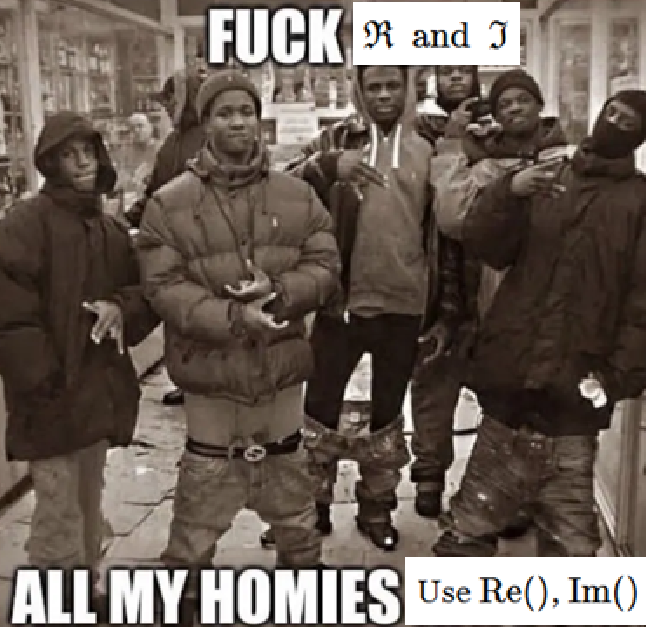
When you're working with complex numbers and someone's still out here using ℜ and ℑ like it's 1897. Meanwhile, Re() and Im() gang is living in the 21st century with proper function notation that doesn't require digging through LaTeX symbol tables. The real vs imaginary part notation debate is apparently the mathematical equivalent of a turf war, and honestly, the Re()/Im() crew has cleaner syntax and better readability. Your move, blackletter enthusiasts. Fun fact: Those fancy ℜ and ℑ symbols are called "blackletter" or "Fraktur" letters, originally from German typography. They look cool on a chalkboard but are an absolute nightmare to type on a keyboard without memorizing obscure Unicode codes.

A Brilliant Construction Of The Reals With Set Builder Notation

A Brilliant Construction Of The Reals With Set Builder Notation
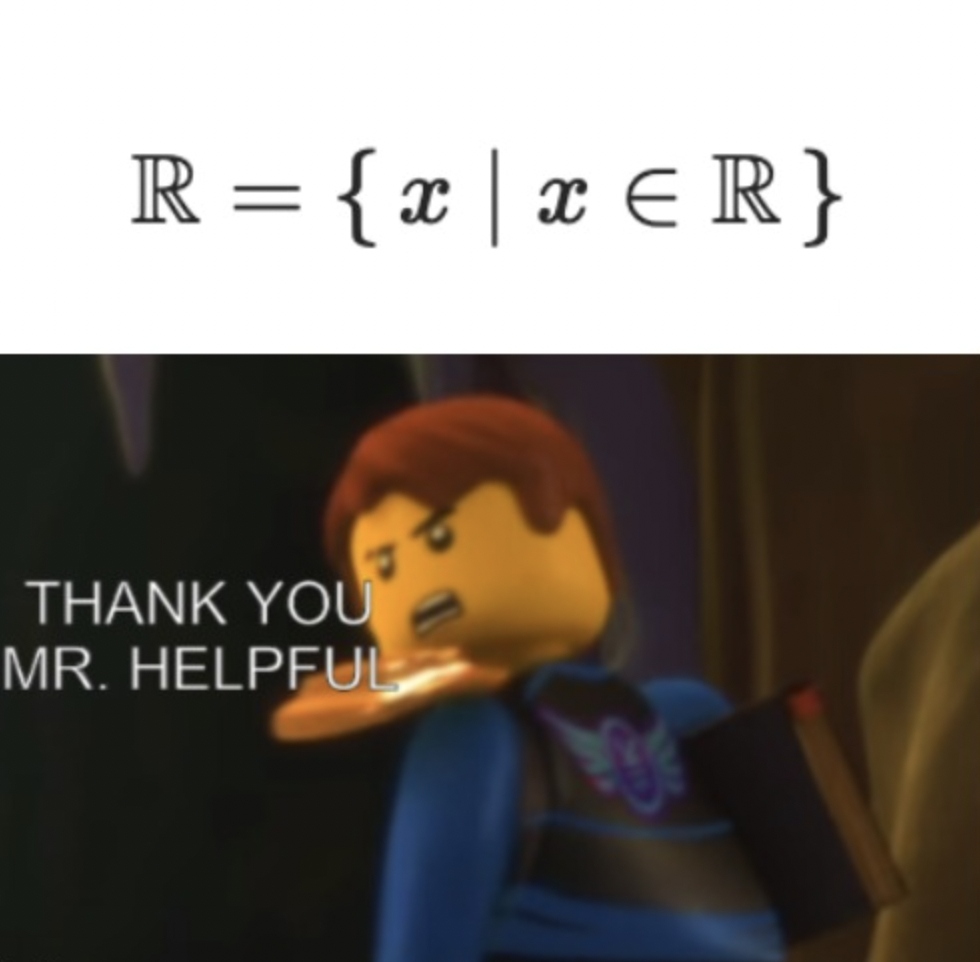
This is the mathematical equivalent of saying "the floor here is made of floor." The equation literally states that the real numbers (ℝ) are defined as the set of all x such that x is a real number. It's beautifully, hilariously circular! Set builder notation is supposed to construct or define sets using properties, but this definition just... assumes you already know what real numbers are. It's like defining a cat as "an animal that is a cat" – technically true, but spectacularly unhelpful. Mathematicians actually construct the reals through rigorous methods like Dedekind cuts or Cauchy sequences, so this lazy circular definition gets the sarcastic "thank you Mr. Helpful" treatment it deserves. Perfect example of when formalism meets maximum laziness.

Which Side Are You On?

Which Side Are You On?
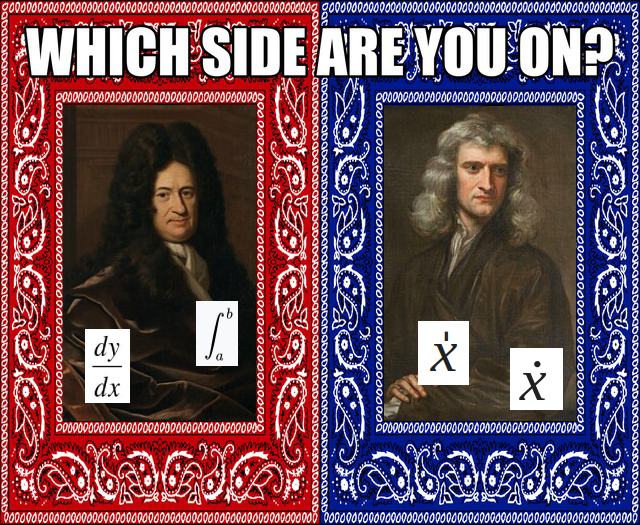
This is basically the Crips vs Bloods of mathematics. On the red side, we've got Leibniz with his dy/dx notation for derivatives—smooth, elegant, and looks like actual fractions (even though they're not, but shhhh). On the blue side, there's Newton rocking the dot notation for derivatives, keeping it simple and clean. The funny thing? These two literally invented calculus independently around the same time and got into one of history's pettiest academic beefs about who did it first. Their rivalry was so intense it split European mathematics for generations. Leibniz's notation won the popularity contest though—most of us learn dy/dx in school because it's way more intuitive for showing what's actually happening. Newton's dot notation still shows up in physics for time derivatives, so both gangs are still repping to this day. Choose your fighter wisely—your calculus professor is judging you.

Where Are My Theoretical Chemists At?

Where Are My Theoretical Chemists At?
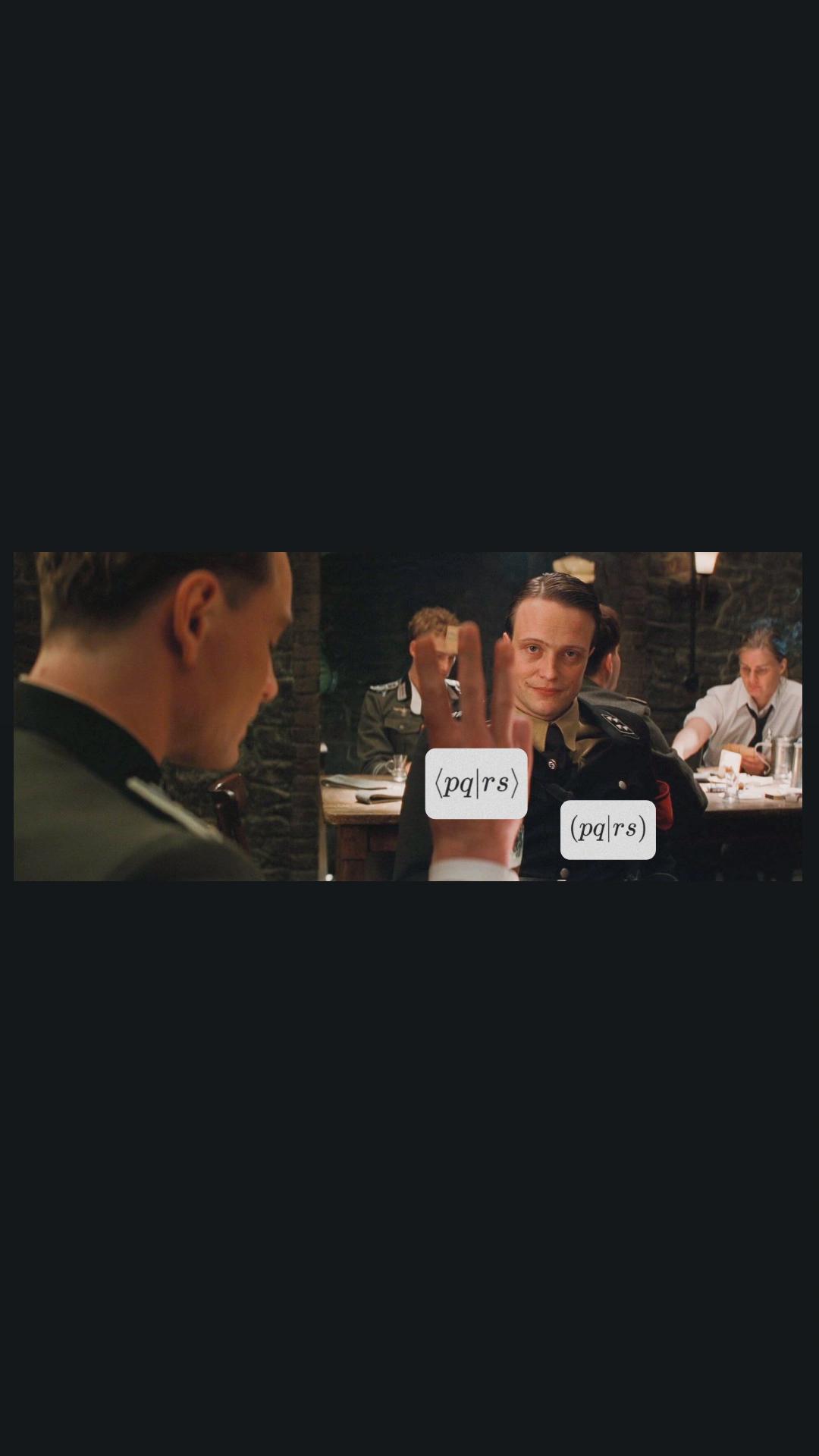
Theoretical chemists really said "why use letters when you can use angle brackets and vertical bars?" The bra-ket notation ⟨pq|rs⟩ versus (pq|rs) debate is basically the Spider-Man pointing meme of quantum chemistry notation. Both represent electron repulsion integrals, but Dirac's bra-ket notation makes you look 47% smarter at conferences. For the uninitiated: bra-ket notation (the angle bracket version) comes from quantum mechanics and is named after breaking "bracket" into "bra" and "ket" because physicists are hilarious like that. It's the theoretical chemist's way of flexing their quantum mechanics muscles while calculating how electrons repel each other. Meanwhile, the parentheses notation is the more traditional chemistry approach—same calculation, less existential quantum vibes. Both notations will get you the same answer, but only one makes you look like you actually read Dirac's textbook instead of just the SparkNotes version.

I Love Inconsistent Notation

I Love Inconsistent Notation
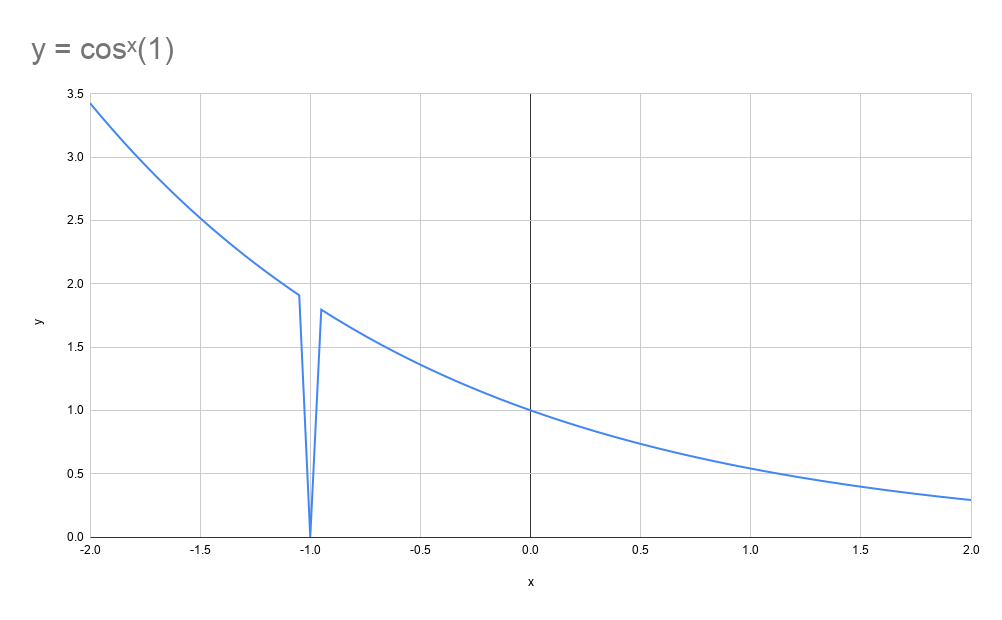
Someone plotted cos x (1) and the graph is having an identity crisis. That superscript x could mean "cosine to the power of x" or it could mean "cosine applied x times" (like iterating the function). The result? A Frankenstein curve that looks like it's trying to be both an exponential decay AND a periodic function while also having a nervous breakdown near x = -1. This is what happens when mathematical notation refuses to commit. In trigonometry, cos²(x) usually means (cos(x))², but cos⁻¹(x) means arccos(x), not 1/cos(x). Pick a lane, math. The chaos here is real—somewhere between -1 and -1.5, the function apparently encounters a singularity and decides to just... teleport. Beautiful. Every math student has stared at notation like this wondering if they're solving the problem correctly or summoning an eldritch horror. Turns out it's both.

O To The Power Of Zero Equals Rebellion

O To The Power Of Zero Equals Rebellion
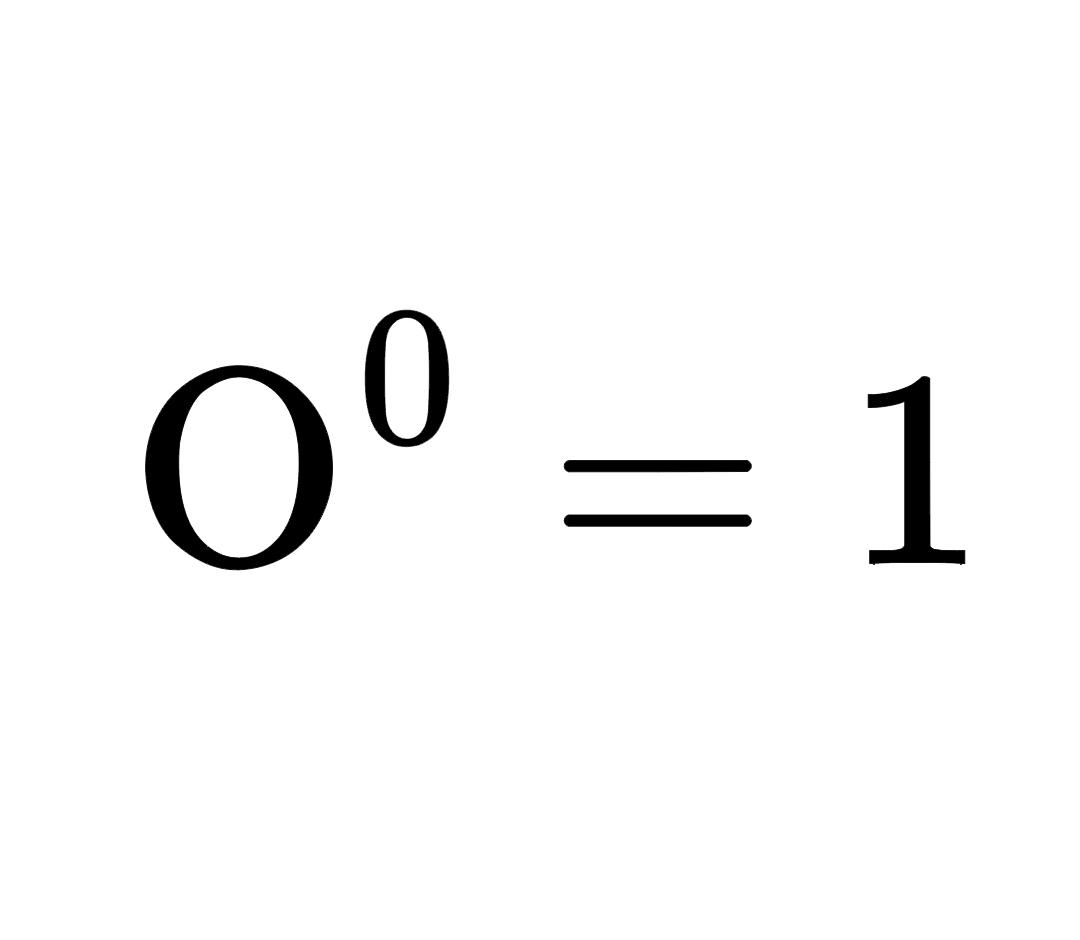
Look at this mathematical rebel! Instead of writing x 0 = 1 like every textbook since Newton's day, they've gone full circle with O 0 = 1. It's the mathematical equivalent of showing up to a black-tie event in a neon jumpsuit! Zero raised to zero power has sparked more heated debates in math departments than the proper pronunciation of "gif." The expression is technically an indeterminate form, but mathematicians generally define it as 1 by convention. Kinda like how we all agree traffic lights are red-yellow-green even though colorblind people might beg to differ!

Compact Notation For Multifactorials

Compact Notation For Multifactorials
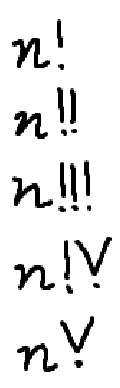
Mathematicians inventing increasingly absurd ways to write "multiply this number by all smaller positive integers" is peak academic efficiency. First we had n! (factorial), then n!! (double factorial), and apparently someone thought "why stop there?" So now we've got Roman numerals joining the party! Next semester's homework: Calculate 42!^MCMXCIX. Your calculator's already sweating.

Chemistry With Physics Is Such A Paradox

Chemistry With Physics Is Such A Paradox
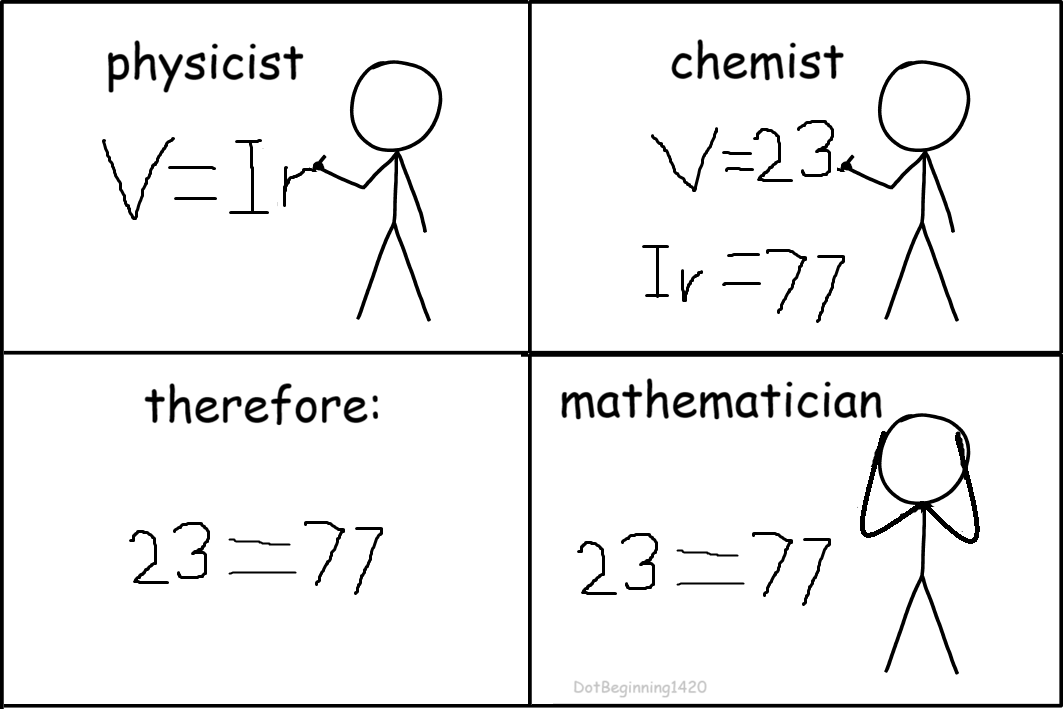
The eternal struggle between notation systems! The physicist writes √=Ir (square root equals current times resistance), while the chemist writes √=23 and Ir=77 (iridium's atomic number). When combined, we get 23=77, which makes the mathematician have an existential crisis. This is what happens when different scientific languages collide - mathematical impossibilities that would make Euler roll in his grave! Interdisciplinary communication: 0, Scientific confusion: 100.

I Don't Want To Unlearn Writing Both As Indistinguishable Scratches

I Don't Want To Unlearn Writing Both As Indistinguishable Scratches
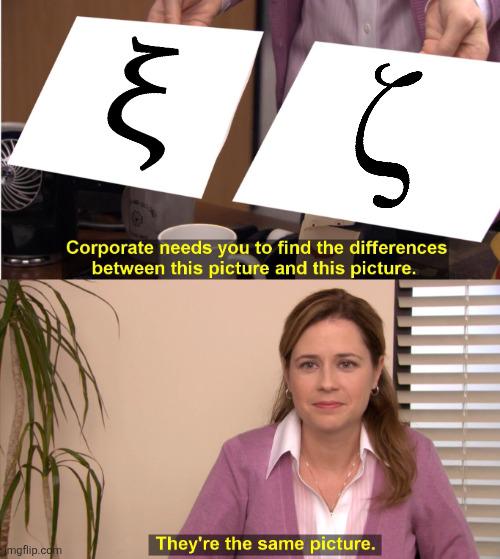
When your physics professor asks you to distinguish between zeta (ζ) and xi (ξ) on your quantum mechanics exam. The symbols evolved from distinct Greek letters into what can only be described as "squiggly line 1" and "squiggly line 2" in most physicists' handwriting. The academic equivalent of corporate asking you to spot nonexistent differences. At some point in grad school, your handwriting just... gives up.

Two Very Different Units

Two Very Different Units
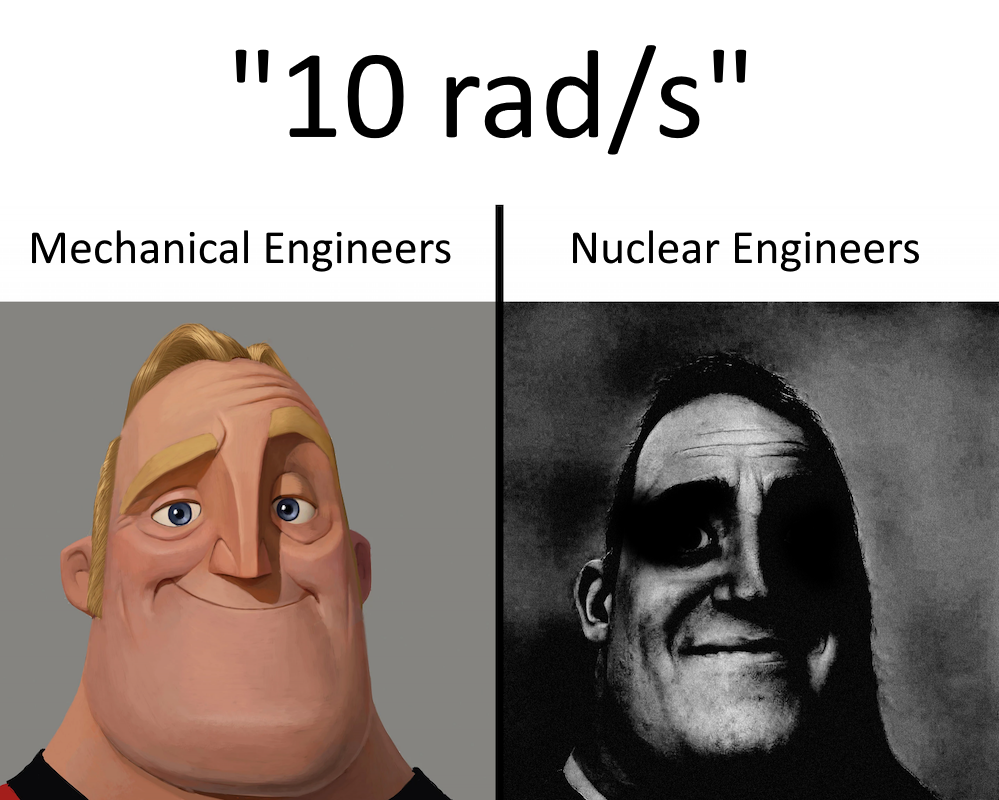
The beauty of scientific notation - same symbols, wildly different implications. To a mechanical engineer, "10 rad/s" is just a spinning thing. "Is my motor running at 10 radians per second? Cool, that's about 95 RPM." Meanwhile, nuclear engineers are having existential crises because 10 radiation units per second means either evacuate the building or update your will. One field worries about things going round, the other about things going boom. The duality of engineering - where identical notation can mean either "normal Tuesday" or "call the hazmat team."

The Great Academic Notation Divide

The Great Academic Notation Divide
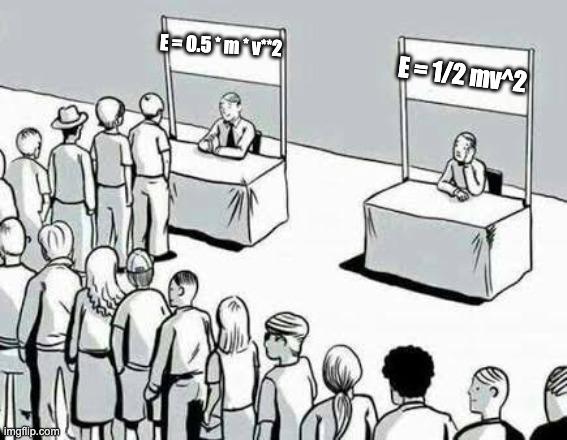
The kinetic energy equation (E = ½mv²) is literally the same in both booths, but the physics majors get the unnecessarily complicated version (E = 0.5*m*v^2). Meanwhile, the CS minor booth sits empty because they had the audacity to use a sensible notation. This is the perfect representation of academia's bizarre love affair with making simple things needlessly complex. Physics departments worldwide are feeling personally attacked right now. And they should.