
Molecular Memes

Posts tagged with Molecular
RNA vs. The Cooler RNA

RNA vs. The Cooler RNA
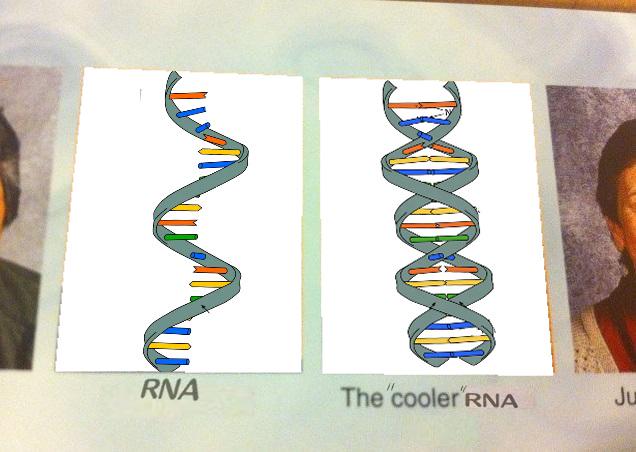
Molecular biology textbooks really did us dirty with this one. Left side: regular RNA with its single-stranded, wonky spiral structure that we had to memorize for exams. Right side: "The cooler RNA" with a perfectly organized double helix that looks suspiciously like DNA. The pain of drawing that irregular RNA structure on tests still haunts biology students to this day. Pro tip: RNA isn't trying to be messy to annoy you - its single-stranded nature allows it to fold into complex 3D structures that are crucial for its biological functions. But try telling that to your 10th-grade self struggling to draw it correctly!

The Strongest Bond In All Of Chemistry

The Strongest Bond In All Of Chemistry
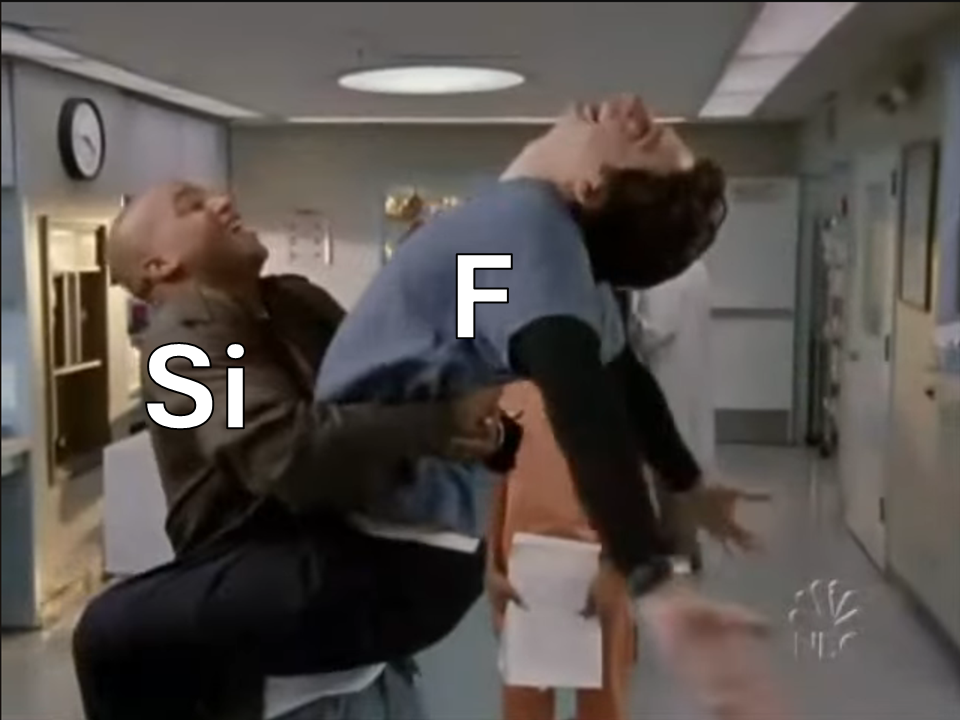
Silicon-Fluorine (Si-F) bonds don't mess around! While carbon compounds are out here having relationship drama, Si-F is in a committed relationship with a bond strength of ~565 kJ/mol. It's literally so clingy that chemists call it "hypervalent." These two elements see each other and it's just *chef's kiss* electronegativity perfection. The meme brilliantly shows two people absolutely losing their minds with joy - just like Si and F atoms when they find each other in solution. Not even water can tear these two apart. Talk about relationship goals that most organic chemists can only dream of synthesizing!

Testosterone Is Missing A P+

Testosterone Is Missing A P+
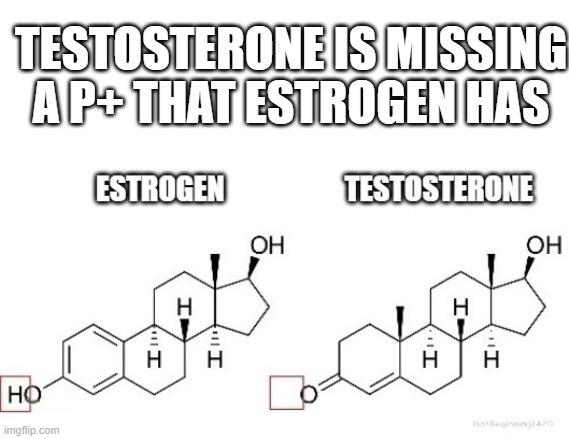
The nerdiest hormone pun ever! Looking at the molecular structures, estrogen has a phenol group with an OH attached directly to a benzene ring, giving it that extra "p+" (proton). Meanwhile, testosterone is structurally similar but lacks this particular phenol arrangement. It's basically organic chemistry dad humor. The "p+" refers to a proton (H+), which is what makes the difference in that hydroxyl group position. The subtle chemical distinction between these sex hormones creates their vastly different biological effects, yet they're remarkably similar structurally - just a proton's difference in the right place! Chemistry nerds unite! This is what happens when biochemists try to make jokes at parties.

The Protein Name That Doubles As A Thesis

The Protein Name That Doubles As A Thesis
What you're looking at is the chemical name for titin, the largest known protein in the human body. At 189,819 letters, it's so long that grad students who try to pronounce it typically finish their PhDs before reaching the end. The protein itself helps muscles contract, but its name could probably cause muscle strain just by trying to read it. Scientists clearly had too much free time when naming this one—or maybe they just wanted to ensure job security by creating words only they could pronounce.

Berry Orbital Theory

Berry Orbital Theory
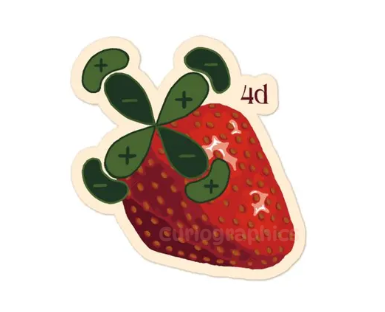
Chemists secretly designing fruit in their spare time. The 4d orbital strawberry perfectly illustrates what happens when you leave scientists alone with design software. Next up: watermelons with f-orbitals. The seeds are obviously the electrons. Nature's delicious quantum mechanics.

The Ultimate Biological Commitment

The Ultimate Biological Commitment
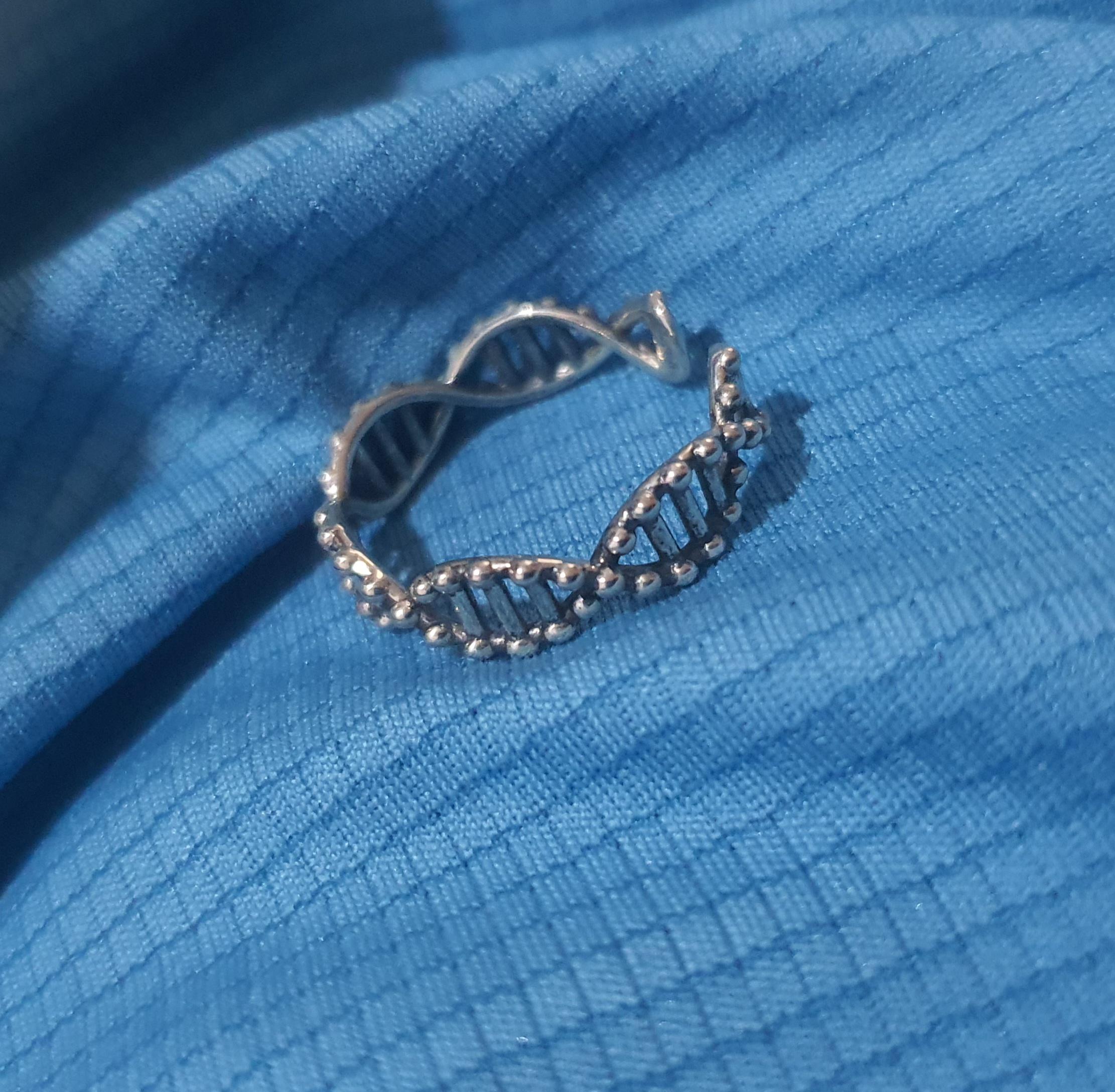
Nothing says "I'm committed to you for life" quite like proposing with the very molecule that determines life itself. This DNA helix ring is perfect for that special someone who appreciates the molecular basis of heredity more than diamonds. "Till genetic mutation do us part" takes on a whole new meaning when your engagement ring literally represents the building blocks of existence. Just hope your partner doesn't sequence it and find you're only 99.9% compatible!

The Great DNA Name Mix-Up

The Great DNA Name Mix-Up
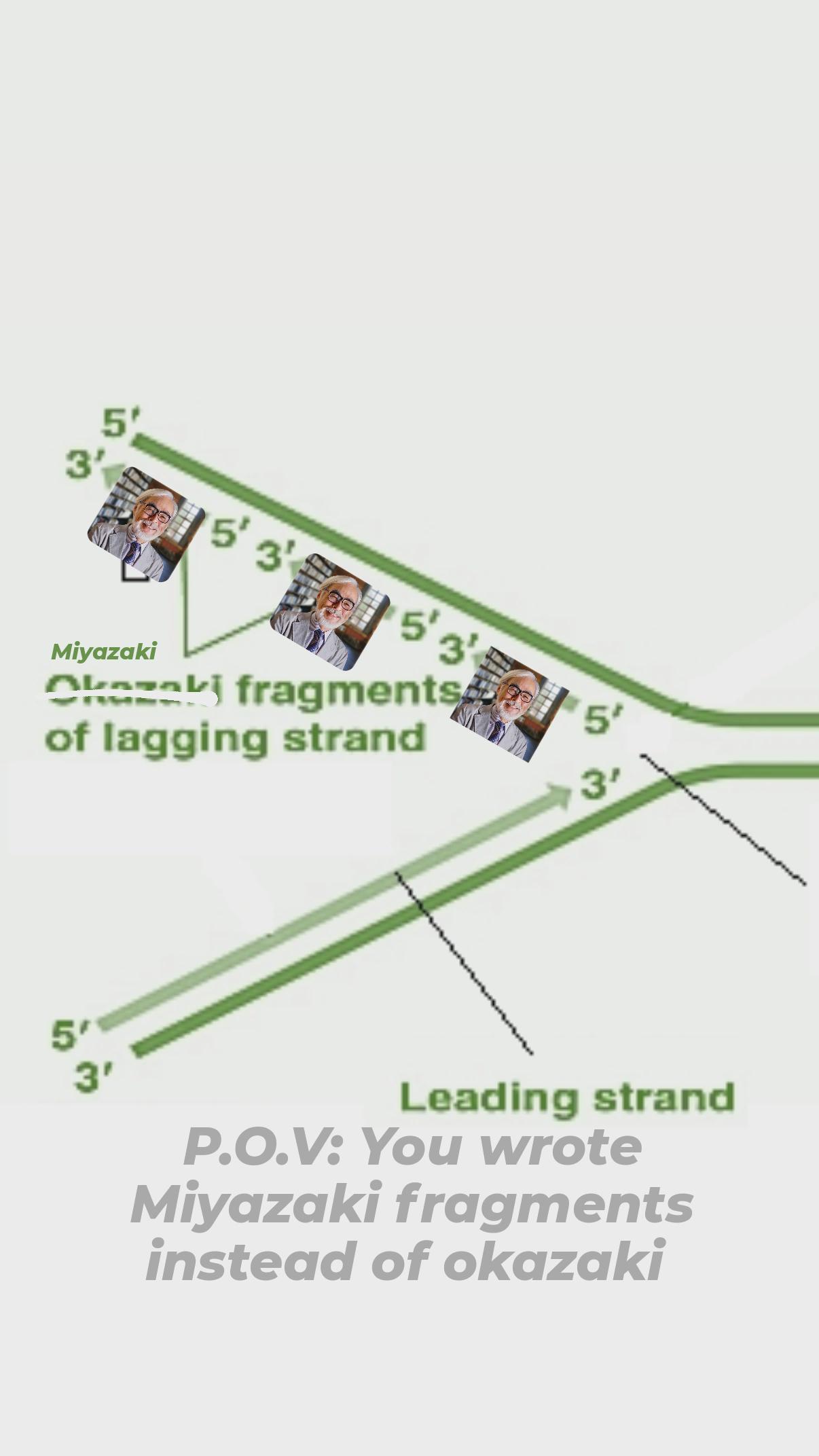
DNA replication humor at its finest! Someone mixed up their Japanese scientists with their DNA fragments! 😂 Okazaki fragments (named after scientist Reiji Okazaki) are those short pieces created during DNA replication on the lagging strand because DNA polymerase can only build in one direction. The meme creator hilariously wrote "Miyazaki" instead - you know, like the famous animator behind Studio Ghibli! That's like confusing Watson and Crick with Batman and Robin. Molecular biology professors everywhere are simultaneously laughing and crying right now.

Adenosine To Whom Are You Loyal To?

Adenosine To Whom Are You Loyal To?
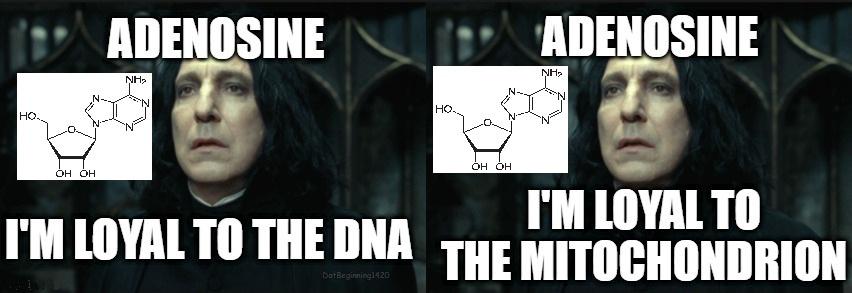
The molecular double agent strikes again! Adenosine plays for both teams in the cellular power struggle. In nuclear DNA, it pairs with thymine as part of the genetic code. But then it sneaks off to the mitochondria (the powerhouse of the cell!) where it forms part of ATP - the energy currency that keeps your cells running. The Severus Snape of biochemistry - seemingly loyal to one master while secretly serving another. Biochemistry's ultimate plot twist!

Chemistree 🌳🧪🍊

Chemistree 🌳🧪🍊
Nature's own molecular modeling kit! That tree branch pattern looks suspiciously like an organic compound structure straight out of your o-chem textbook. This is what happens when Mother Nature gets her PhD in chemistry and decides to flex on us. Somewhere a structural biologist is looking at this and thinking "I could publish a paper on this." Meanwhile, undergrads are frantically trying to identify the functional groups before the next quiz.

Adenosine Is A Double Agent

Adenosine Is A Double Agent
The biochemical betrayal we never saw coming! Adenosine plays both sides like Snape in a lab coat. In one cell compartment, it's all "DNA is my ride-or-die" while simultaneously pledging allegiance to the mitochondria (the powerhouse of the cell™). This nucleoside doesn't just have commitment issues—it's fundamental to both DNA structure AND cellular energy production in ATP. The ultimate molecular spy, working undercover in multiple metabolic pathways while maintaining its poker face. Trust issues with your biochemistry, anyone?

Antibody Insults: No Immunity To This Burn

Antibody Insults: No Immunity To This Burn
Molecular biology humor at its finest! This meme shows an antibody structure labeled "IDIOTYPE" but "WITHOUT THE Y,P,E" - leaving just "IDIOT." It's basically protein structure roasting you. The Y-shaped antibody molecule consists of heavy and light chains with variable regions that recognize antigens. Remove the Y (shape), P (protein), and E (epitope binding) and you're just left with... well, you get it. Savage immunological burn that would make even T-cells say "damn, that's cytotoxic."

Spider-Man: No Way Glucose

Spider-Man: No Way Glucose
Spider-Man swinging between two identical glucose molecules is peak chemistry humor. It's the sugar-powered superhero we never knew we needed! What's his superpower? Giving everyone diabetes at a molecular level. The true villain isn't Green Goblin—it's high fructose corn syrup. Next time your blood sugar spikes, just blame it on Peter Parker's commute between carbon rings.