

Materials science Memes

Posts tagged with Materials science
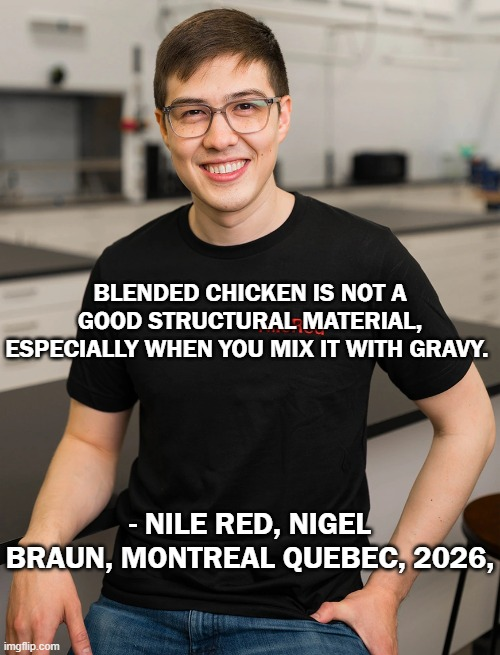
Are Eggs Classified As Blended Chickens?

Are Eggs Classified As Blended Chickens?
Someone out there is really asking the hard-hitting questions about whether eggs count as "blended chickens," and honestly? The engineering critique here is *chef's kiss*. Turns out blended chicken makes for terrible structural material, especially when you add gravy to the mix. Who knew that liquefied poultry doesn't have the load-bearing capacity needed for construction projects? For the record, eggs are unfertilized chicken ova - basically just chicken periods in a shell. They're not blended chickens any more than your morning orange juice is a blended orange tree. But let's be real, the mental image of someone trying to build a bridge out of chicken smoothie is absolutely sending me. The structural integrity would be... questionable at best. Props to Nile Red and Nigel Braun for this future wisdom from 2026. Can't wait to see what other groundbreaking materials science discoveries await us.

And Now What The Hell Is This Odd Elasticity?

And Now What The Hell Is This Odd Elasticity?
You spend years mastering Newtonian fluids (water, air, your morning coffee), feeling pretty good about yourself. Then someone introduces you to non-Newtonian fluids and you're like "okay, weird but manageable—cornstarch acts solid when you punch it, ketchup flows when you shake it, cool cool." But then materials science decides to absolutely wreck your day by throwing Hookean solids into the mix. These bad boys follow Hooke's Law (stress is proportional to strain), which sounds simple until you realize you now need to track elastic moduli, yield points, and plastic deformation. And don't even get me started on viscoelastic materials that are somehow BOTH fluid AND solid depending on their mood. The real kicker? Once you think you've got it all figured out, someone whispers "odd elasticity" and you're back to square one, questioning every life choice that led you to materials engineering. It's like the universe keeps adding DLC packs to the physics engine just to mess with us.

Awfullerenes

Awfullerenes
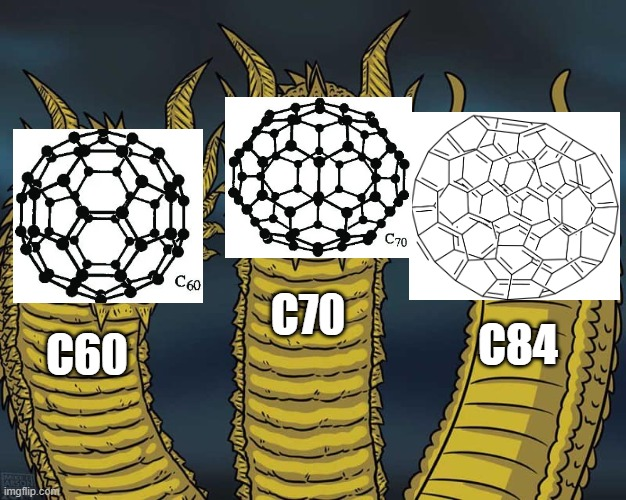
So C60 is the beautiful buckminsterfullerene—a perfect soccer ball of carbon that won a Nobel Prize and made chemists weep with joy. C70 is the slightly elongated rugby ball version, still elegant and symmetric. Then there's C84, which looks like someone tried to assemble IKEA furniture after three beers. The molecular structure becomes increasingly chaotic and asymmetric as you add more carbon atoms, hence the "awfullerenes" label. It's like watching molecular beauty standards deteriorate in real time. Fun fact: there are actually multiple isomers of C84, each more cursed than the last, because apparently nature ran out of good ideas after C70.

Electron Gas

Electron Gas
So in metals, the atoms are basically just sitting there in a lattice, holding their nuclei tight while their valence electrons are out there living their best communist life. These electrons form what physicists lovingly call an "electron gas" or "electron sea" - they're delocalized and shared among ALL the atoms like some kind of subatomic commune. No private property here, comrade! This is why metals conduct electricity so well and why your chemistry professor kept drawing those weird sea-of-electrons diagrams. The Bugs Bunny communist meme format is *chef's kiss* for this one because those electrons truly serve the collective. Fun fact: this electron sharing is also why metals are shiny and malleable - the electrons can move around and absorb/reflect light at pretty much any wavelength.

First Week Of Metallurgy Internship In The US Be Like

First Week Of Metallurgy Internship In The US Be Like
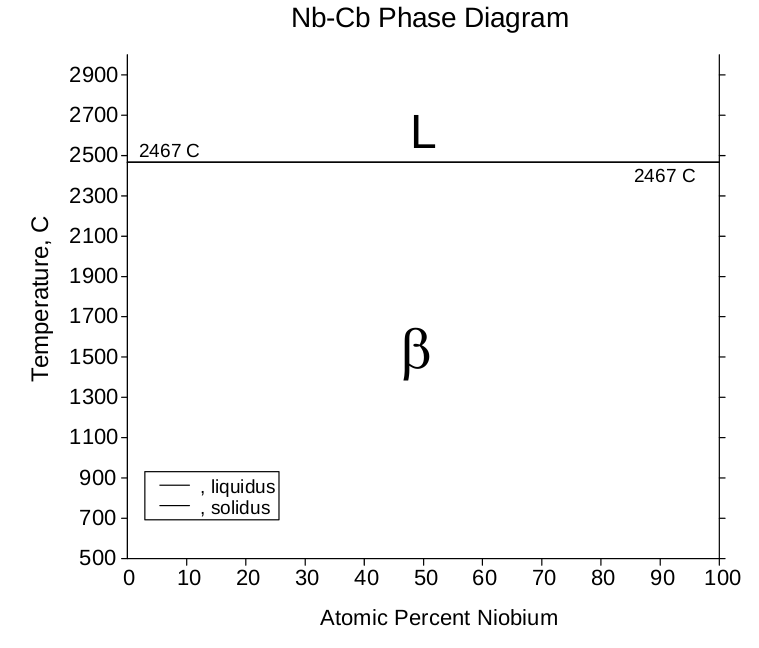
Nothing says "welcome to America" quite like staring at a phase diagram where the temperature axis goes up to 2467°C while you're still trying to figure out if that's hot or cold in Fahrenheit. Your European brain is screaming "why are we using Celsius on a US internship diagram?!" while your supervisor casually mentions something about liquidus lines. Phase diagrams are basically relationship status charts for metals—they tell you whether niobium and columbium are in a solid commitment (β phase), going through a liquid phase, or somewhere complicated in between. The joke here is that US metallurgy somehow ended up with this beautifully metric diagram despite the country's stubborn refusal to adopt the metric system for literally anything else. You can melt steel at 2467°C but you can't order a 500mL coffee without confusing everyone. Also, fun fact: Columbium (Cb) is just the old American name for niobium (Nb). So this is technically a niobium-niobium phase diagram, which makes about as much sense as your first week does.

When VASP DFT Crushes Your Soul

When VASP DFT Crushes Your Soul
That special moment when your computational chemistry simulation becomes an exercise in existential despair. Two weeks of your life sacrificed to the VASP gods (Vienna Ab initio Simulation Package with Density Functional Theory), meticulously calculating how molecules stick to surfaces, only for the results to violate every prediction and possibly several laws of physics. Nothing says "reconsider your career choices" quite like watching your supercomputer time produce garbage that would make even Schrödinger's cat play dead for real.

Material Deformation Cheat Sheet

Material Deformation Cheat Sheet
Engineering students spend semesters learning about material properties only to have it perfectly summarized by rubber bands. Left side shows elastic deformation—apply force, material bends, release force, material returns to original shape. Right side shows plastic deformation—apply force, material bends, release force, material says "nope, I live like this now." Just like my motivation after finals week.

Chemist's Version Of SMH My Head

Chemist's Version Of SMH My Head
When you realize "MOF Organic Framework" literally translates to "Metal-Organic Framework Organic Framework" and your inner chemistry pedant has a meltdown. It's like saying PIN number or ATM machine, but for people who spend way too much time with coordination polymers and porous materials. Chemists everywhere are silently screaming at this redundancy while non-chemists wonder why we're having an existential crisis over some colorful balls and blue pyramids. Just another day in the world of chemical nomenclature where we'd rather die on this hill than admit our acronyms might be getting out of hand.

Ancient Wisdom vs. Modern Potholes

Ancient Wisdom vs. Modern Potholes
The irony is delicious! Ancient Romans built roads that have survived 2,000+ years using basic geometry and materials science, while our modern "advanced" asphalt roads develop potholes after one winter. Nothing says "progress" quite like driving through what feels like the surface of the moon every spring. The perfect demonstration that sometimes a degree in engineering doesn't beat practical knowledge and quality materials. Perhaps we should send our road crews to study ancient Roman concrete instead of whatever "pothole generator 3000" technology we're currently using.

Smallest 3D Printed Noah's Ark

Smallest 3D Printed Noah's Ark
That moment when your nanofabrication lab decides to recreate biblical stories at the microscale. The 10 μm boat can barely fit one elephant, let alone two of every animal. Guess Noah's going to need a bigger printer with better resolution. Maybe next time try printing the flood first—it's just water molecules, should be easier.

Crystal Clear Chemistry

Crystal Clear Chemistry
Fun fact: 3,090 degrees Fahrenheit (1,700°C) is the melting point of silicon dioxide (silica), the main component of sand! At this temperature, ordinary beach sand transforms from grainy annoyance to transparent liquid glass. The meme plays on the literal "clarity" that happens when sand melts - it becomes clear both visually and metaphorically. Nature's ultimate phase transition from "getting everywhere" to "stunningly transparent." Next beach day, just remember you're walking on potential windows!

I Fully Understand It!

I Fully Understand It!
Every materials science student knows this pain. The professor points confidently at what appears to be television static and says "You can clearly see this in the microstructure" while you nod vigorously, pretending those random speckles are obviously grain boundaries and not just... well... speckles. It's the academic equivalent of those Magic Eye pictures, except the only thing materializing is your impending exam failure.