Survivorship bias Memes

Posts tagged with Survivorship bias

One More Model

One More Model
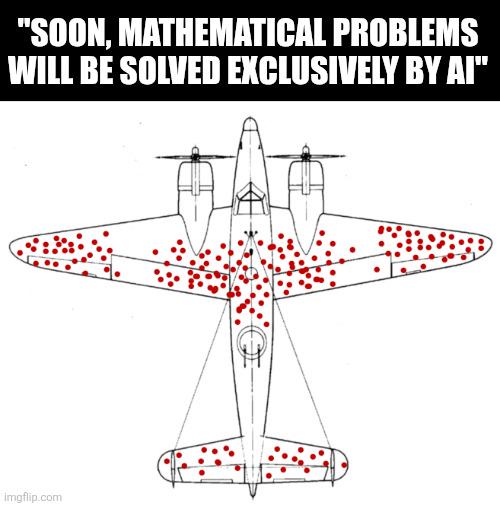
You know what's wild? AI evangelists keep promising that machine learning will replace mathematicians and solve all our problems, but here's the reality check: that plane isn't flying anywhere. The classic survivorship bias illustration shows a WWII aircraft with bullet holes concentrated everywhere EXCEPT the engines and cockpit—because the planes that got hit there never made it back. The genius move was to armor the parts WITHOUT holes, not the parts WITH them. Now imagine training an AI model on this data without understanding the underlying logic. It would confidently tell you to reinforce the wings and fuselage because "that's where all the damage is!" Meanwhile, actual mathematicians and statisticians understood the invisible data—the planes that didn't return. No amount of throwing neural networks at a problem will replace understanding what you're actually measuring. So yeah, maybe we still need those pesky humans who can think about what's NOT in the dataset. Fun fact: Abraham Wald, the statistician who figured this out, was part of the Statistical Research Group during WWII, which was basically the Avengers of math nerds. They saved countless lives by actually understanding their data instead of just curve-fitting it.

No One Ever Survived A Crotch Shot

No One Ever Survived A Crotch Shot
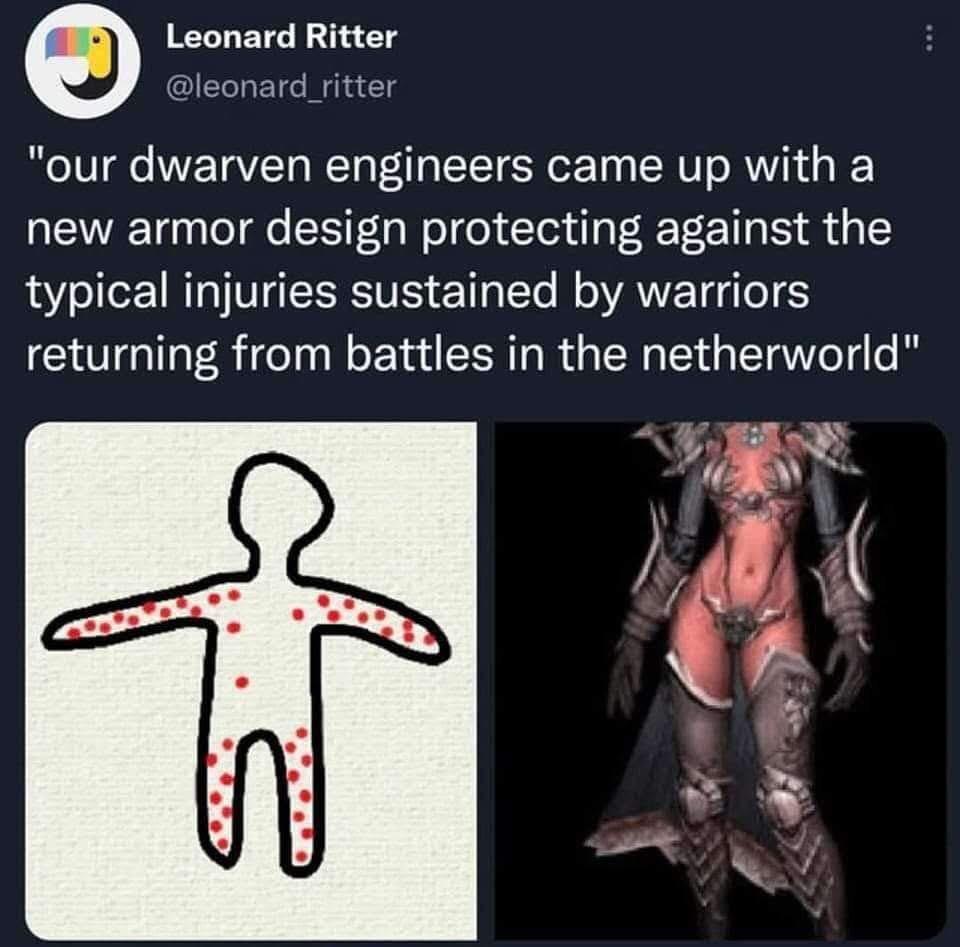
So apparently dwarven engineers analyzed battlefield casualty data and concluded that warriors were getting absolutely wrecked in very specific body regions. Their solution? Armor that protects literally everywhere EXCEPT the vital organs. Chest? Nah, leave it exposed. Heart and lungs? Who needs 'em! But those shoulders and thighs? MAXIMUM PROTECTION ENGAGED. This is basically what happens when you let engineers design armor based purely on "injury frequency" data without considering, you know, injury severity . Sure, maybe warriors got bruised shoulders more often, but I'm pretty sure the ones who took arrows to the torso didn't make it back to fill out the survey. Classic survivorship bias meets fantasy game logic! The heat map shows where warriors got hit most, and the armor designer apparently said "perfect, let's protect those spots" while completely ignoring that protecting your internal organs might be slightly more important than your kneecaps. Revolutionary engineering at its finest! 🛡️

Saw This In Explain The Joke...

Saw This In Explain The Joke...
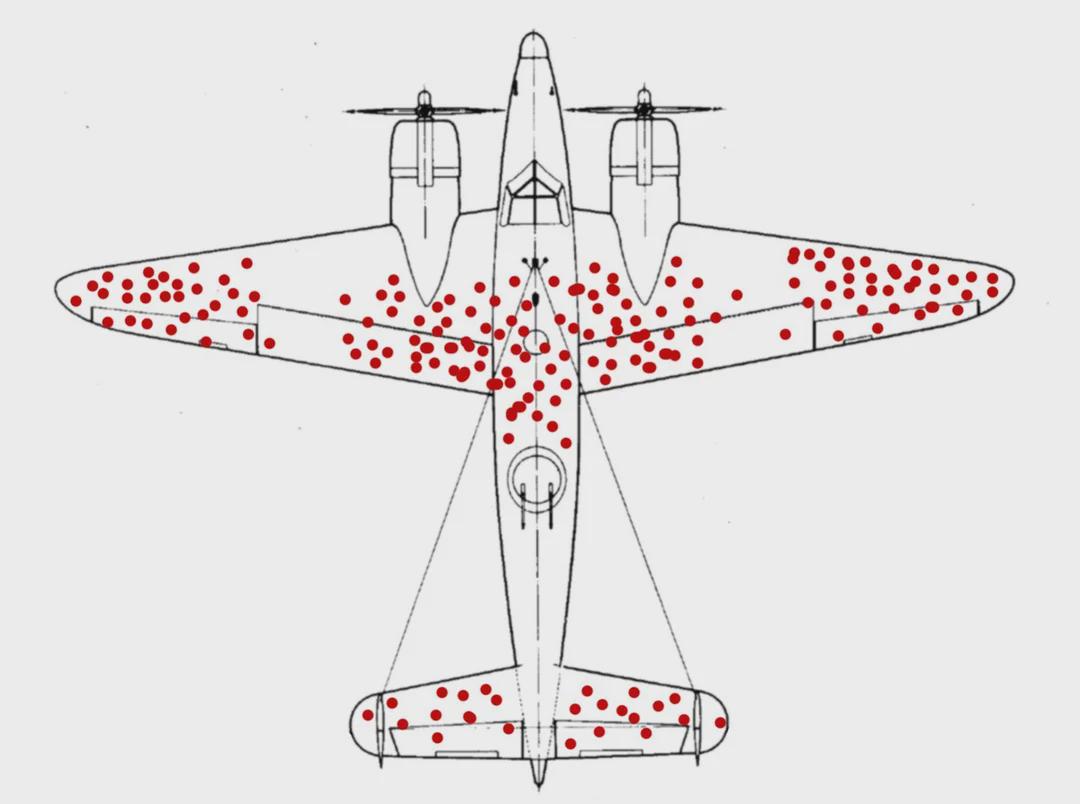
Survivorship bias is that sneaky psychological trap where we only look at what made it through and completely ignore everything that didn't. During WWII, statistician Abraham Wald noticed the military wanted to reinforce bomber planes where they saw bullet holes on returning aircraft. But here's the galaxy brain move: those planes SURVIVED. The bullet holes you're NOT seeing? Those are in the engines and cockpit—the spots that actually brought planes down. The dots on this plane represent damage from survivors, while the empty spaces are the real danger zones. It's like interviewing only lottery winners about investment strategies and wondering why your portfolio is crying. We do this constantly in research—studying successful businesses while ignoring thousands of bankruptcies, or analyzing centenarians who smoked daily while missing the millions who didn't make it. Your brain is basically a highlights reel that forgot to include the bloopers, and that's how you end up armoring the wrong parts of your metaphorical airplane.

Missing Data: The Planes That Never Returned

Missing Data: The Planes That Never Returned
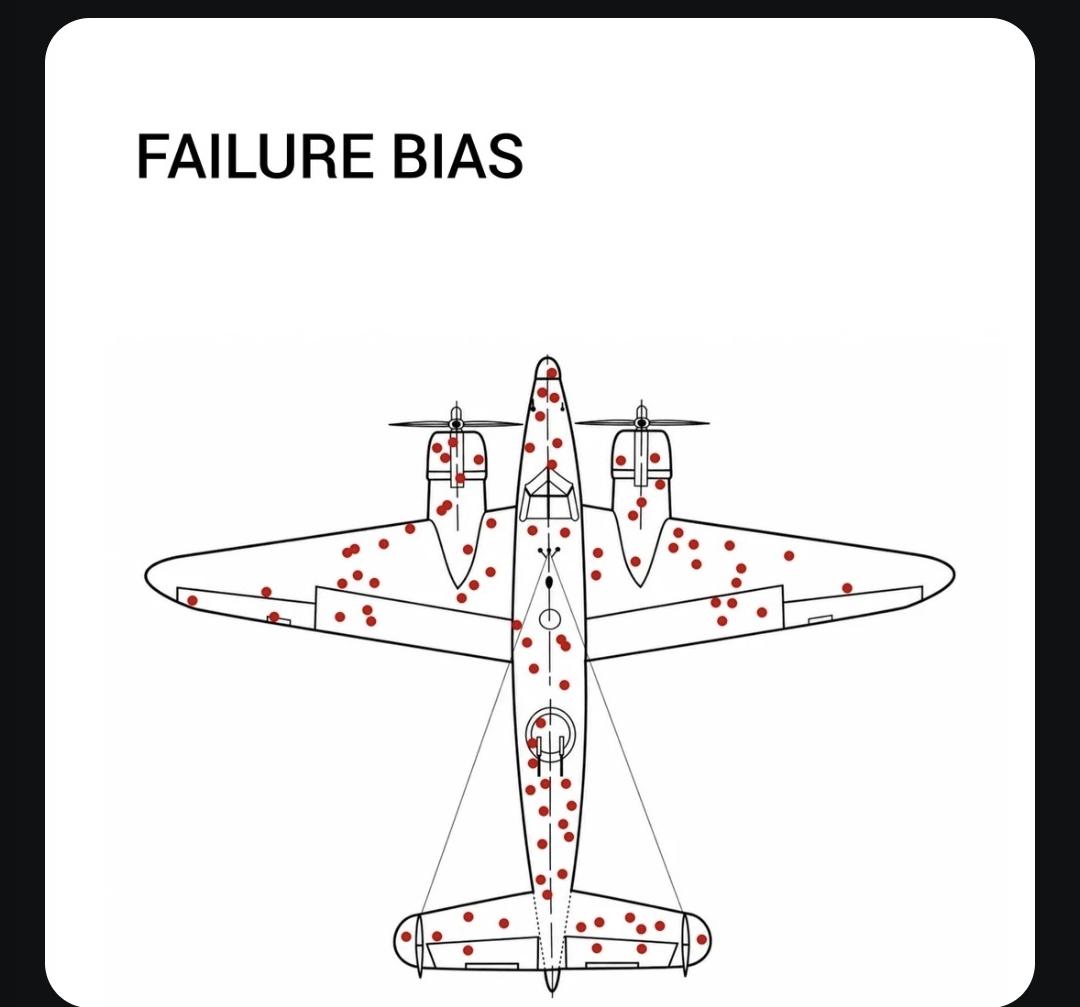
This meme brilliantly captures the statistical reality of life through survivorship bias! The airplane diagram shows bullet holes (red dots) recorded on returning WWII aircraft. Military analysts initially wanted to add armor where the bullets hit, until mathematician Abraham Wald pointed out the obvious-but-genius insight: these planes survived despite being hit in these areas. The planes shot in unmarked areas never made it back to be counted! Just like in life, we only see the "survivors" — successful businesses, relationships, experiments — while the failures disappear from view. Your sample size is literally missing all the crashes!

The Observer Effect: Immortal Cameramen And Statistical Ghosts

The Observer Effect: Immortal Cameramen And Statistical Ghosts
The perfect illustration of observation bias in scientific studies. On the left, we have the "cameraman never dies" trope from action movies—implying the observer is somehow immune to danger. On the right, survivorship bias in its purest form—we only see data from subjects who lived to tell the tale. The rest? Dead in a statistical ditch somewhere. Next time you read a groundbreaking paper, remember all the failed experiments that never made it to publication.

The Gambler's Fallacy Surgical Suite

The Gambler's Fallacy Surgical Suite
The perfect storm of statistical misunderstanding. The doctor's streak of 20 survivors is mathematically irrelevant to your individual 50% chance. Meanwhile, the patient's blissful ignorance is distributed on a bell curve with the statistically literate person in the middle having an existential crisis. Nothing says "I understand probability" like sweating profusely while explaining why past surgical outcomes don't influence future ones. Your surgery odds remain stubbornly fixed at 50% regardless of how many lucky patients preceded you—much like how flipping heads 20 times doesn't make the next coin toss any more likely to be tails. Statistics: simultaneously the most useful and most psychologically torturous branch of mathematics.

The Cave-Dwelling Survivorship Bias

The Cave-Dwelling Survivorship Bias
The perfect illustration of survivorship bias! Just like how archaeologists find ancient remains in caves and conclude "cave dwellers everywhere!" – the meme shows a WWII bomber diagram with bullet holes (red dots) marked only where planes returned safely. The missing data? All the planes that got hit in the critical spots never made it back! It's the scientific equivalent of saying "I only die on days I don't drink coffee, therefore coffee makes me immortal!" *adjusts imaginary lab goggles* Classic logical fallacy wrapped in anthropological humor!