
Psychology Memes

Posts tagged with Psychology
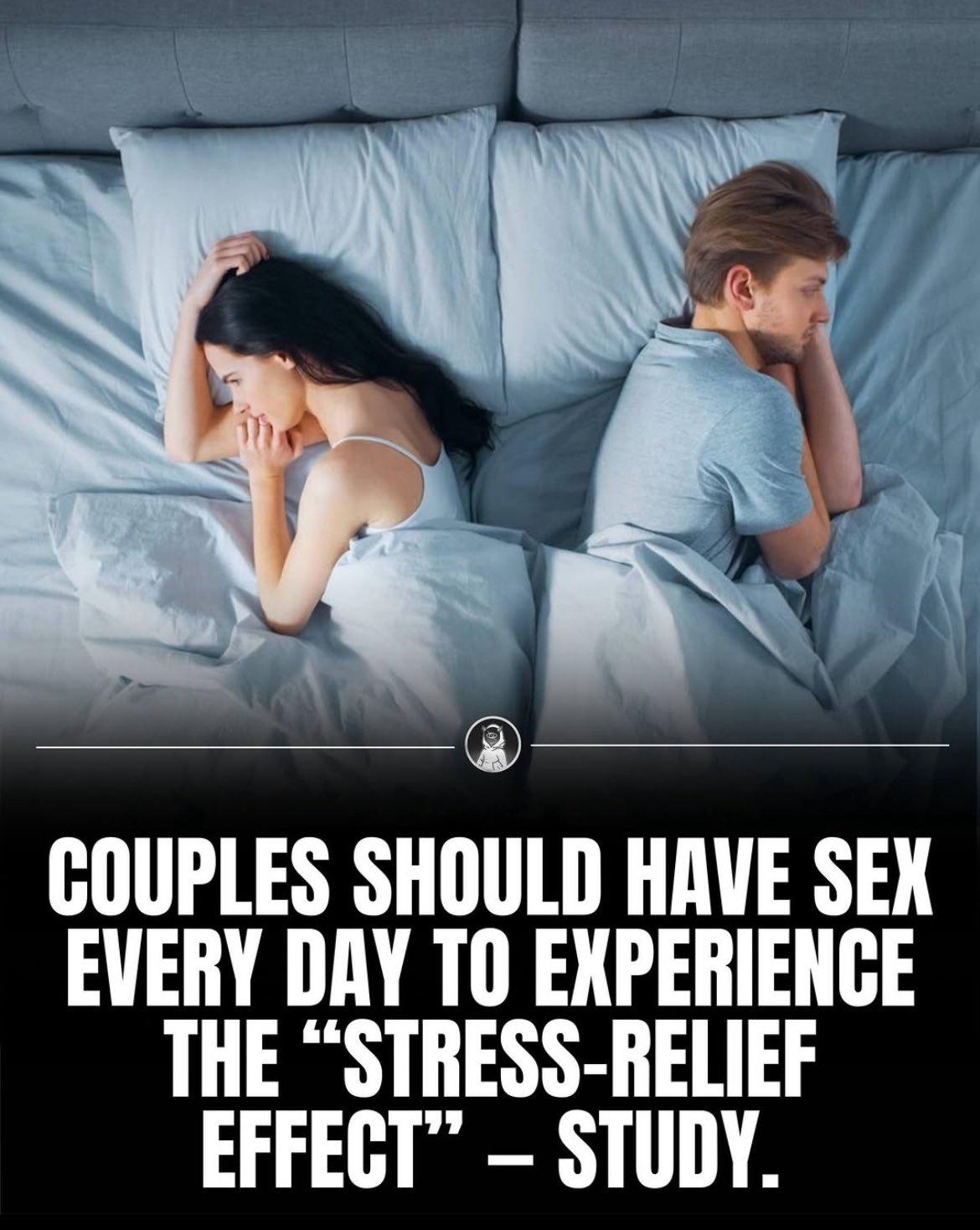
The Quotation Marks Of Questionable Science

The Quotation Marks Of Questionable Science
Classic case of correlation vs. causation confusion. The "study" referenced here is about as scientifically rigorous as my coffee mug's claim that it contains the world's best scientist. Sure, sexual activity does trigger oxytocin and endorphin release—neurochemicals that can reduce cortisol levels—but the irony here is palpable. The couple in the image appears to be experiencing the exact stress the alleged study claims to prevent. Reminds me of when my grad students cite papers they clearly haven't read. Pro tip: any research with quotation marks around its main finding probably wasn't published in Nature.

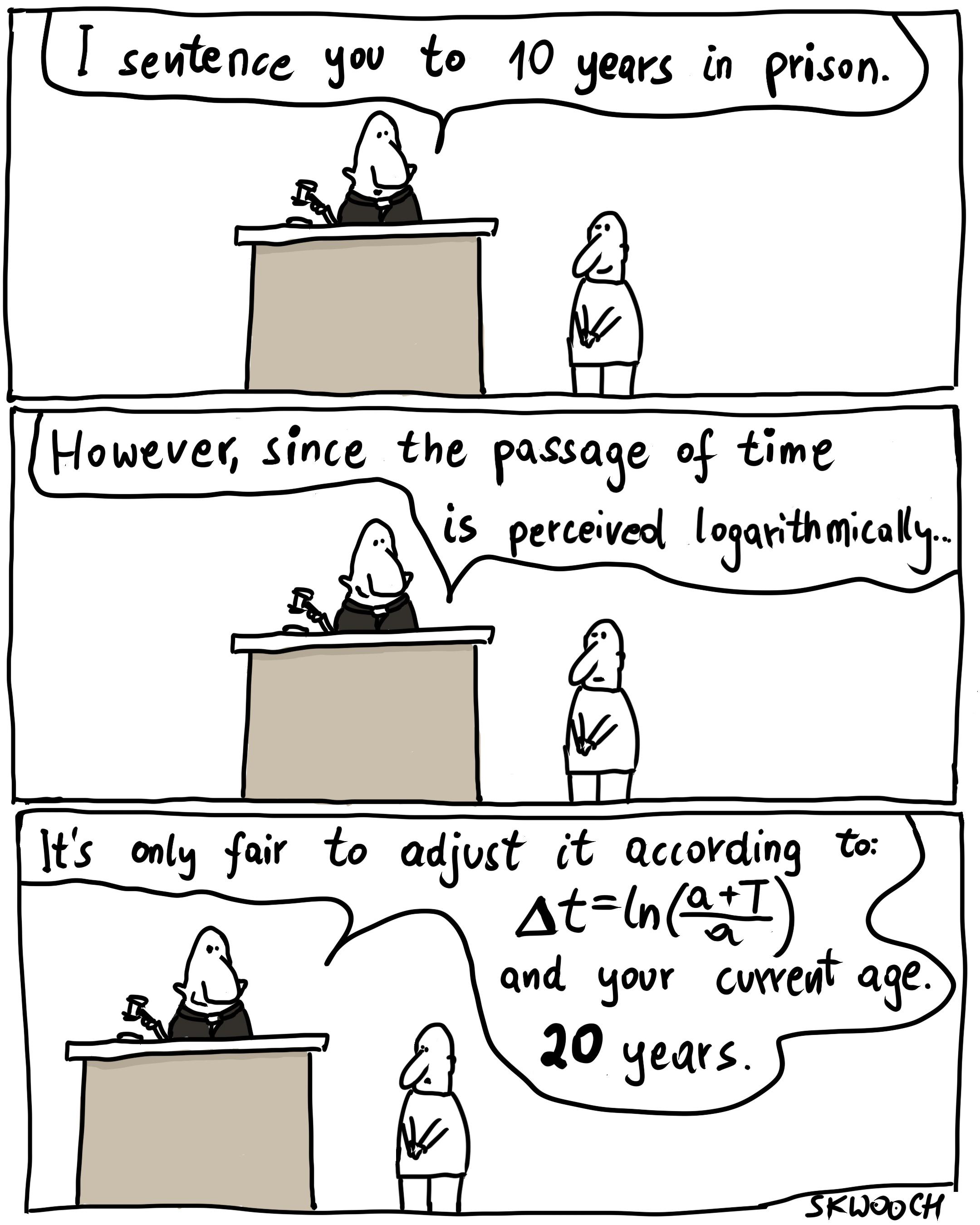
Time Served On A Logarithmic Scale

Time Served On A Logarithmic Scale
Finally, a judge who understands psychophysics. The Weber-Fechner law states that our perception of time follows a logarithmic scale—the older you get, the faster time seems to fly. So a 20-year-old would experience those 10 prison years as an eternity, while a 60-year-old would barely notice them between breakfast and dinner. The equation actually calculates how much subjective time has passed based on your age (a) and the sentence length (t). Justice isn't just blind; it's mathematically adjusted for your temporal perception. Now if only they'd apply the same principle to DMV waiting times.

The Human Classification Spectrum

The Human Classification Spectrum
The scientific community's classification system strikes again! While psychopaths and serial killers get the Hollywood treatment, those on the spectrum who dive into anthropology and sociology are just trying to decode the bizarre social operating system the rest of humanity runs on. It's basically reverse engineering humans.exe when the documentation is written in hieroglyphics. The desperate wall-clinging is just what happens when you've spent too many hours analyzing social constructs and suddenly realize everyone's following arbitrary rules nobody actually explained.

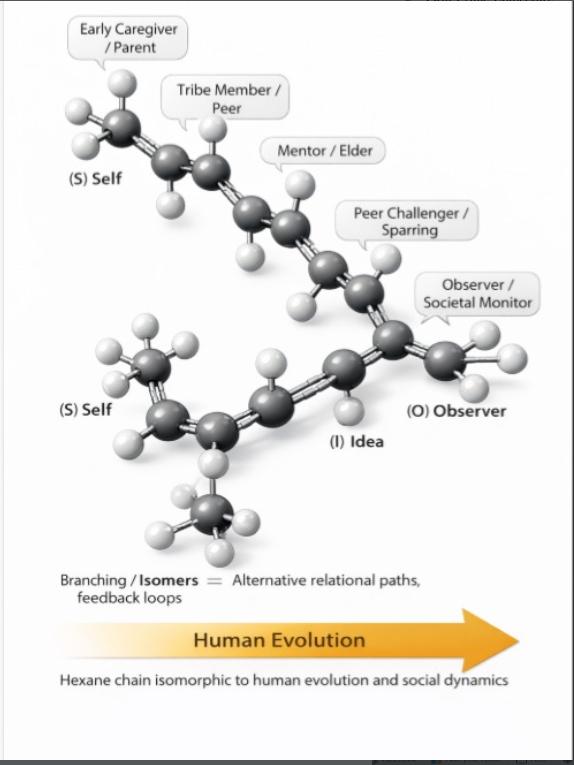
The Chemical Structure Of Human Relationships

The Chemical Structure Of Human Relationships
Whoever created this masterpiece deserves both a Nobel Prize and therapy. They've cleverly mapped human relationships onto a hexane molecule, suggesting our social evolution follows the same structural patterns as carbon chains. The parent bond at one end, the observer at another—it's almost poetic if it weren't so nerdy. Chemistry students will recognize hexane's structure while psychology majors will nod knowingly at the social dynamics. It's what happens when you let someone with too many degrees and not enough friends loose in Photoshop. The real question: is your relationship with your mentor a single or double bond? Choose wisely—one is significantly harder to break.

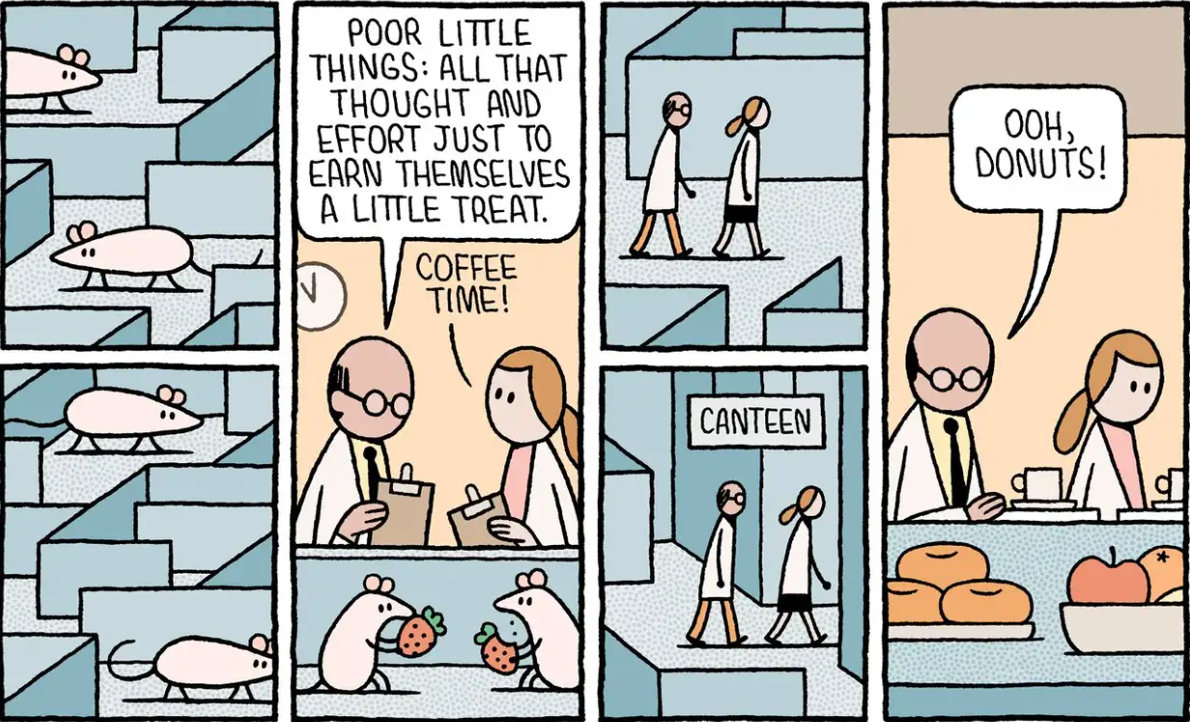
Of Mice And Men

Of Mice And Men
The crushing irony of lab research in four panels. Lab mice navigate complex mazes and perform cognitive tasks for a strawberry reward, while the scientists observing them celebrate with coffee and donuts after watching animals solve puzzles. The parallel reward systems are perfect - both species working for their respective treats, except one group designed the entire experiment. Guess which species got the better deal? Not the one still living in a maze.

The Dunning-Kruger Effect About Dunning-Kruger

The Dunning-Kruger Effect About Dunning-Kruger
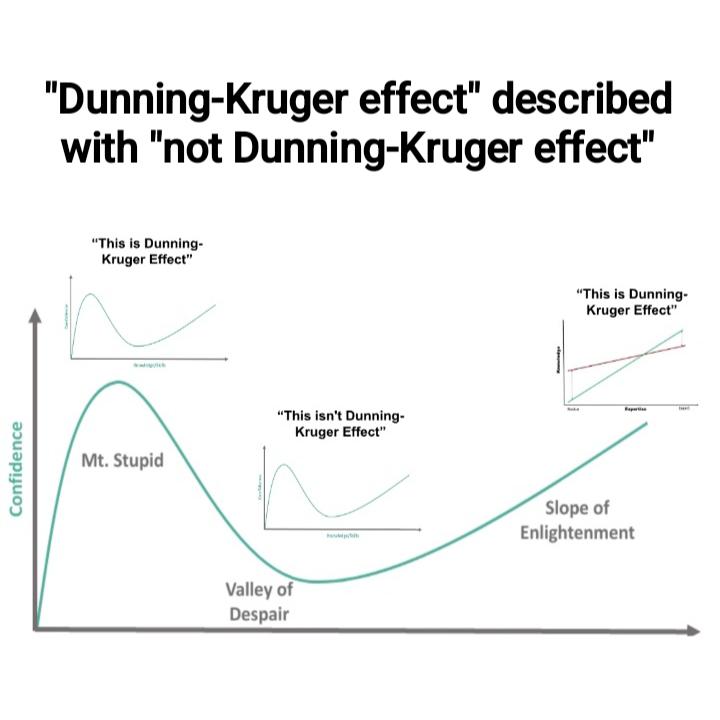
The perfect meta-meme doesn't exi— This brilliant graph shows the Dunning-Kruger effect (a cognitive bias where people with low ability overestimate their skills) while simultaneously demonstrating it! You start at "Mt. Stupid" with maximum confidence despite minimal knowledge, plummet into the "Valley of Despair" upon realizing how little you know, then gradually climb the "Slope of Enlightenment" as actual competence grows. The irony? The meme itself incorrectly labels graphs as "Dunning-Kruger Effect" that aren't actually accurate representations of the original research findings! It's literally committing the very cognitive error it's trying to explain. That's some galaxy-brain inception-level science humor right there.

Aggressive Cuteness Explained

Aggressive Cuteness Explained
The neurological response to extreme cuteness is fascinating. When we encounter something unbearably adorable, our brain's limbic system gets so overwhelmed with positive emotion that it can trigger an aggressive impulse - what scientists call "cute aggression." It's why we say things like "I want to squeeze you to death" to puppies. Just your brain's way of regulating emotional overload. Evolution really said "too much happiness might be dangerous, better balance it with a tiny murder thought."

You Will Get Well Soon... Or Else

You Will Get Well Soon... Or Else
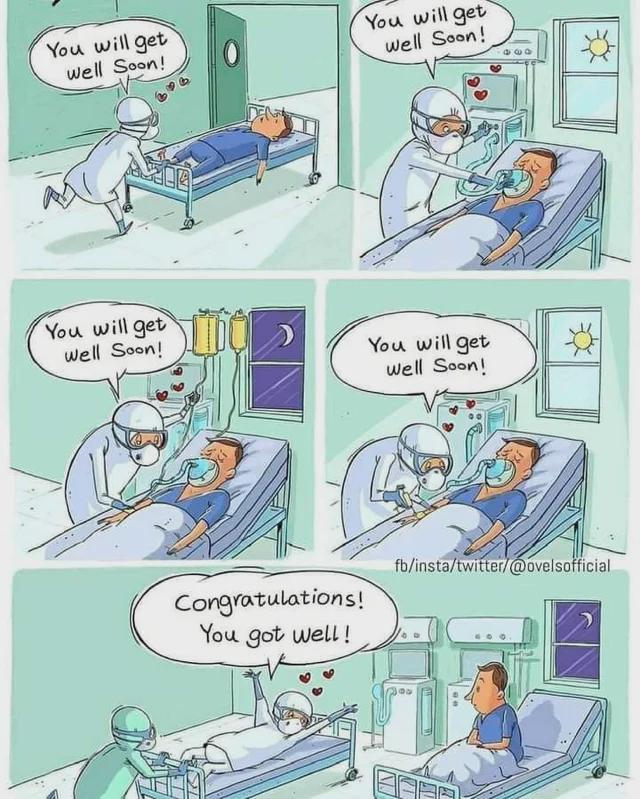
The doctor's repetitive "You will get well soon!" isn't just encouragement—it's a command. Like some bizarre healthcare spell, they chant it day and night until the prophecy fulfills itself. The patient recovers through either medical science or sheer intimidation. Healthcare professionals know the secret: 50% medicine, 50% psychological warfare against disease. Next time you're sick, remember that somewhere, a doctor is preparing their motivational arsenal.

The Confirmation Bias Love Experiment

The Confirmation Bias Love Experiment
The scientific method meets relationship tactics! This dad deserves a Nobel Prize in psychological manipulation. Instead of running controlled experiments, he exploited confirmation bias by texting at 11:11—a time astrology believers consider significant. His hypothesis? If he creates enough "meaningful coincidences," she'll attribute it to cosmic alignment rather than calculated timing. The children's reactions perfectly represent the spectrum of scientific skepticism: one impressed by the methodology, the other already planning to replicate the experiment. Pseudoscience: 0, Strategic thinking: 1.

The Memory Paradox

The Memory Paradox
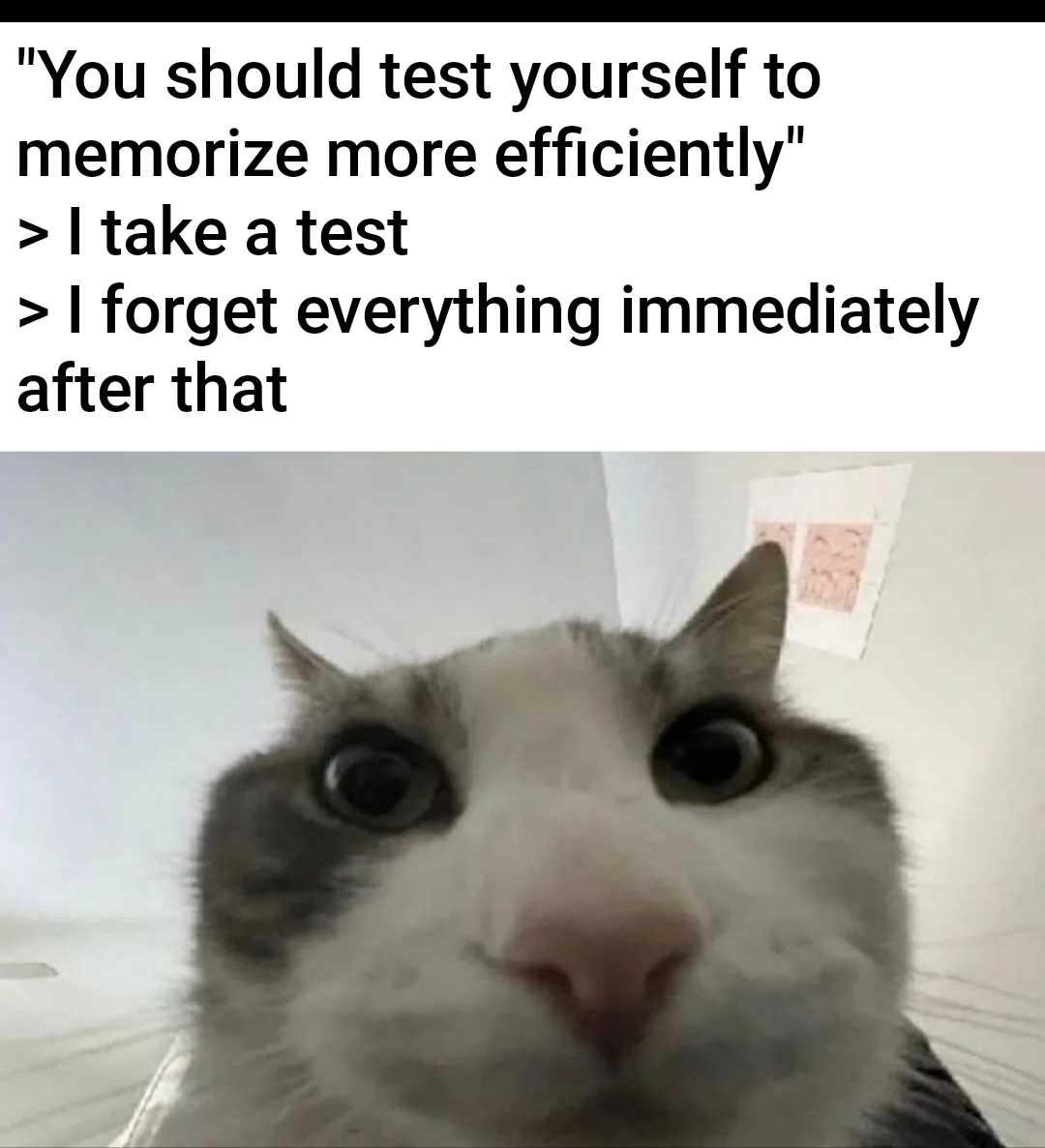
The irony of cognitive science in its purest form! Your brain is like that one lab partner who promises to help but vanishes during crunch time. Testing yourself to improve memory only to have your neurons go "NOPE" and dump all the information like it's radioactive waste! The hippocampus has left the chat. Fun neurological fact: this frustrating phenomenon has a name - the "testing effect paradox" where the very act of testing can trigger anxiety that blocks memory formation. Your brain cells are literally having a panic party while you stare blankly at the exam paper!

Context Matters In Statistical Analysis

Context Matters In Statistical Analysis
The duality of the modern researcher. Claiming to despise statistical analysis during methodology discussions, then frantically refreshing Spotify Wrapped to see if their music taste is statistically significant compared to the general population. Same people who say "p-values are meaningless" will fight to the death defending why they're in the top 0.5% of Taylor Swift listeners. Data suddenly becomes fascinating when it's about your personal habits instead of your research variables.

What Is Neuroscience Again?

What Is Neuroscience Again?
Ever notice the cosmic irony? Neuroscience is literally just a bunch of brains trying to figure themselves out. It's the ultimate narcissistic field of study—three pounds of tissue attempting to understand itself using... itself. Like a USB drive trying to know what a USB drive is by plugging itself into itself. The brain named itself, categorized itself, and now spends billions in research funding just to understand why it does what it does. Talk about an existential feedback loop!