
Operators Memes

Posts tagged with Operators

Delta Airlines vs Nabla Airlines

Delta Airlines vs Nabla Airlines
So apparently the Greek letter Delta (Δ) gets you a nice functioning airplane cruising smoothly through the clouds, while its mathematical cousin Nabla (∇) gets you... whatever that crashed disaster is sitting in the snow. For those who slept through vector calculus: Delta typically represents change or difference, while Nabla is the del operator used for gradients, divergence, and curl. Basically, Delta is straightforward—"here's the change"—while Nabla is the overachiever that has to calculate rates of change in every possible direction simultaneously. The visual metaphor writes itself: one symbol gets you reliable transportation, the other gets you a catastrophic failure frozen on a runway. Maybe Nabla tried to optimize its flight path in too many dimensions at once? Should've stuck with simple Δx and Δy instead of computing the gradient field of air resistance.

Basic Modulus Use In Real Life

Basic Modulus Use In Real Life
This is hilariously accurate for anyone who's ever tried to apply math to their emotional problems! The modulus operator (%) gives you the remainder after division, but more importantly, it converts negative numbers into their positive counterparts when you're working with absolute values. So naturally, someone thought "Hey, let me use this mathematical operation to turn my sadness into something positive!" Spoiler alert: it doesn't work that way. The joke here is that programmers and math nerds are so used to solving problems with elegant mathematical solutions that they forget emotions don't follow the same logic. You can't just apply abs() or modulus to your feelings and expect them to magically become positive. If only mental health worked like integer arithmetic, therapists would just be teaching us operator overloading! Fun fact: The modulus operation is actually super useful in real life for things like determining if a number is even or odd, creating circular arrays, or figuring out what day of the week it'll be 100 days from now. Just... not for fixing your emotional state. Sorry, mathematicians!

Division's Forgotten Verbal Companion

Division's Forgotten Verbal Companion
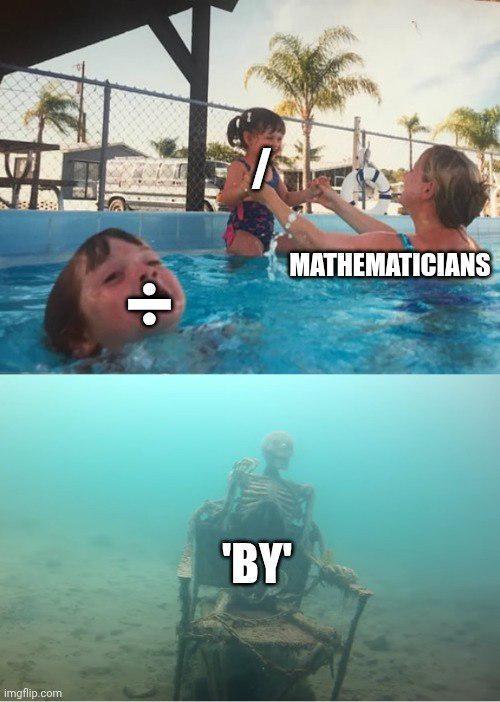
The ultimate mathematical tragedy! The top panel shows division (÷) being celebrated by mathematicians, while poor division "by" sits forgotten at the bottom of the ocean like a skeletal remains. In mathematics, division is typically represented by the ÷ symbol or a forward slash, while writing "divided by" in equations is considered informal and often abandoned in higher math notation. Division by zero might be undefined, but division "by" is straight-up extinct in formal mathematical writing. Pour one out for our neglected linguistic operator!

New Shorthand Just Dropped

New Shorthand Just Dropped
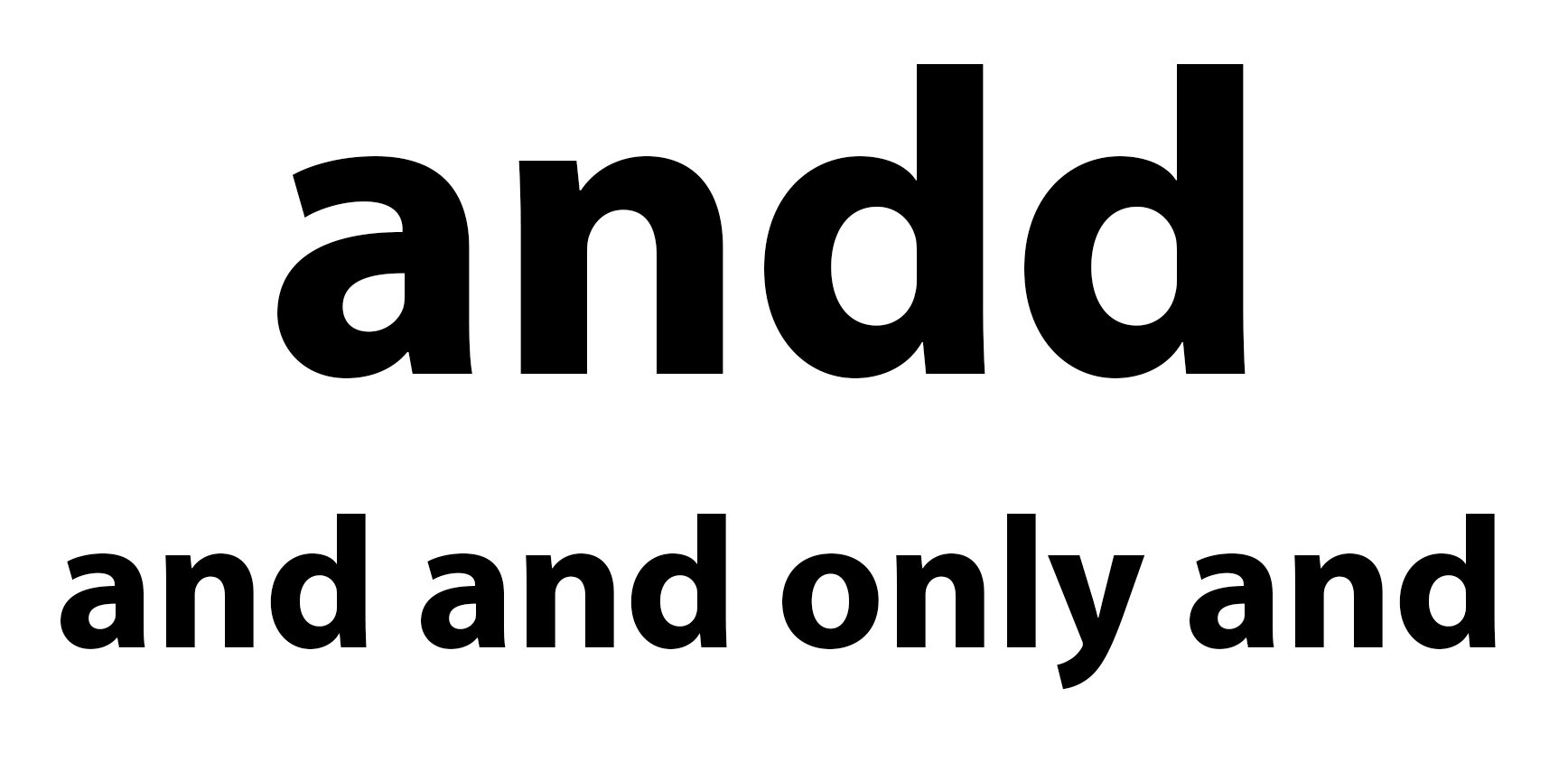
For the mathematically challenged but efficiency-minded researcher, behold the ultimate Boolean operator compression! "andd" - saving precious keystrokes by combining "and" with "and only and." This is what happens when mathematicians optimize their coffee-to-typing ratio. Next up: replacing "if and only if" with just a wink emoji. Formal logic papers would be 50% shorter if we all embraced this notation. Your dissertation committee might have questions, but think of all the trees you'll save!

Guess The Operators! (Easy To Hard)

Guess The Operators! (Easy To Hard)
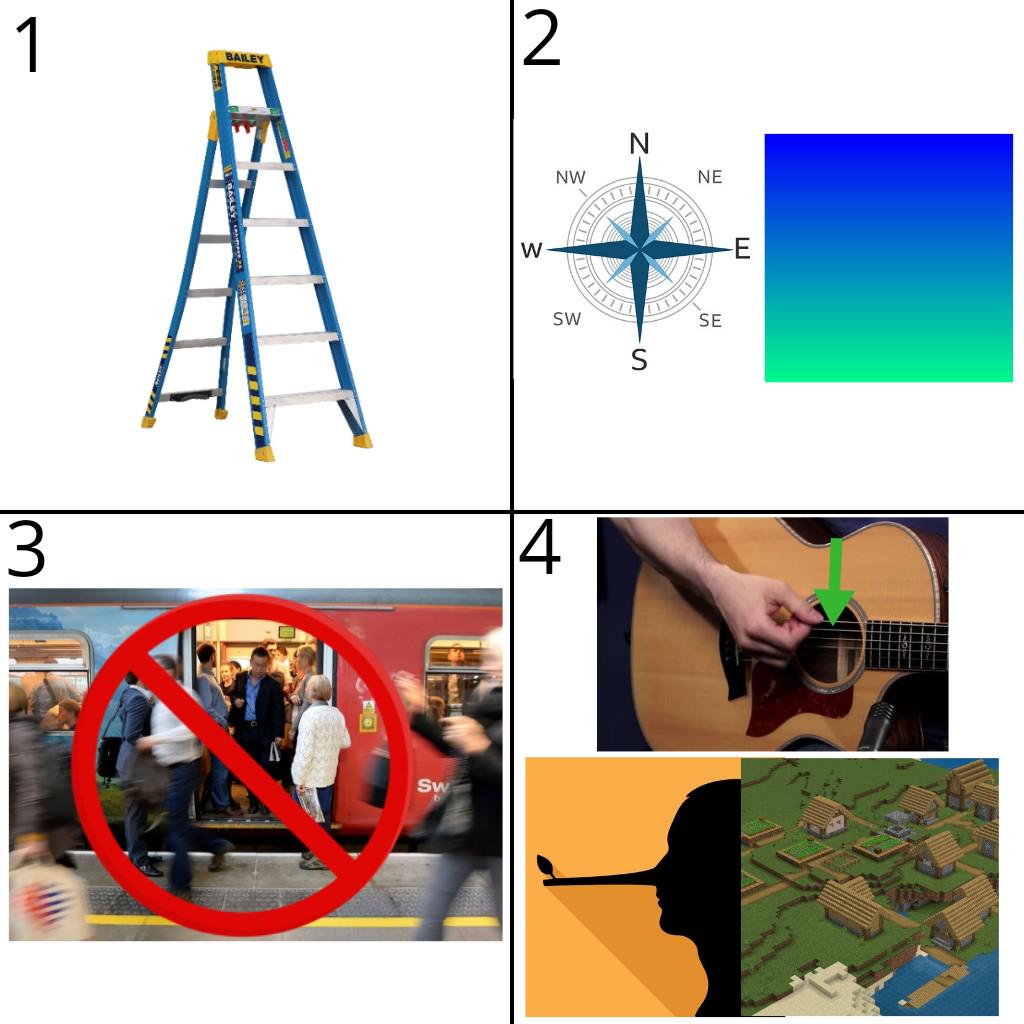
A brilliant progression of mathematical operators disguised as everyday items: 1. Step ladder = "raise to power" (exponentiation) 2. Compass = "direction" (vector) 3. No entry sign = "not" (logical negation) 4. Guitar pick + village = "pick a village" (selection operator) The difficulty escalation is spot on. Started with basic exponents, ended with selection operators. Just another day of mathematicians turning ordinary objects into symbols that will eventually make undergrads cry during finals week.

When Mathematical Notation Gets Accidentally Suggestive

When Mathematical Notation Gets Accidentally Suggestive
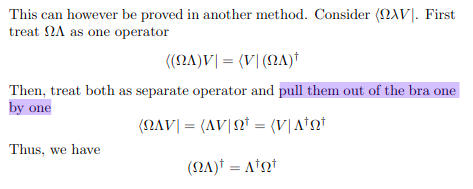
When math gets naughty! 🤓 The phrase "pull them out of the bra one by one" is just innocent mathematical notation about removing operators from bracket notation, but OH MY GOODNESS does it sound risqué when taken out of context! This is what happens when mathematicians accidentally make their equations sound like a striptease. Next time you're solving for eigenvalues, remember to keep it PG-13! Even quantum mechanics needs consent before removing anything from brackets! 😂

For Those Trying To Understand Operators

For Those Trying To Understand Operators
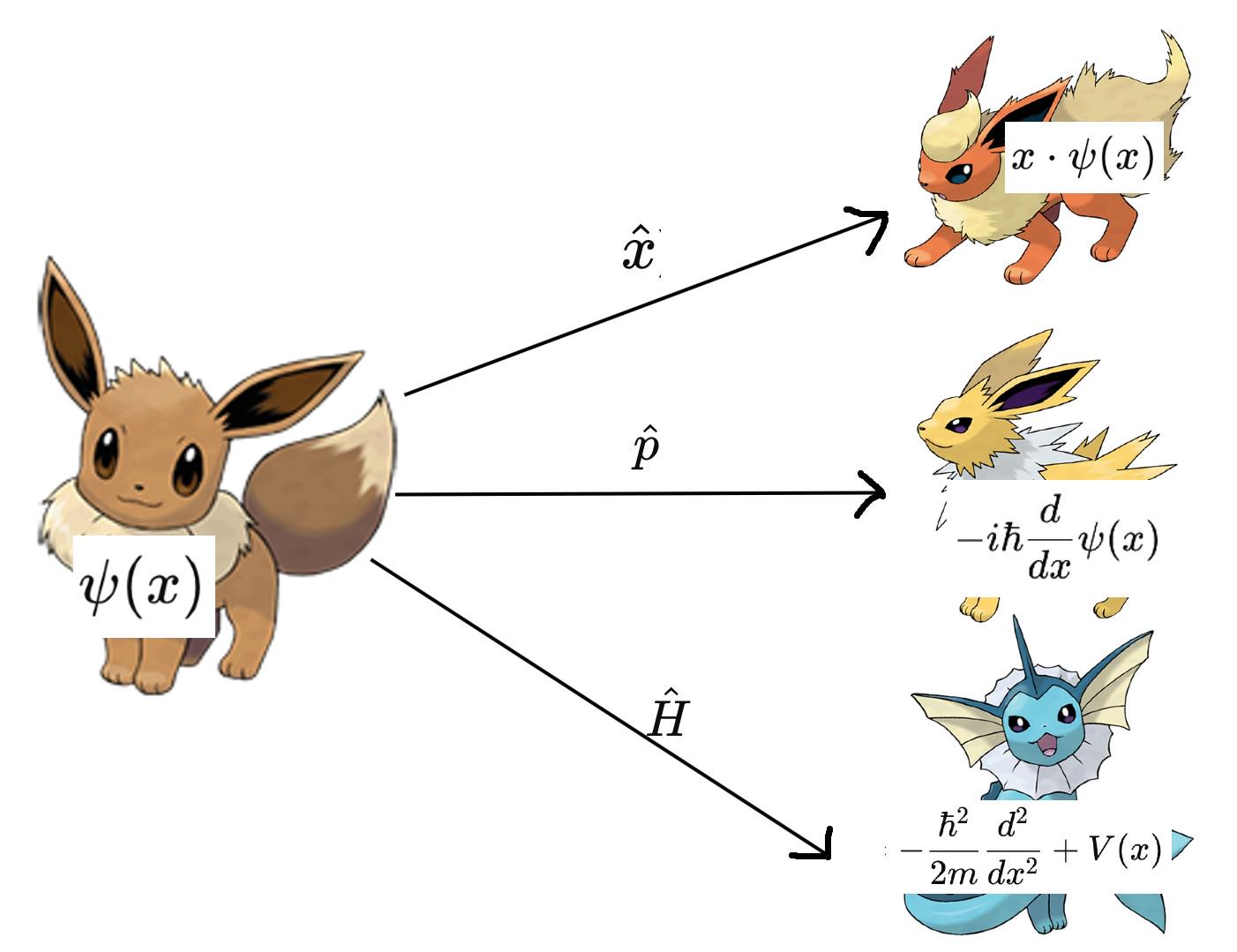
Quantum mechanics explained through Pokémon evolution. Starting with Eevee as the wavefunction ψ(x), we see how different operators transform it into specialized forms. Position operator x̂ gives you Flareon (multiplication), momentum operator p̂ produces Jolteon (differentiation), and the Hamiltonian Ĥ yields Vaporeon (energy equation). This is what happens when physicists procrastinate on their dissertation by playing Pokémon. The Schrödinger equation has never been this adorable or unnecessarily complicated.

Quantum Mechanics Dating Problems

Quantum Mechanics Dating Problems
Finding a Hermitian operator that commutes with the Hamiltonian is like striking quantum gold—it gives you those sweet, sweet conserved quantities. But the moment you're dealing with degenerate states, you start eyeing that operator like it's your ex who just texted "we need to talk." Suddenly, perturbation theory looks mighty attractive. For the uninitiated: Hermitian operators represent physical observables in quantum mechanics. When one commutes with the Hamiltonian (H), it means you can measure both properties simultaneously—a rare luxury in the quantum world. Degenerate states, however, are quantum mechanics' way of saying "it's complicated."

The Quantum State Of Bedtime Thoughts

The Quantum State Of Bedtime Thoughts
The eternal battle between relationship expectations and scientific obsession! While she suspects romantic betrayal, his brain is actually stuck in quantum notation limbo. That moment when your significant other thinks you're emotionally distant, but you're just mentally debating whether that symbol on yesterday's lecture board was a momentum operator (p) or position operator (q). The physics never stops, even in bed. The struggle is real for anyone whose brain refuses to shut down the scientific processing center after hours!

Guess The Operators! (Easy To Hard) Part 2

Guess The Operators! (Easy To Hard) Part 2
Mathematical operators have never been this delicious! This genius puzzle uses visual puns to represent math operators: 1. Hermit Crab = Shell/Division (get it? Because it's in a shell!) 2. Lamb Chop + Bert = Minus/Subtraction (lamb-Bert = λ-Bert = subtract) 3. Chocolatier + Mint Leaf = Times/Multiplication (After Eight mint chocolate = × = multiply) 4. Fabric + Wood = Plus/Addition (texture + grain = cross-grain = +) The progression from "easy" to "hard" is diabolical! Your math teacher would either love this or have a nervous breakdown trying to grade it.

The Factorial Fallacy: When Symbols Collide

The Factorial Fallacy: When Symbols Collide
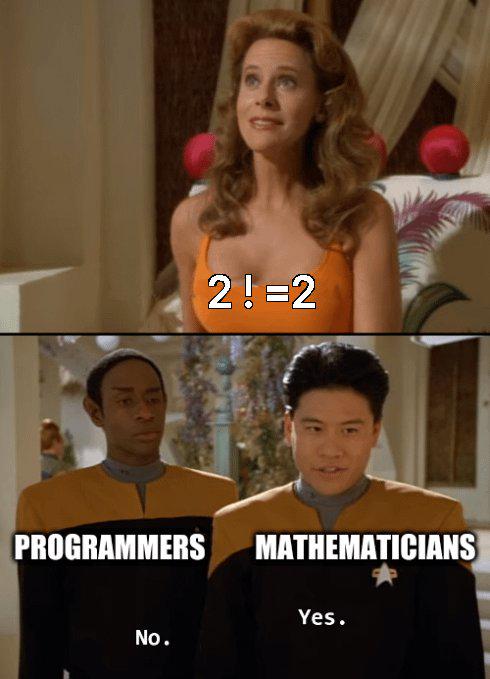
The eternal battle between programmers and mathematicians in one perfect Star Trek showdown! In programming, "2! = 2" is interpreted as "2 not equal to 2" (false) because "!" is the logical NOT operator. Meanwhile, mathematicians see "2!" as factorial, which equals 2×1=2, making the statement true. This is why programmers and mathematicians can't share keyboards without causing a universe-ending paradox. Next time you're debugging code with your mathematician friend, just remember you're literally speaking different languages while typing the exact same symbols.

Only Has A Fraction Of The Power

Only Has A Fraction Of The Power
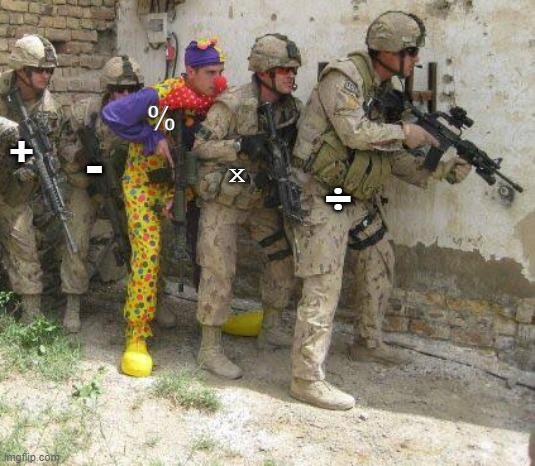
The mathematical operators have been deployed! While the soldiers wield their standard-issue firearms, the percent sign is clearly the comedic relief of the unit. That poor percentage symbol only deals with fractions of numbers, unlike its more powerful squadmates: addition, subtraction, multiplication, and division, who can transform values completely! In the mathematical hierarchy of operations, our colorful clown (%) is just hanging out at the bottom of the PEMDAS pecking order. It's like bringing a water pistol to a nuclear war—technically a weapon, but c'mon now.