

Mathematicians Memes

Posts tagged with Mathematicians
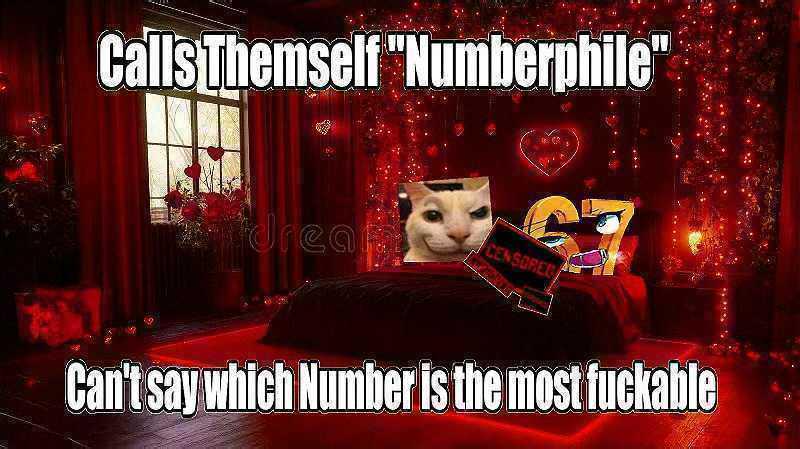
This Is Real Math, Done By Real Methematicians

This Is Real Math, Done By Real Methematicians
So you claim to be a "numberphile" but you can't even pick your favorite number? Sounds like someone's commitment issues extend beyond relationships and into the numerical realm. It's like being a food critic who refuses to name their favorite dish—except somehow nerdier. The cat's judgy expression perfectly captures the internal struggle of every math enthusiast who's been asked this impossible question. Like, do I go with π because I'm cultured? Euler's number e because I'm sophisticated? Or just admit that 69 makes me giggle like a middle schooler? The romantic bedroom setting adds a deliciously absurd layer—because nothing says "passionate love affair" quite like an existential crisis over numerical preferences. Fun fact: There are people who genuinely have favorite numbers based on their mathematical properties. Some worship 1729 (the Hardy-Ramanujan number), others stan Graham's number. But the real ones know that committing to just ONE number is basically mathematical polyamory denial.

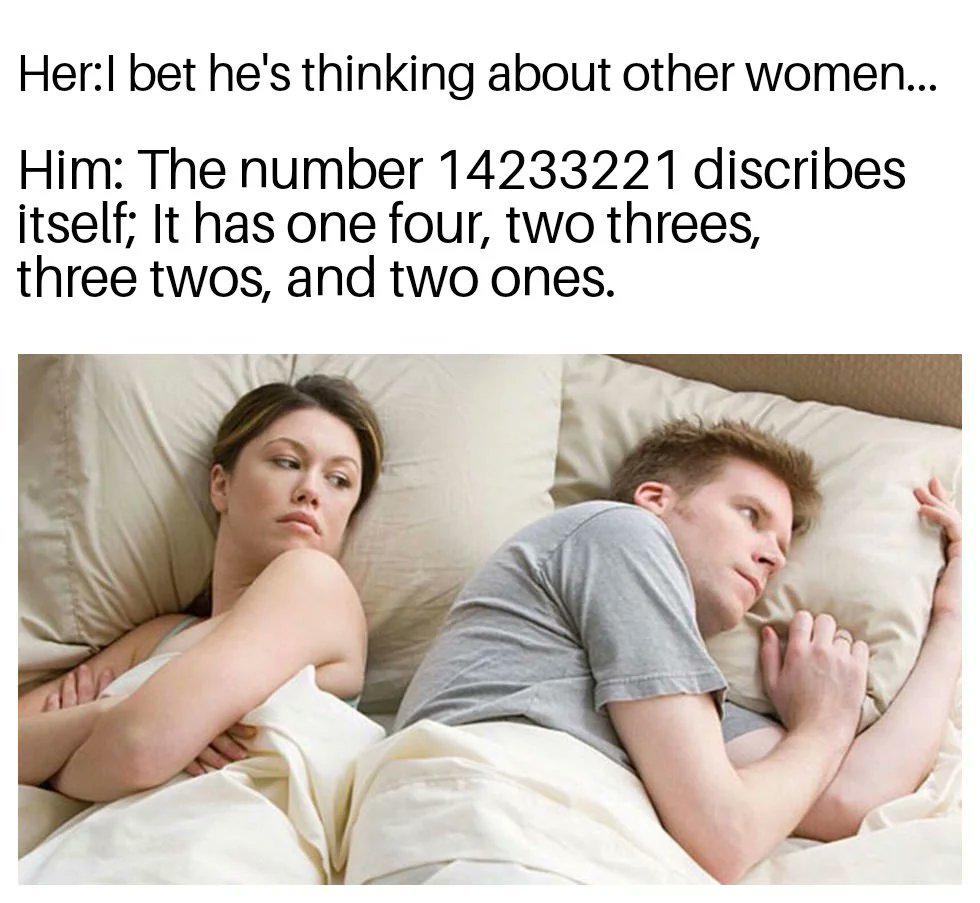
One Four, Two Threes, Three Twos, And Two Ones

One Four, Two Threes, Three Twos, And Two Ones
This is what happens when you date a mathematician—pillow talk becomes a number theory lecture. The number 14233221 is self-descriptive: reading left to right, it contains one 4, two 3s, three 2s, and two 1s. It literally counts its own digits. While she's suspecting infidelity, he's mentally cataloging integers like he's organizing his sock drawer. This is peak math brain: when your partner thinks you're emotionally distant, but you're actually just fascinated by numerical properties. Self-descriptive numbers are rare gems in mathematics, and apparently so is his attention span for relationship concerns. Nothing says "I'm emotionally unavailable" quite like being more excited about digit frequency than human connection.

Most Normal Paul Erdős Social Interaction

Most Normal Paul Erdős Social Interaction
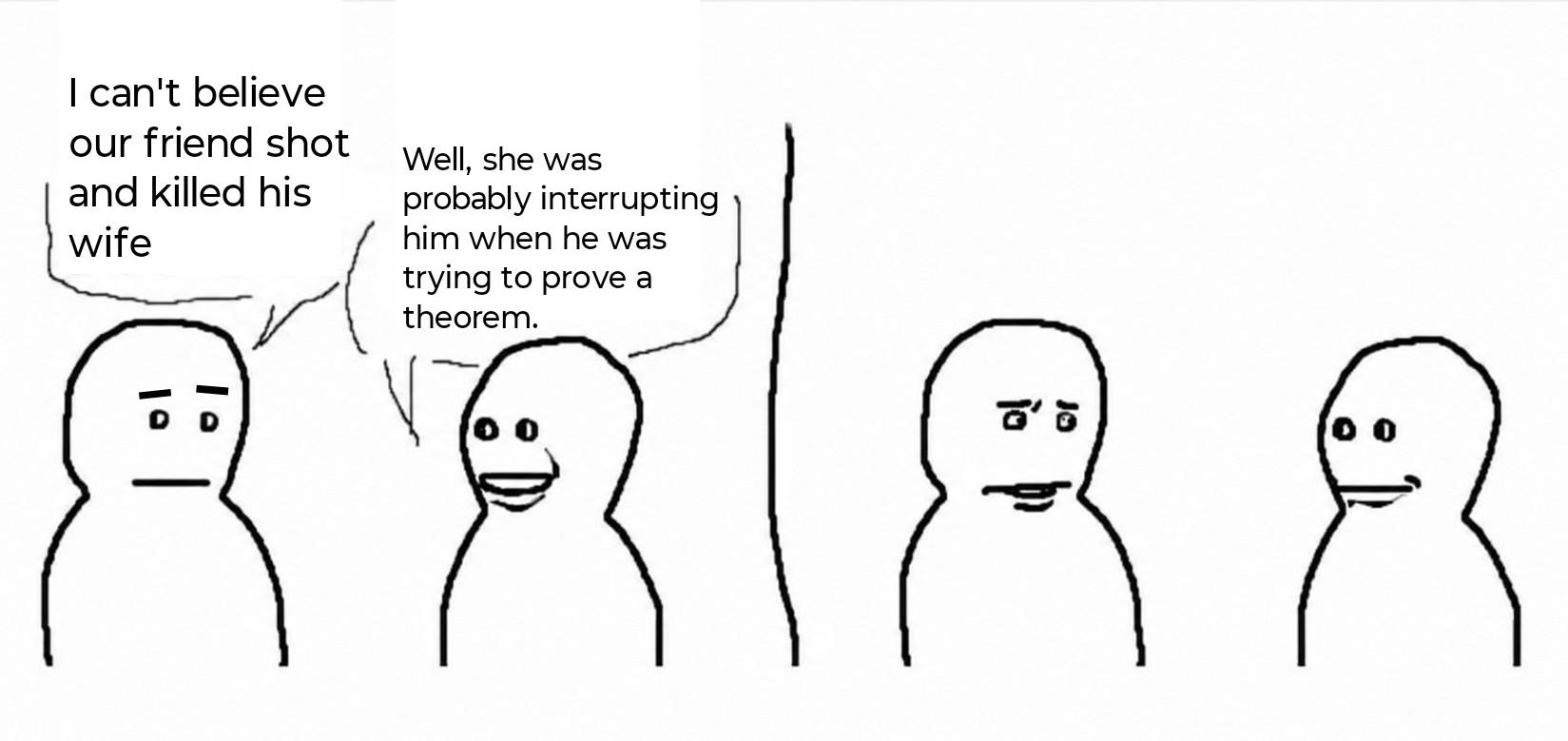
Paul Erdős, the legendary Hungarian mathematician who published over 1,500 papers and had basically zero social filter, would absolutely say something like this. The man lived out of a suitcase, showed up at colleagues' doorsteps unannounced, and was so dedicated to mathematics that he never married or had a stable home. So when someone casually mentions a murder-suicide, his brain immediately goes "well, theorems are obviously more important than human life, right?" The comedic timing here is *chef's kiss*. Person A is horrified about a tragedy, and Erdős (represented by the smiling figure) just casually drops the most mathematician response possible: "Yeah, but was he working on a proof though?" The awkward silence in the second panel says everything. This is peak mathematician energy—where proving theorems takes priority over literally every other aspect of human existence, including basic empathy. Fun fact: Erdős referred to children as "epsilons" (a math term for small quantities), women as "bosses," men as "slaves," and God as the "Supreme Fascist" who kept the best mathematical proofs in "The Book." So yeah, this level of social awkwardness is pretty on-brand.

(G. H. Hardy Excluded)

(G. H. Hardy Excluded)
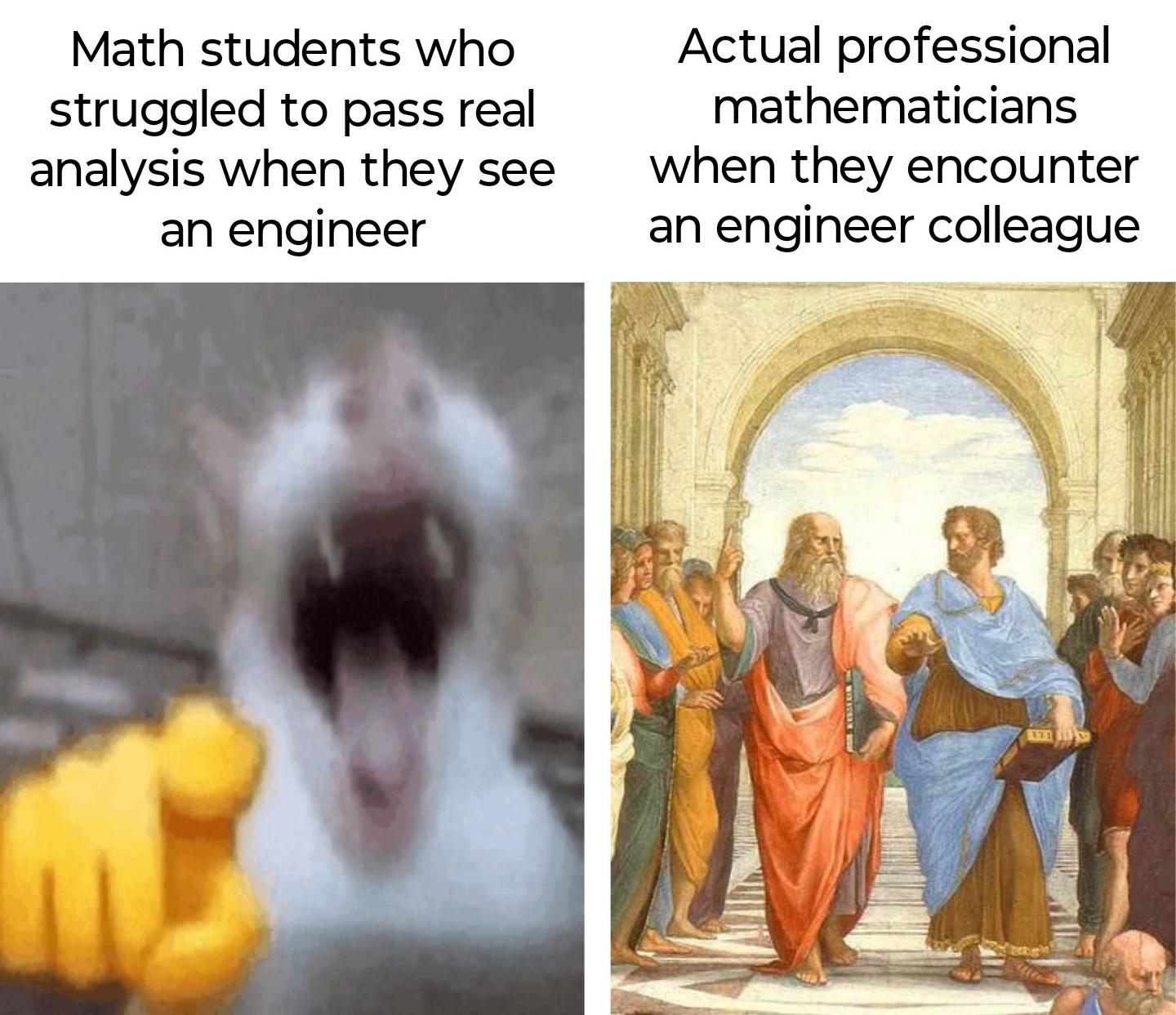
This one hits different for anyone who's witnessed the ancient rivalry between pure mathematicians and engineers. The left side shows math students who barely scraped through real analysis (you know, epsilon-delta proofs and Cauchy sequences) having a full meltdown when they meet an engineer. The right? That's Raphael's "School of Athens" – literally Plato and Aristotle having a civilized philosophical discourse. The joke is that professional mathematicians, despite their theoretical prowess, treat engineers with the utmost respect and collegiality. Why? Because engineers actually USE math to build stuff that works. Meanwhile, those struggling math students develop this weird superiority complex to cope with their trauma. The title reference to G.H. Hardy is *chef's kiss* – Hardy famously wrote in "A Mathematician's Apology" that he was proud his work had no practical applications whatsoever. He'd absolutely be on the left side, screaming at engineers for their "applied" sins. Pure math elitism at its finest!

Guys I Just Realized What To Do When You Run Out Of English, Greek, Hebrew And Cyrillic Alphabets: The Armenian Alphabet (Ignore Existing Symbols). Can Also Use Each Letter With Certain Transformations Applied Such As Rotation Or Reflection.

Guys I Just Realized What To Do When You Run Out Of English, Greek, Hebrew And Cyrillic Alphabets: The Armenian Alphabet (Ignore Existing Symbols). Can Also Use Each Letter With Certain Transformations Applied Such As Rotation Or Reflection.
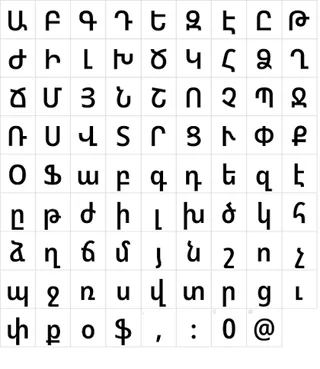
You know you've been doing math too long when you've exhausted the entire Latin alphabet, burned through Greek, raided Hebrew for good measure, borrowed from Cyrillic, and now you're eyeing Armenian characters like they're the last lifeboat on the Titanic. This is what happens when you need to define 47 different variables in a single equation and you're too stubborn to use subscripts properly. The real galaxy brain move here is suggesting rotations and reflections. Nothing says "I've lost control of my notation system" quite like using ∃ and Ǝ as two completely different variables in the same proof. Your thesis committee will love it. Or report you to the authorities. Fun fact: Mathematicians have actually done this. They've used Fraktur, blackboard bold, script fonts, and even Hebrew letters like ℵ (aleph) for cardinalities. At this point we're just collecting alphabets like Pokémon cards. Gotta notate 'em all.

Something We Can Learn From Him

Something We Can Learn From Him
When a Fields medalist casually drops his mental health coping strategy and it's just... reading manga. Yu Deng, who won mathematics' most prestigious award in 2026, apparently handles depression by diving into yuri manga—a genre focused on romantic relationships between women. The juxtaposition is chef's kiss: you'd expect some profound mathematical meditation or complex problem-solving ritual, but nope. Just wholesome anime romance. Honestly? Relatable king. Sometimes the solution to existential dread isn't found in differential equations but in the pure escapism of illustrated storytelling. The man solved problems that would make most people's brains melt, but his therapy is the same as half the internet's. Respect.

Mathematicians When They Find A Way Around The Rules They Made Up

Mathematicians When They Find A Way Around The Rules They Made Up
Mathematicians really be out here creating entire axiom systems, defining what's "allowed" and what's "forbidden," then spending the next 200 years finding loopholes like they're tax attorneys. "You can't divide by zero? Cool, cool... but what if we just *approach* zero? Checkmate, logic!" They literally invented imaginary numbers because regular numbers weren't cutting it anymore. The self-congratulation energy is off the charts—like awarding yourself a medal for solving a puzzle you created while locked in your own basement. And honestly? Respect. That's some next-level mental gymnastics right there.

Wait Till You Learn About Trivial Algepanties

Wait Till You Learn About Trivial Algepanties
Real Analysis mathematicians have spent years mastering epsilon-delta proofs and Lebesgue integration, only to have someone waltz in talking about "Fake Vaginalybro" like it's a legitimate mathematical concept. The sheer audacity of making up nonsense math terms that sound vaguely legitimate is sending them into existential crisis mode. For context: Real Analysis is one of the most rigorous and notoriously difficult branches of mathematics, dealing with limits, continuity, and the foundations of calculus. It's where math students go to question their life choices. So when someone comes in with completely fabricated terminology that sounds like it could be real (because let's be honest, math already has absurd-sounding names like "hairy ball theorem" and "cox ring"), it's both hilarious and mildly offensive to those who've suffered through it. The title reference to "Trivial Algepanties" is chef's kiss—another fake math term playing on "trivial" (math-speak for "obviously easy") and "algebraic topology." It's like watching someone's brain short-circuit in real time.

Well It Should Be

Well It Should Be
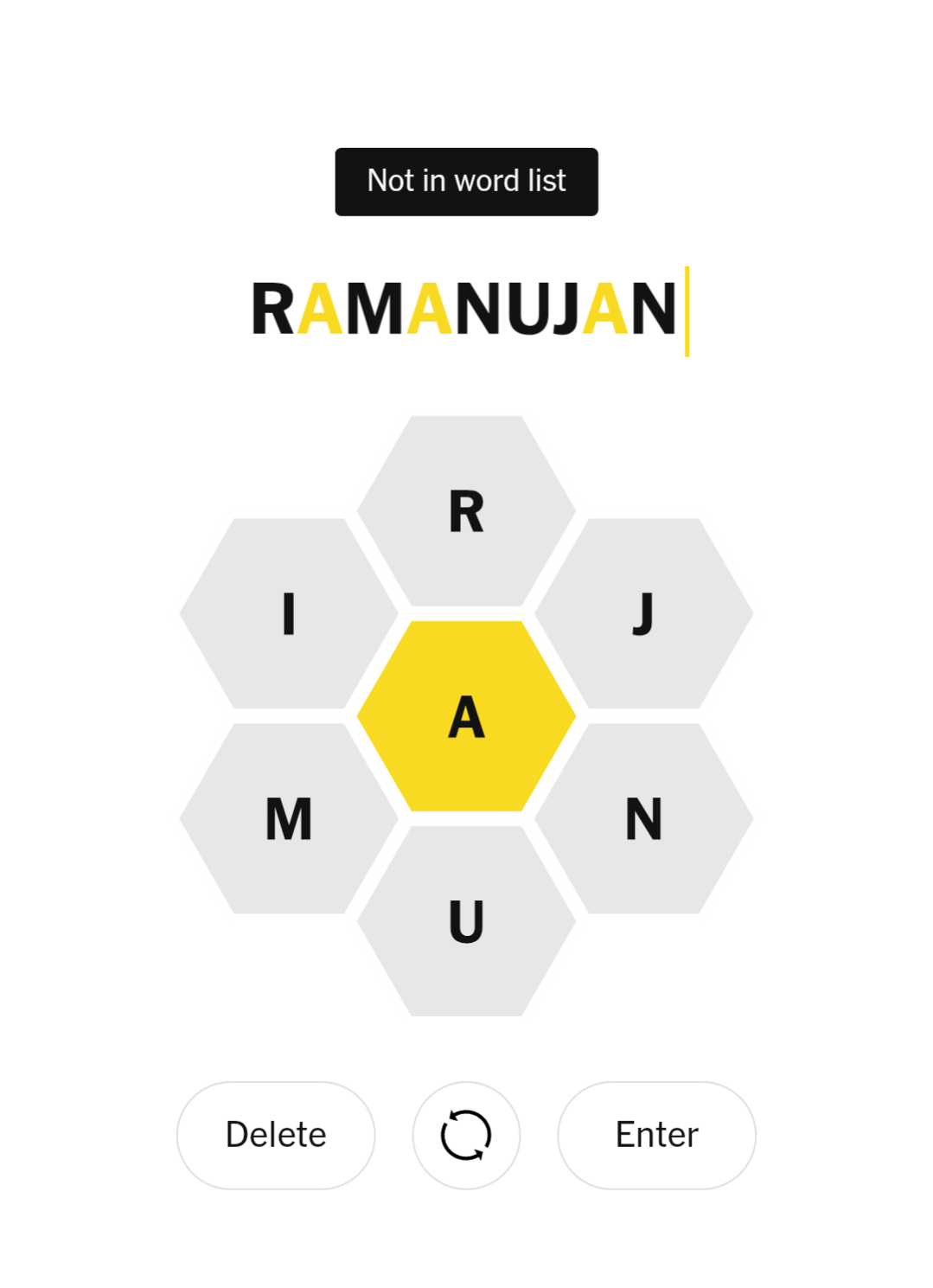
Someone's playing a word game and discovered they can spell "RAMANUJAN" using the available letters. The game's having none of it though—"Not in word list" it says, like some kind of mathematical hate crime. For those wondering, Srinivasa Ramanujan was one of history's most brilliant mathematicians who made groundbreaking contributions to number theory, infinite series, and continued fractions—mostly self-taught and working in isolation. The man literally rediscovered theorems that took European mathematicians centuries to develop, and this word game can't even acknowledge his existence? The indignation is justified. You can probably spell "KARDASHIAN" or "MINECRAFT" but not the name of a genius who gave us formulas still being used in modern physics and computer science. Dictionary developers, do better.

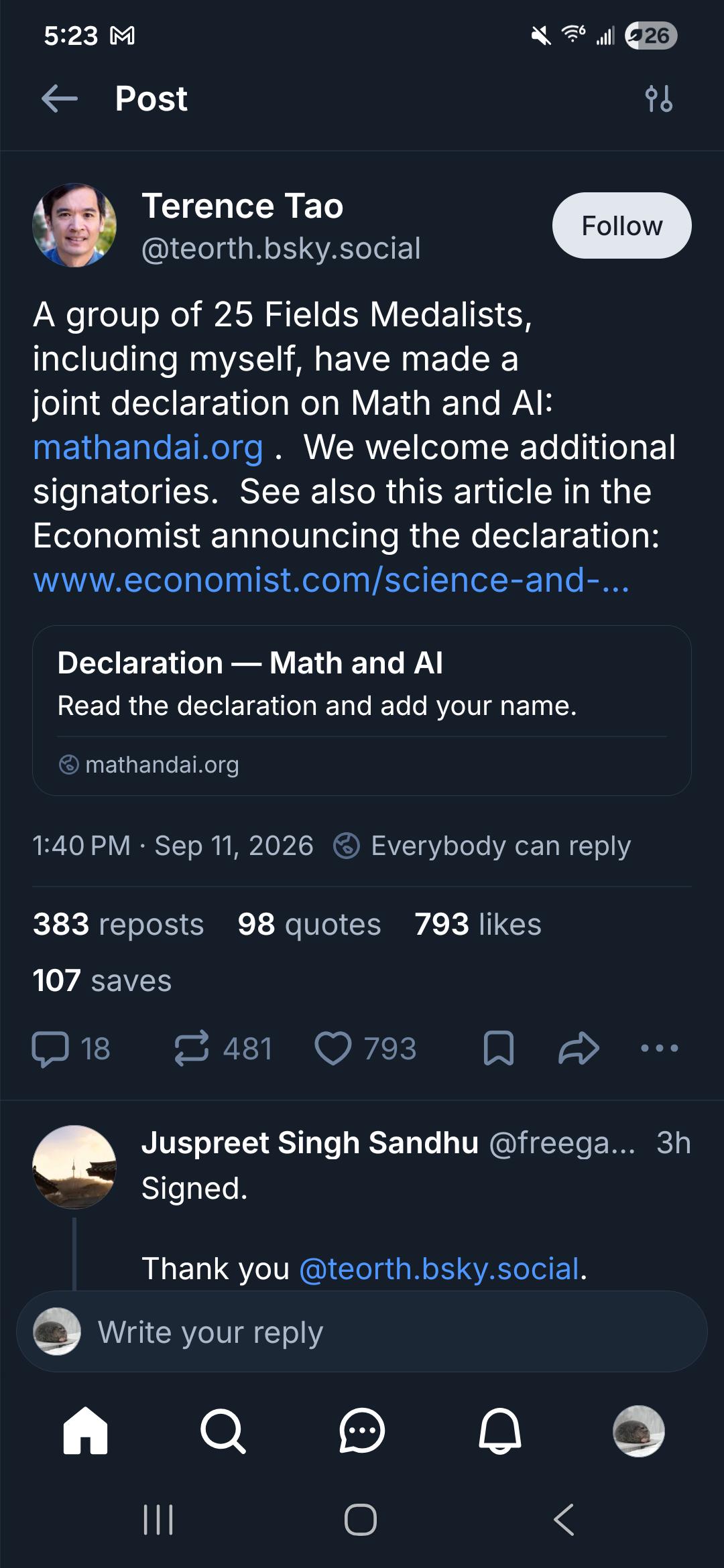
Terence Tao On AI And Math

Terence Tao On AI And Math
When 25 Fields Medalists—literally the people who've solved problems most of us can't even comprehend—decide to make a joint declaration about AI and math, you know it's either really important or they're just tired of being asked if ChatGPT will replace them at conferences. Terence Tao, who's basically the final boss of mathematics, is rallying the mathematical elite to weigh in on how AI should interact with their field. It's like watching the Avengers assemble, except instead of fighting Thanos, they're establishing guidelines for machine learning models that can do calculus faster than you can say "proof by induction." The real flex here is casually dropping "25 Fields Medalists" like it's no big deal. That's more mathematical firepower than most universities will see in a century. They're welcoming additional signatories too, which is academic speak for "you can join our cool kids club if you're also absurdly accomplished."

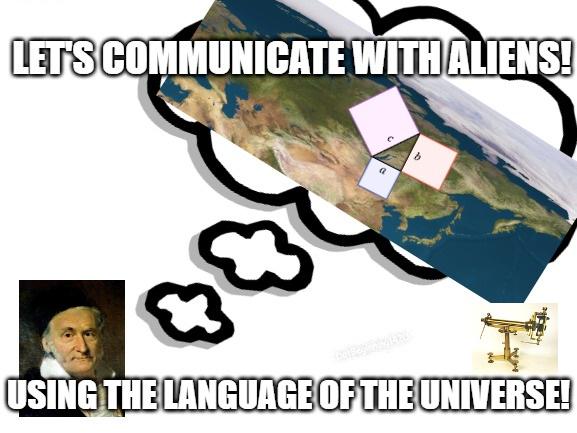
Gauss Wished To Communicate With Aliens

Gauss Wished To Communicate With Aliens
Carl Friedrich Gauss really said "let's just plant massive geometric forests visible from space" because he figured any intelligent aliens would recognize the Pythagorean theorem. The dude wanted to carve GIANT triangles into Siberia to prove we're not total idiots down here. Because nothing says "we're advanced" like deforestation in the shape of math proofs, right? The beauty here is that Gauss genuinely believed mathematics was the universal language—transcending culture, species, and planetary origin. And honestly? He wasn't wrong. While we're out here arguing about metric vs imperial, math stays consistent whether you're in Germany or the Andromeda galaxy. His plan was basically cosmic show-and-tell with geometry. Too bad the project never happened—probably for the best since aliens would've just seen it and thought "oh great, another species obsessed with right angles." 📐👽

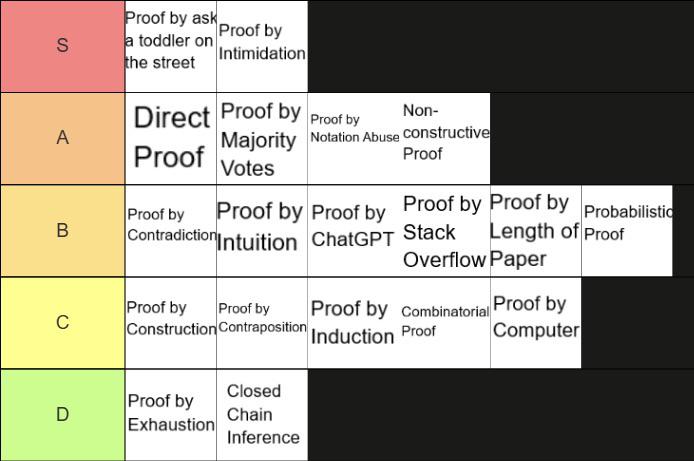
Tier List Of Proof Methods

Tier List Of Proof Methods
Mathematicians ranking their proof techniques like they're competitive Smash Bros characters, and honestly? The chaos is *chef's kiss*. S-tier naturally includes "Proof by asking a toddler on the street" and "Proof by intimidation" because nothing says mathematical rigor like scaring your theorem into submission or consulting a three-year-old's unfiltered wisdom. Meanwhile, "Direct Proof" is chilling in A-tier like it's not literally the foundation of mathematics—apparently being straightforward is overrated. B-tier is where the modern era shines: "Proof by ChatGPT" sitting comfortably next to "Proof by Stack Overflow" because why do the work yourself when the internet hivemind exists? "Proof by Intuition" is there too, which is just fancy talk for "trust me bro, it feels right." Down in D-tier we've got "Proof by Exhaustion" and "Closed Chain Inference"—the methods so tedious that even mathematicians are like "yeah, it works, but at what cost?" Your wrist hurts, your soul is drained, but hey, QED. The real crime? "Proof by Induction" languishing in C-tier when it's literally carrying half of discrete mathematics on its back. Put some respect on the domino effect's name!