
False-positive Memes

Posts tagged with False-positive
I Don't Think I'll Confuse Type I And II Errors Again After This

I Don't Think I'll Confuse Type I And II Errors Again After This
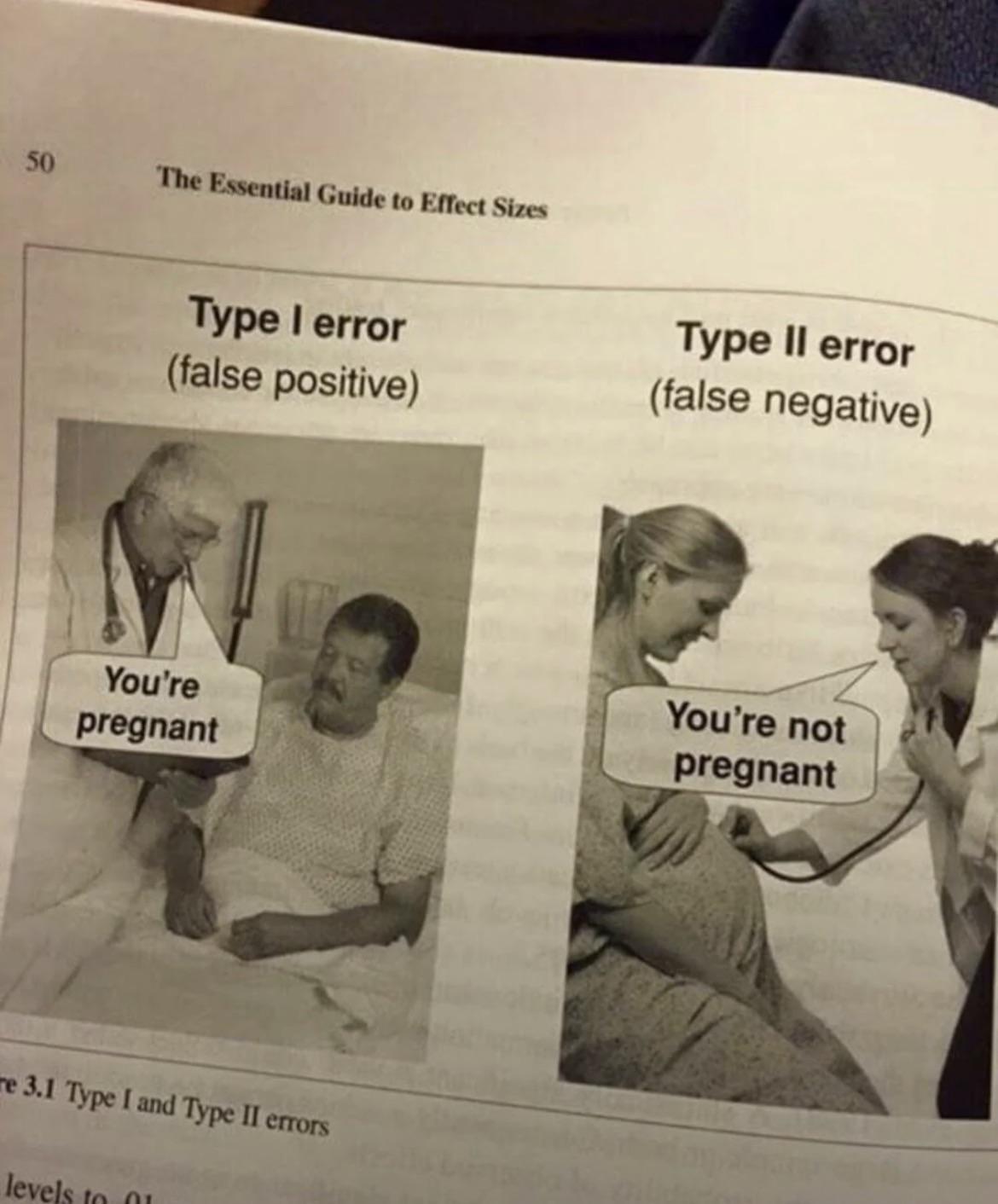
Statistical concepts have never been so... reproductive ! This textbook example brilliantly demonstrates Type I and Type II errors using pregnancy diagnoses. A Type I error (false positive) shows a doctor telling a clearly male patient he's pregnant—rejecting a true null hypothesis when it's actually true. Meanwhile, the Type II error (false negative) shows a doctor telling a visibly pregnant woman she's not pregnant—failing to reject a false null hypothesis. Next time you're struggling with statistics homework, just remember: if your male friend gets a positive pregnancy test, you've got yourself a classic Type I error. The p-value is probably as confused as that poor man's face!

The Four Stages Of Scientific Discovery

The Four Stages Of Scientific Discovery
The scientific method in four panels! First, you notice a tiny difference in your data and think "that's interesting." Second panel: "Hmm, could be something." Third panel: "HOLY CRAP IT'S STATISTICALLY SIGNIFICANT!" And finally, the crushing disappointment when you realize it was just an artifact of your measurement technique. The emotional rollercoaster of research compressed into one Gru meme—from excitement to despair faster than peer reviewers can say "insufficient sample size."

What Are The Odds? They're Actually In Your Favor!

What Are The Odds? They're Actually In Your Favor!
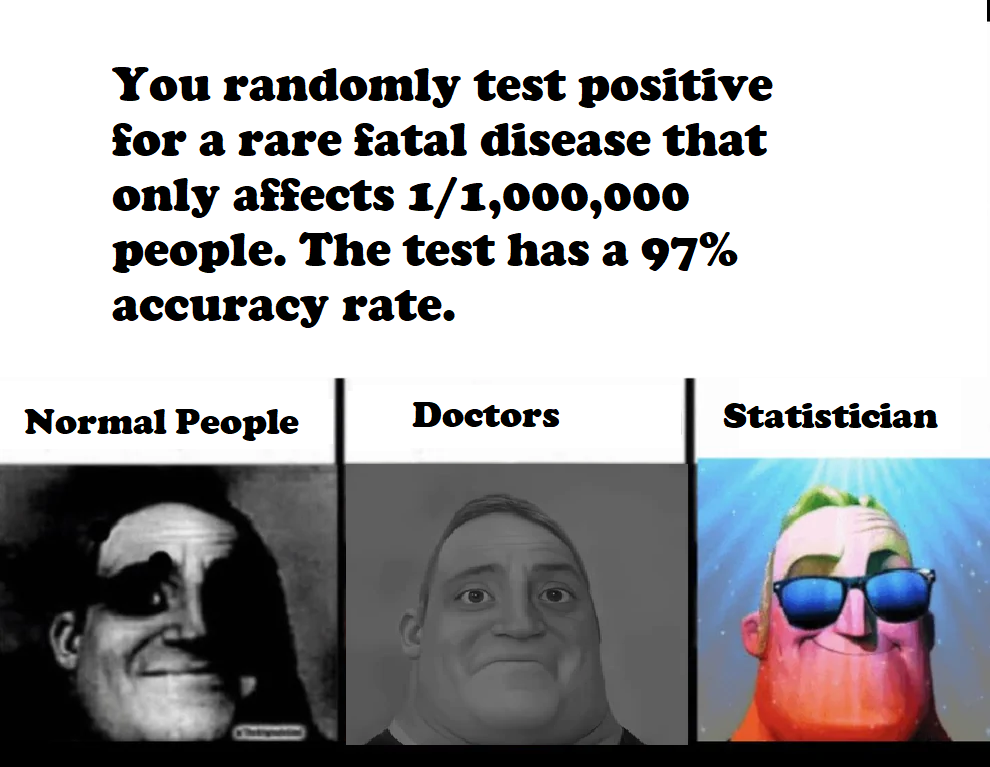
The statistician is smugly grinning because they know something the others don't—Bayes' Theorem just crashed the panic party! With a disease prevalence of 1/1,000,000 and a test that's 97% accurate, your chances of actually having the disease are microscopic. Even with a positive test, there's a 99.997% chance you're perfectly fine! The false positive rate absolutely demolishes the actual disease probability. This is why statisticians roll their eyes when doctors freak out over rare disease test results without considering the base rate fallacy. Numbers don't lie, but they sure can be misleading without proper statistical context!