

Carbon Memes

Posts tagged with Carbon

Always These Three

Always These Three
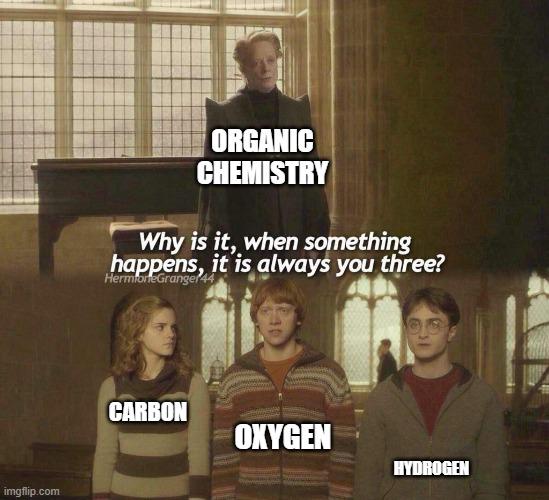
Organic chemistry calling out its favorite trio for causing all the drama. Carbon, hydrogen, and oxygen are basically the Hermione, Ron, and Harry of chemistry—wherever there's a reaction happening, you can bet these three are involved. From alcohols to carboxylic acids to sugars to literally every biomolecule, it's always the same suspects. Meanwhile, nitrogen is somewhere in the background feeling left out (but still shows up in amines and amino acids when needed). The meme perfectly captures how organic chemistry is essentially just watching these three elements rearrange themselves in increasingly creative ways while pretending each new combination is a completely different molecule. Spoiler alert: it's still just CHO doing their thing.

A Skeleton Is A Skeleton

A Skeleton Is A Skeleton
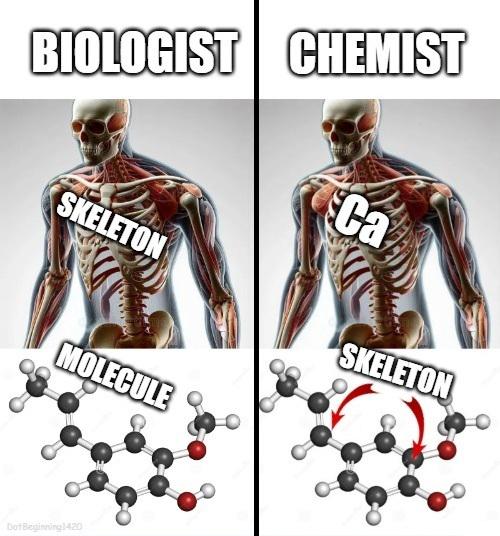
Here we have the fundamental philosophical divide between two scientific tribes. The biologist looks at a molecular structure and sees a beautiful skeleton—the carbon backbone that forms the framework of organic molecules. Meanwhile, the chemist looks at the exact same thing and just sees... Ca. Calcium. The literal skeletal element. It's like watching two people speak completely different languages while staring at the same picture. Biologists are out here getting poetic about carbon chains and molecular architecture, while chemists are like "yeah cool story bro, but that's just calcium doing calcium things in your bones." The real kicker? They're both right, which somehow makes it even funnier. One discipline named the concept after the structure, the other is just being painfully literal about what bones are actually made of. Classic interdisciplinary communication breakdown right there.

Carbon Rules Supreme

Carbon Rules Supreme
Exobiologists (scientists who study the possibility of life beyond Earth) are basically the carbon-based life fan club, and they get VERY defensive when anyone suggests silicon could be a viable alternative. The joke here is that when someone brings up silicon-based life forms as a theoretical possibility, exobiologists immediately shut it down with the enthusiasm of someone explaining why sand is terrible. Silicon sits right below carbon on the periodic table and can form four bonds just like carbon, which is why sci-fi writers love it. But here's the thing: silicon bonds are weaker, silicon dioxide is a solid (aka sand/glass) instead of a gas like CO₂, and silicon just doesn't have carbon's chemical flexibility. So while theoretically possible under wildly different conditions, carbon remains the undisputed champion of biochemistry. The exobiologist's reaction is basically: "Sure, let me tell you exactly why your silicon dreams will crumble into... well, sand." Carbon supremacy forever! 💎

What Is The Largest Kingdom By Biomass?

What Is The Largest Kingdom By Biomass?
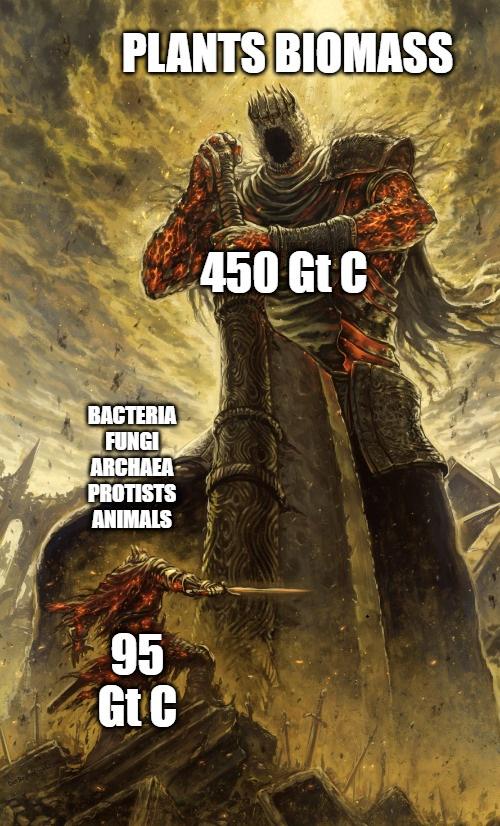
Plants really said "I'm about to end this man's whole career" and then dominated Earth's biomass for 450 million years straight. With approximately 450 gigatons of carbon, plant biomass absolutely dwarfs everything else on the planet. Meanwhile, bacteria, fungi, archaea, protists, and animals combined clock in at a measly 95 gigatons of carbon—getting absolutely bodied by our photosynthesizing overlords. The visual of plants as some godlike titan casually crushing all other kingdoms is *chef's kiss* accurate. Sure, bacteria are everywhere and outnumber us by astronomical margins, but when it comes to sheer mass? Plants are the heavyweight champions. Trees alone carry most of that weight—literally just standing there, being massive, converting CO₂ into cellulose like it's no big deal. Fun fact: humans represent only about 0.06 gigatons of that 95 Gt C total, meaning we're basically a rounding error in Earth's biomass spreadsheet. Humbling, isn't it?

Awfullerenes

Awfullerenes
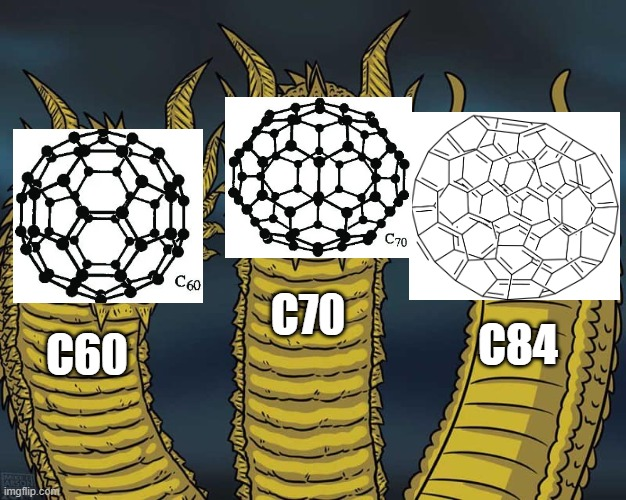
So C60 is the beautiful buckminsterfullerene—a perfect soccer ball of carbon that won a Nobel Prize and made chemists weep with joy. C70 is the slightly elongated rugby ball version, still elegant and symmetric. Then there's C84, which looks like someone tried to assemble IKEA furniture after three beers. The molecular structure becomes increasingly chaotic and asymmetric as you add more carbon atoms, hence the "awfullerenes" label. It's like watching molecular beauty standards deteriorate in real time. Fun fact: there are actually multiple isomers of C84, each more cursed than the last, because apparently nature ran out of good ideas after C70.

Elements Moral Alignment

Elements Moral Alignment
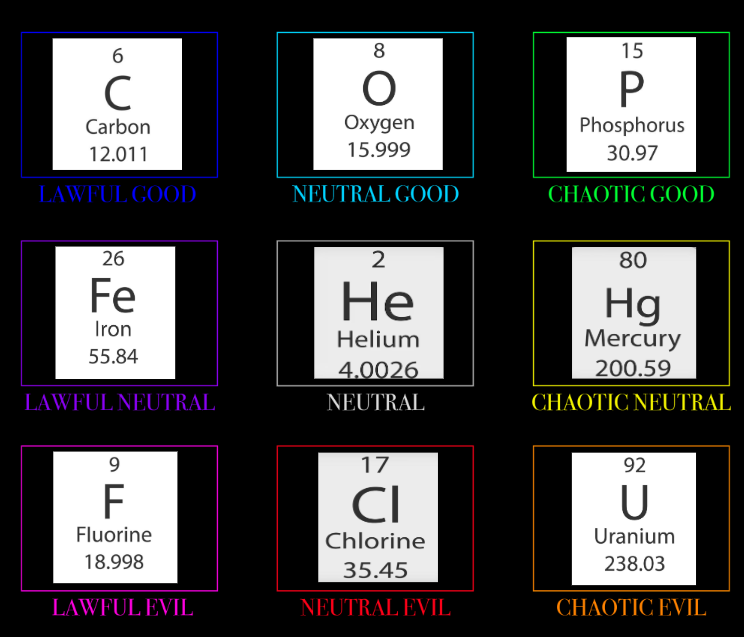
Someone took the classic D&D alignment chart and applied it to the periodic table, and honestly? It's surprisingly accurate. Carbon is Lawful Good because it's literally the foundation of all life and plays by the rules of organic chemistry. Oxygen gets Neutral Good status—essential for life but will absolutely help fires burn everything down. Phosphorus earns Chaotic Good because while it's crucial for DNA and ATP, it also spontaneously combusts and was used to make matches and incendiary weapons. Iron is Lawful Neutral —just doing its job in hemoglobin and construction without drama. Helium is pure Neutral , refusing to react with literally anything (noble gas energy). Mercury gets Chaotic Neutral because it's the only metal that's liquid at room temperature and was historically used in everything from thermometers to mad hatters. Fluorine is Lawful Evil —the most electronegative element that will rip electrons from almost anything in its path, but at least it's predictable about it. Chlorine is Neutral Evil (poison gas, anyone?). And Uranium? Chaotic Evil all the way—radioactive, unstable, and capable of leveling cities. This is what happens when chemistry nerds play too much D&D, and I'm here for it.

Oxygen's Identity Crisis

Oxygen's Identity Crisis
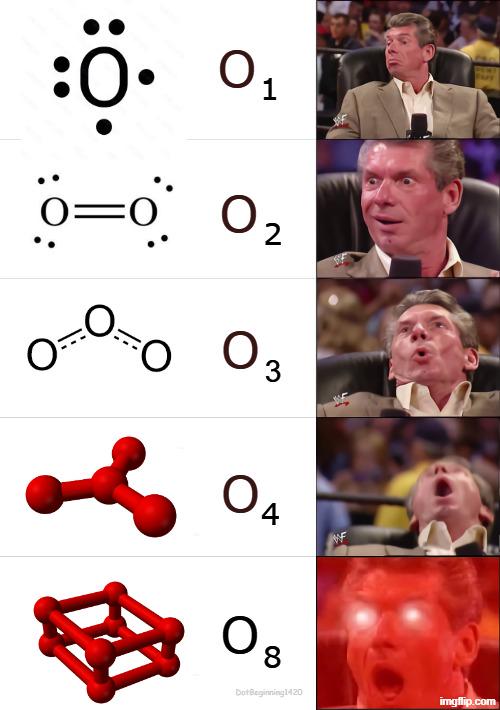
Chemistry nerds unite! The progression from O₁ to O₈ is like oxygen's desperate attempt to be as cool as carbon! Single oxygen atom? Boring. O₂ molecule that we breathe? Getting better. Ozone (O₃)? Now we're talking! But that O₄ structure? Oxygen is clearly trying harder. Then BAM - O₈ appears with its fancy cubic structure and oxygen is officially having an identity crisis! The real joke? While carbon effortlessly forms diamonds, graphene, and basically the foundation of all life, oxygen is over here desperately trying different configurations like it's speed-dating molecular structures! 💯 It's the elemental equivalent of copying your classmate's homework but making it progressively more obvious with each attempt!

Oxygen's Identity Crisis: Carbon Cosplay Edition

Oxygen's Identity Crisis: Carbon Cosplay Edition
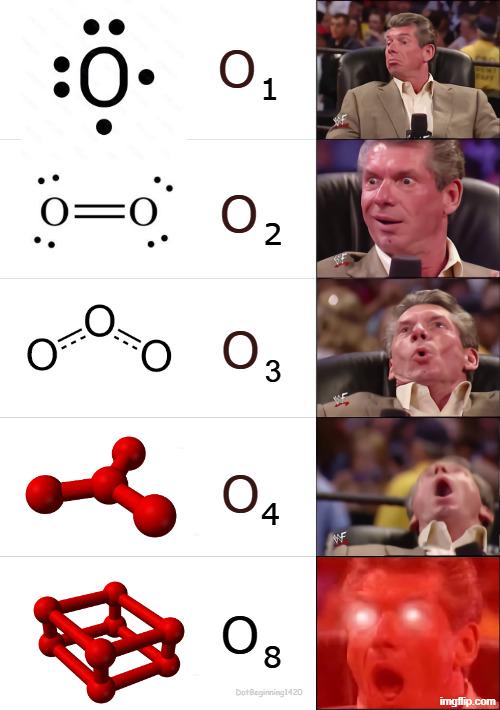
Oxygen is having an identity crisis! The meme shows oxygen's increasingly elaborate forms - from single atom O₁, to O₂ (what we breathe), to ozone O₃, to the less common O₄, until it goes FULL CARBON with that cubic O₈ structure! 😱 That last one is blowing minds because oxygen is basically copying carbon's cubic structure (like diamond). It's the chemical equivalent of your friend stealing your whole personality and pretending it was their idea all along! Fun fact: While O₂ keeps us alive and O₃ protects us from UV rays, that O₈ structure is super unstable and would probably explode if you looked at it wrong. Oxygen's midlife crisis is literally explosive!

Carbon's Promiscuous Chemical Lifestyle

Carbon's Promiscuous Chemical Lifestyle
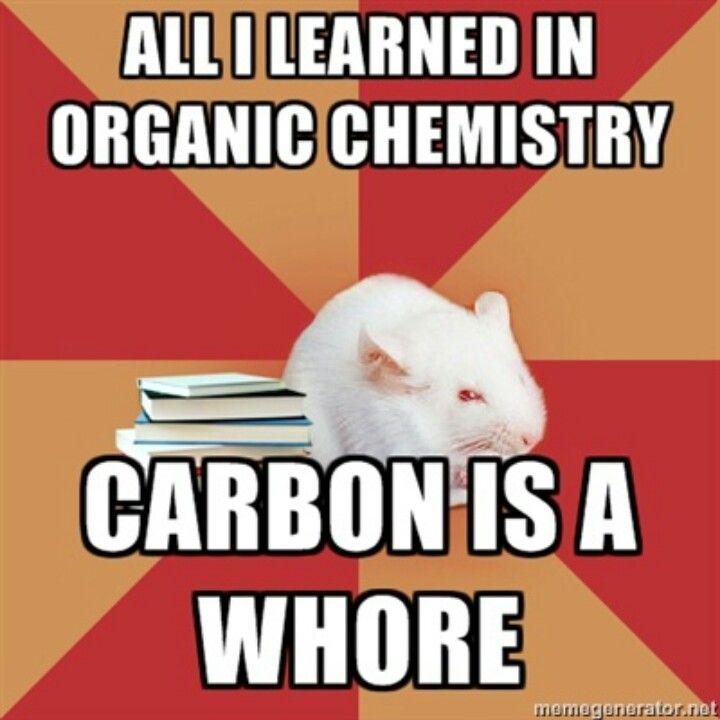
Carbon really gets around! The ultimate player in the molecular dating scene, forming bonds with practically ANYONE. While other elements are picky, carbon's out there making chains, rings, and all sorts of wild structures with up to four partners at once! No wonder organic chemistry students are traumatized - they're basically just documenting carbon's scandalous love life across thousands of compounds. That lab notebook? More like carbon's little black book!

The Chemical Structure Of Human Relationships

The Chemical Structure Of Human Relationships
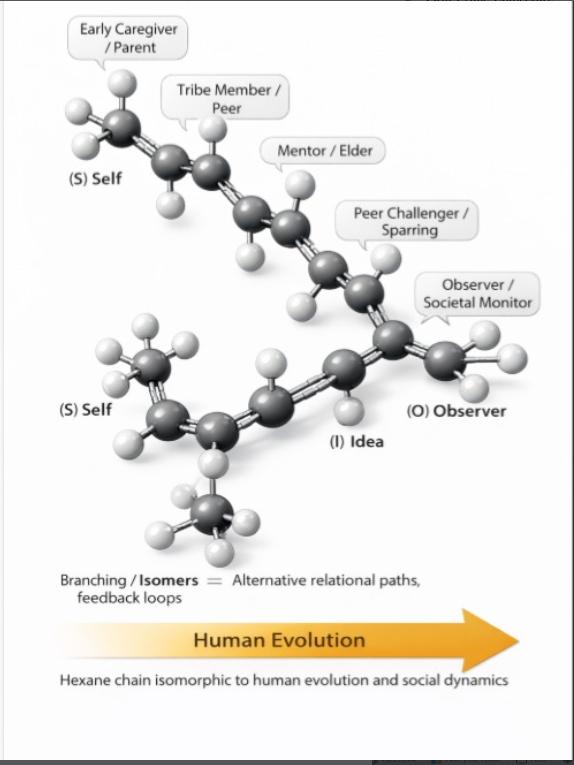
Whoever created this masterpiece deserves both a Nobel Prize and therapy. They've cleverly mapped human relationships onto a hexane molecule, suggesting our social evolution follows the same structural patterns as carbon chains. The parent bond at one end, the observer at another—it's almost poetic if it weren't so nerdy. Chemistry students will recognize hexane's structure while psychology majors will nod knowingly at the social dynamics. It's what happens when you let someone with too many degrees and not enough friends loose in Photoshop. The real question: is your relationship with your mentor a single or double bond? Choose wisely—one is significantly harder to break.

When Math Meets Chemistry, Death Ensues

When Math Meets Chemistry, Death Ensues
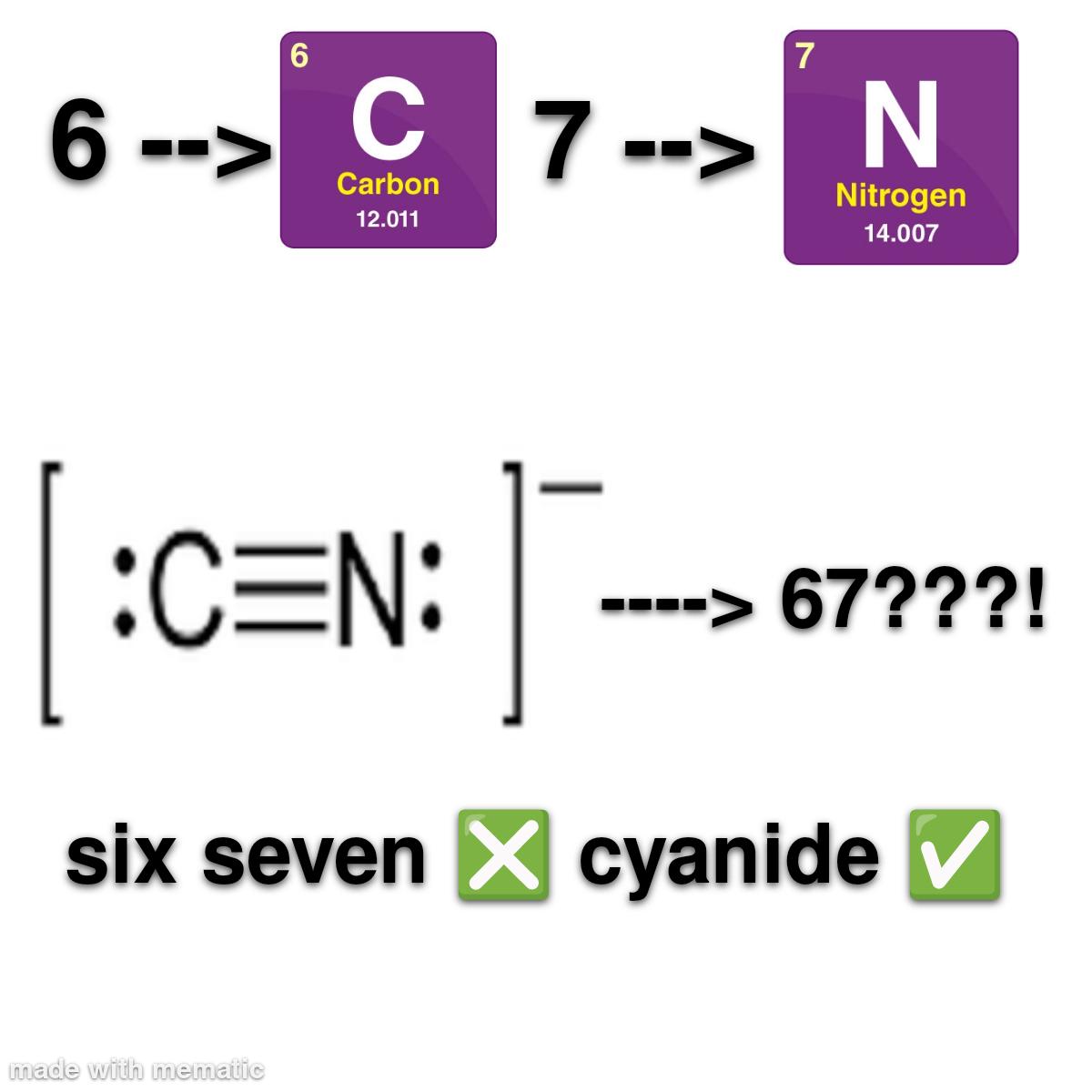
When chemistry puns attack! The meme plays with the idea that if 6 gives you Carbon (atomic number 6) and 7 gives you Nitrogen (atomic number 7), then the cyanide ion [C≡N] - should logically give you... 67? Nope! Just deadly poison. Chemistry humor at its finest - where incorrect addition might not just fail your exam but also end your experiment permanently. The periodic table: where math mistakes can be either harmless or fatal, with very little in between.

Ok, Just Hear Me Out...

Ok, Just Hear Me Out...
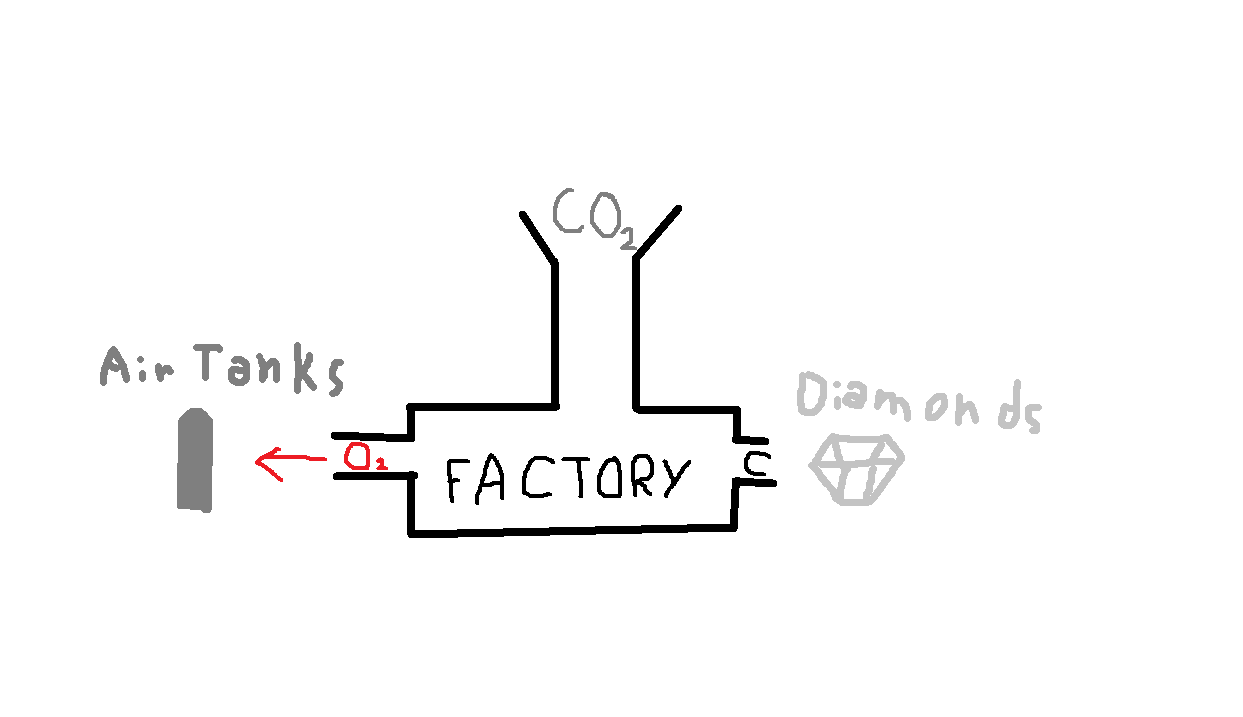
Ever had that wild moment where you realize we could solve TWO global problems at once? This genius sketch proposes the ultimate recycling hack - a factory that takes in CO₂ emissions, extracts oxygen for air tanks, and somehow magically produces diamonds on the other side! It's basically the scientific equivalent of turning your trash into treasure! Carbon under extreme pressure does form diamonds, but this "simple" solution might need a few trillion dollars and several laws of thermodynamics to bend over backward first. Still, points for creativity!