

Biology Memes

Posts tagged with Biology
The Most Energy Consuming Organ Is

The Most Energy Consuming Organ Is
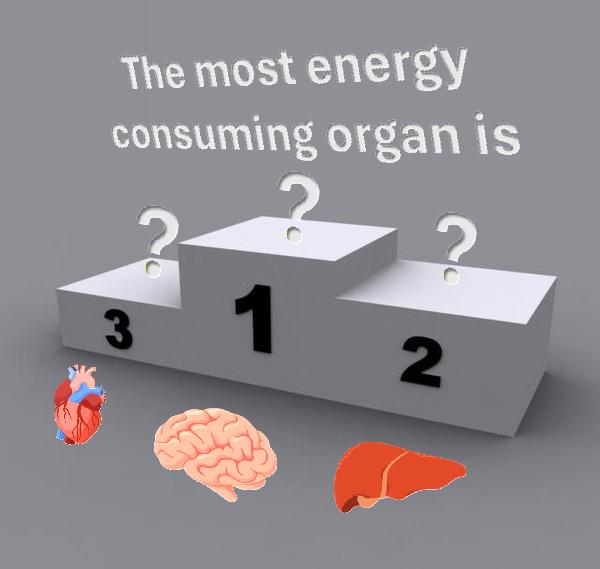
Plot twist: your brain is literally eating 20% of your body's total energy budget while only being 2% of your body weight. That's right—your squishy thinking machine is an absolute energy GUZZLER, burning through glucose like it's going out of style just to keep you scrolling through memes. The heart's working overtime pumping blood 24/7 without breaks (respect), and the liver's out here doing like 500 different metabolic jobs at once, but neither can compete with the brain's ridiculous caloric demands. Your neurons are firing constantly, maintaining ion gradients, synthesizing neurotransmitters, and apparently using all that energy to wonder why you walked into a room. So next time someone calls you a "big brain," just know they're technically calling you an inefficient energy hog. You're welcome! 🧠⚡

Cellular Chuds

Cellular Chuds
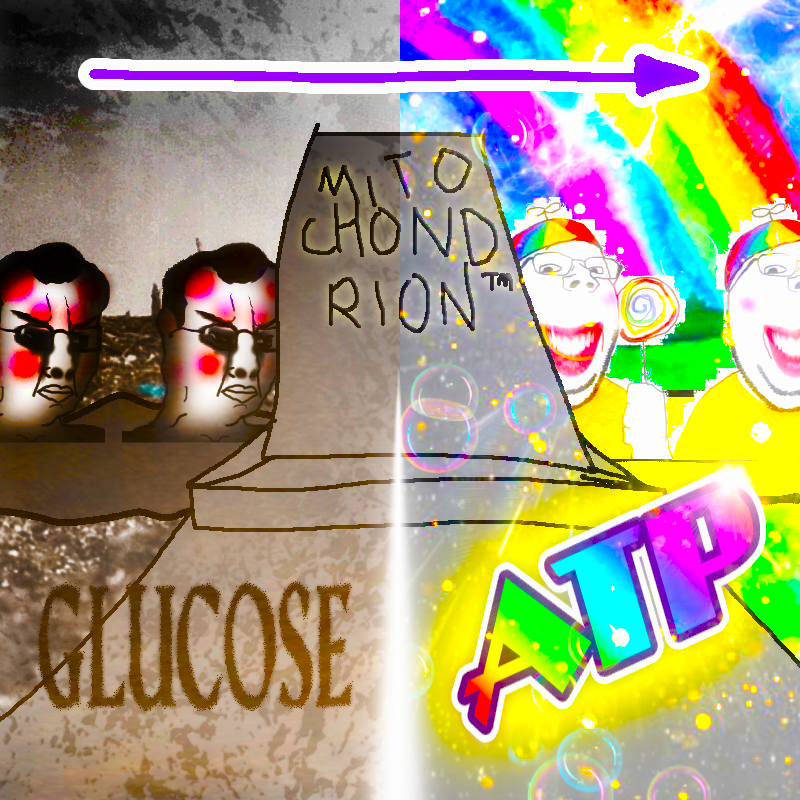
So glucose gets the sad, grainy, depressing aesthetic while mitochondria gets the full rainbow explosion treatment? Sounds about right. Glucose is basically just the delivery guy who shows up at your cellular doorstep, but the mitochondria? That's where the REAL party happens – the powerhouse converting that boring sugar into sweet, sweet ATP energy. The mitochondria literally transforms glucose's dull existence into pure cellular fireworks. It's like comparing the accountant who processes your paycheck to you actually spending that money on something fun. One's necessary but kinda bland, the other makes life worth living! Your cells know what's up.

A Skeleton Is A Skeleton

A Skeleton Is A Skeleton
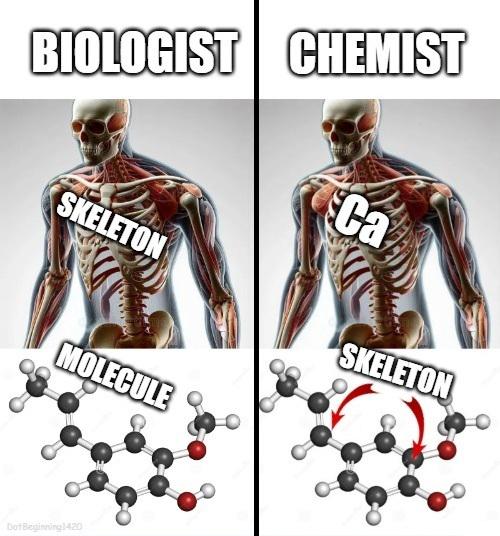
Here we have the fundamental philosophical divide between two scientific tribes. The biologist looks at a molecular structure and sees a beautiful skeleton—the carbon backbone that forms the framework of organic molecules. Meanwhile, the chemist looks at the exact same thing and just sees... Ca. Calcium. The literal skeletal element. It's like watching two people speak completely different languages while staring at the same picture. Biologists are out here getting poetic about carbon chains and molecular architecture, while chemists are like "yeah cool story bro, but that's just calcium doing calcium things in your bones." The real kicker? They're both right, which somehow makes it even funnier. One discipline named the concept after the structure, the other is just being painfully literal about what bones are actually made of. Classic interdisciplinary communication breakdown right there.

How Other STEM Majors Usually Use Their Hands Vs. Biology Majors 💀

How Other STEM Majors Usually Use Their Hands Vs. Biology Majors 💀
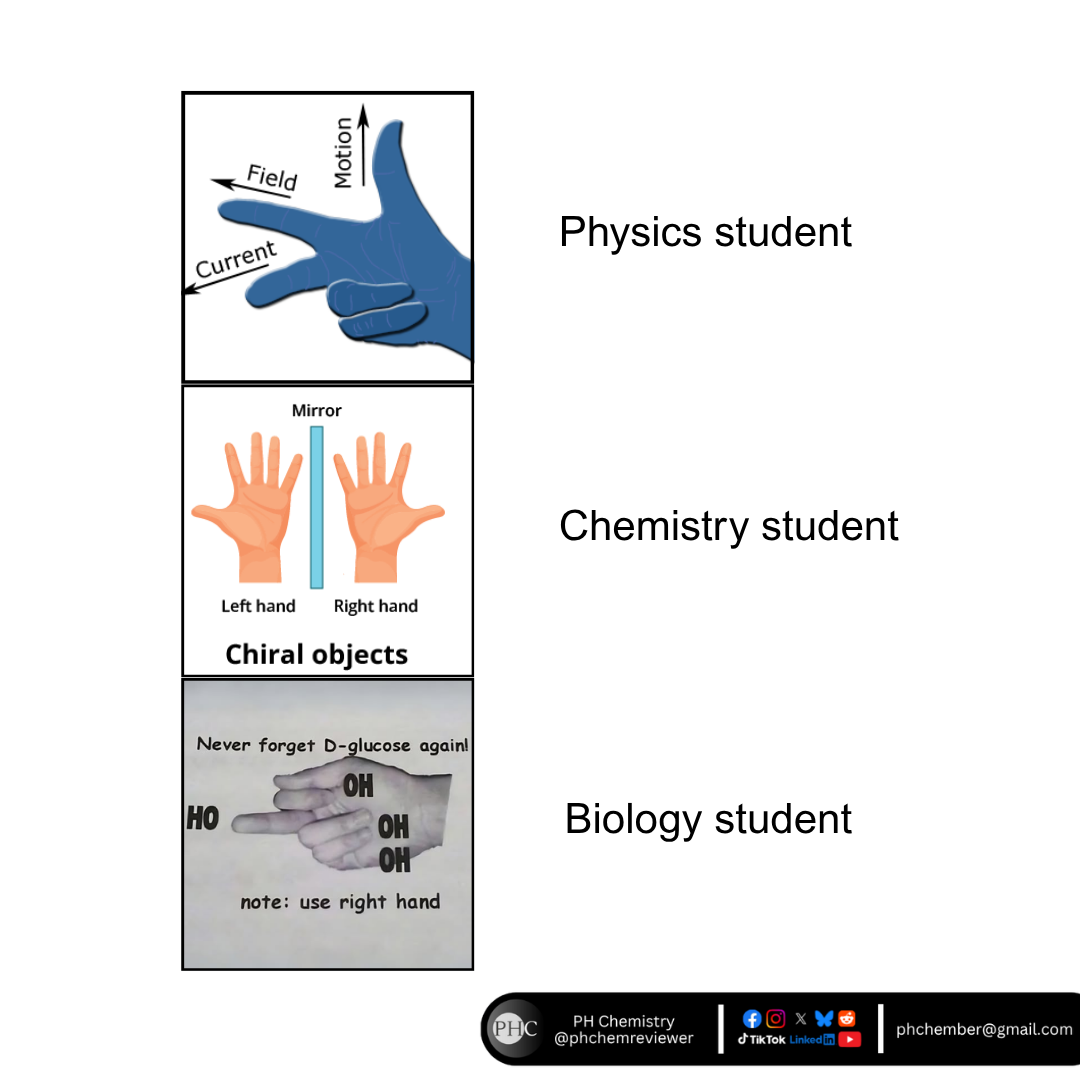
Physics students using the right-hand rule to figure out magnetic fields and current directions, chemistry students using their hands as mirror images to determine chirality... and then there's biology students literally turning their hand into a D-glucose molecule mnemonic device. The dedication to memorizing every single hydroxyl group position on that six-carbon sugar ring is REAL. While physics and chemistry students are out here doing elegant hand gestures for fundamental principles, biology majors are basically tattooing organic chemistry onto their fingers because there's no way anyone's remembering whether it's D-glucose or L-glucose without this hand trick. Fun fact: D-glucose (dextrose) is the most abundant monosaccharide in nature and the primary energy source for your cells right now. Your brain alone burns through about 120 grams of it daily. So yeah, biology students better not forget which way those OH groups point!

Are Eggs Classified As Blended Chickens?

Are Eggs Classified As Blended Chickens?
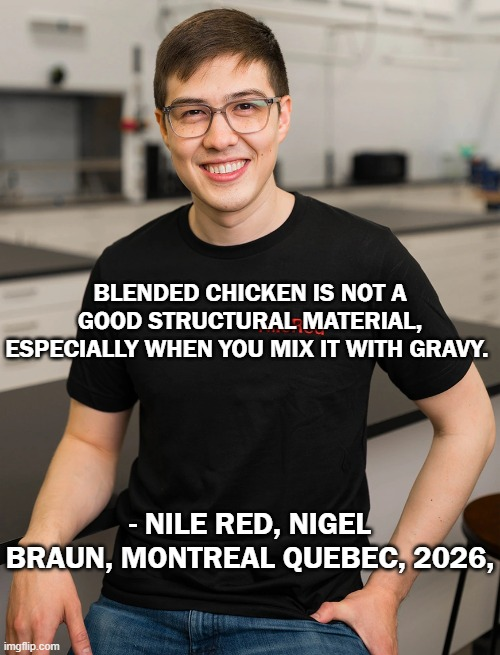
Someone out there is really asking the hard-hitting questions about whether eggs count as "blended chickens," and honestly? The engineering critique here is *chef's kiss*. Turns out blended chicken makes for terrible structural material, especially when you add gravy to the mix. Who knew that liquefied poultry doesn't have the load-bearing capacity needed for construction projects? For the record, eggs are unfertilized chicken ova - basically just chicken periods in a shell. They're not blended chickens any more than your morning orange juice is a blended orange tree. But let's be real, the mental image of someone trying to build a bridge out of chicken smoothie is absolutely sending me. The structural integrity would be... questionable at best. Props to Nile Red and Nigel Braun for this future wisdom from 2026. Can't wait to see what other groundbreaking materials science discoveries await us.

Checkmate Evolutionists /S

Checkmate Evolutionists /S
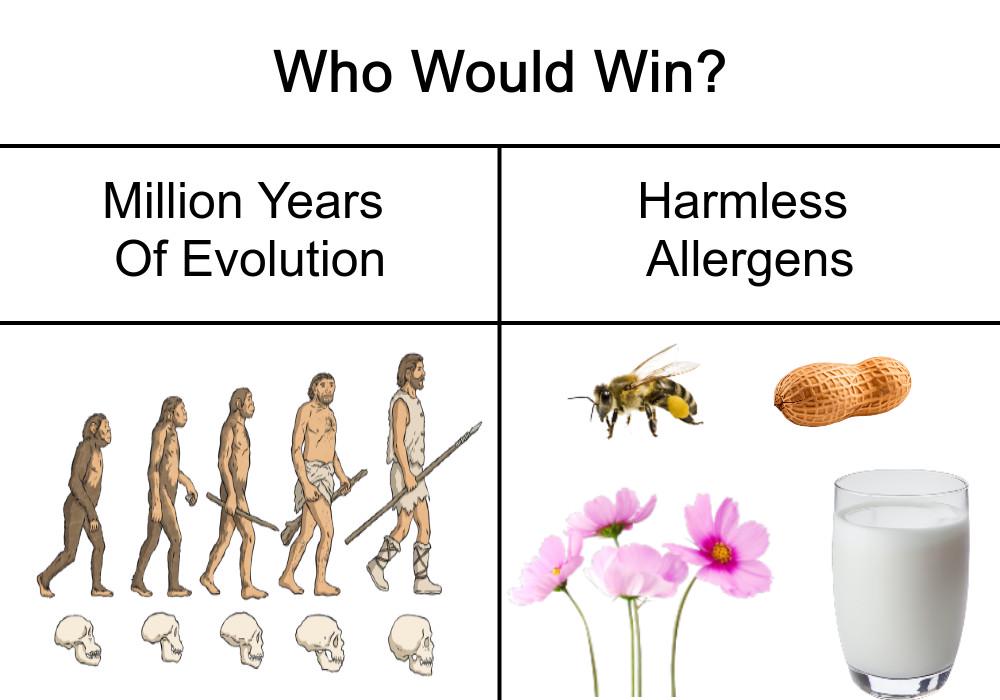
So evolution spent millions of years perfecting humans through natural selection, survival of the fittest, adapting to countless environmental pressures... only for us to get absolutely wrecked by a fuzzy bee, a legume, some flowers, and a glass of cow juice. The irony is *chef's kiss*. We survived ice ages, predators, and plagues, but a single peanut at a birthday party can send someone to the ER faster than you can say "EpiPen." The real kicker? Allergies are basically our immune system being an overachieving drama queen, mistaking harmless proteins for existential threats. Thanks, evolution, for giving us big brains and opposable thumbs but also the ability to die from touching a cashew. Really nailed the quality control on that one.

What Is The Largest Kingdom By Biomass?

What Is The Largest Kingdom By Biomass?
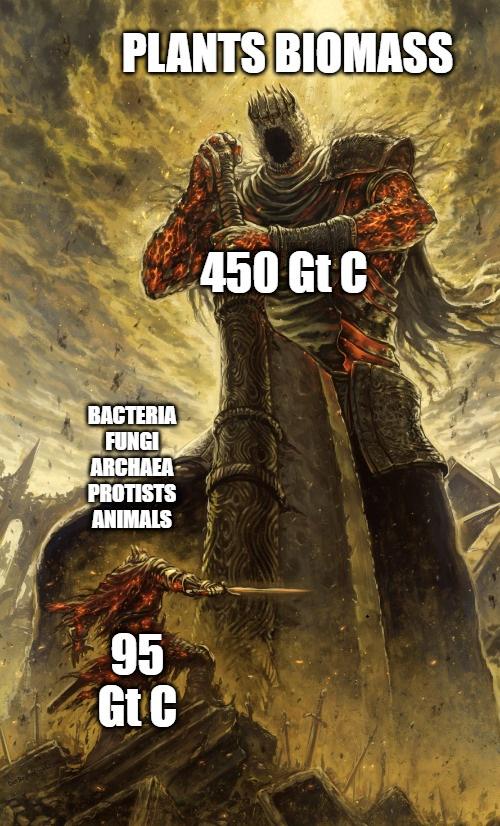
Plants really said "I'm about to end this man's whole career" and then dominated Earth's biomass for 450 million years straight. With approximately 450 gigatons of carbon, plant biomass absolutely dwarfs everything else on the planet. Meanwhile, bacteria, fungi, archaea, protists, and animals combined clock in at a measly 95 gigatons of carbon—getting absolutely bodied by our photosynthesizing overlords. The visual of plants as some godlike titan casually crushing all other kingdoms is *chef's kiss* accurate. Sure, bacteria are everywhere and outnumber us by astronomical margins, but when it comes to sheer mass? Plants are the heavyweight champions. Trees alone carry most of that weight—literally just standing there, being massive, converting CO₂ into cellulose like it's no big deal. Fun fact: humans represent only about 0.06 gigatons of that 95 Gt C total, meaning we're basically a rounding error in Earth's biomass spreadsheet. Humbling, isn't it?

Stay Hydrated!

Stay Hydrated!
You leave your water bottle out for like 2.5 seconds and suddenly it's a thriving ecosystem! Mold, mildew, and algae are basically the opportunistic roommates nobody asked for, just waiting for the tiniest bit of moisture to throw their welcome party. They're like "Oh, you got wet? Perfect, we've been WAITING for this moment our entire spore lives!" The VeggieTales format really captures their smug energy—these organisms are SO ready to colonize any damp surface. Fun fact: mold can start growing on wet materials within 24-48 hours, which explains why your forgotten gym towel becomes a biohazard so quickly. Nature really said "waste not, want not" and gave us these moisture-loving decomposers who are just a little TOO good at their jobs.

Carnivorous Plants

Carnivorous Plants
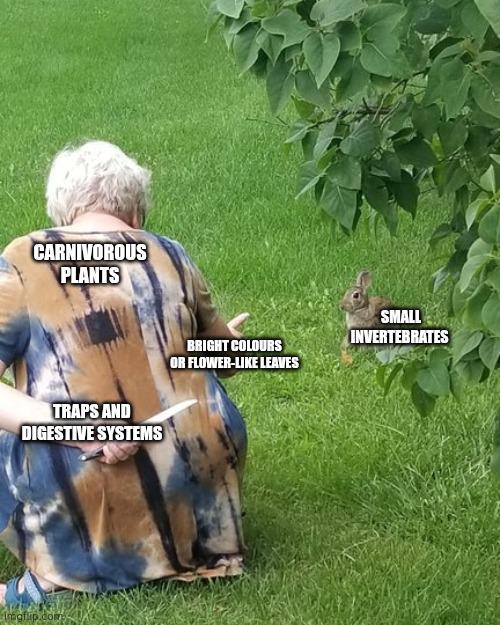
So carnivorous plants really went all out with the evolutionary bells and whistles—complex trapping mechanisms, enzymes that can dissolve chitin, modified leaves that look like something from a horror movie—and then they're out here hunting fruit flies and gnats. Meanwhile, they're completely ignoring the obvious stuff that makes them plants: pretty colors and flower-like structures to attract prey. It's like building a submarine with laser cannons and then using it exclusively to catch minnows. The resource allocation here is genuinely baffling from an efficiency standpoint, but I guess when you evolve in nutrient-poor soil, you work with what you've got.

Cells Be Like

Cells Be Like
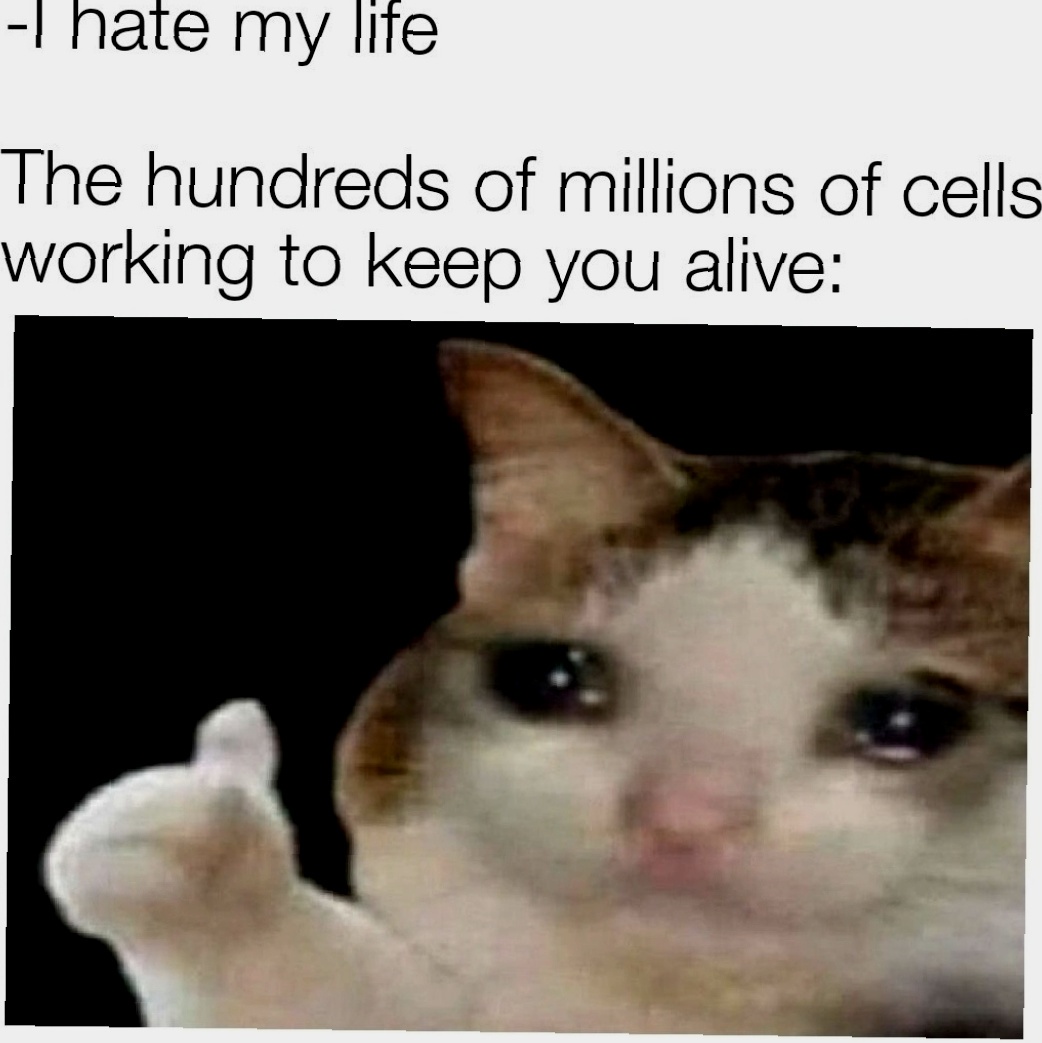
Your body is literally a microscopic workforce of trillions of cells doing 24/7 overtime—respiring, dividing, fighting pathogens, synthesizing proteins—just to keep your ungrateful self scrolling through memes at 2 AM. Meanwhile, you're up there complaining about your existence while they're down there giving you a literal thumbs up like "we got you, fam." The irony is beautiful: your cells are the ultimate team players, coordinating complex biochemical pathways without a single complaint, while you're out here having existential crises. They're pumping ions, maintaining homeostasis, and repairing DNA damage caused by your poor life choices, all while being absolute champs about it. Fun fact: The human body contains roughly 37.2 trillion cells, and every second, about 25 million of them are dividing to replace the ones that die. That's some serious dedication to keeping your depressed self functional.

Pyruvate? Acetyl-CoA? My Brain Left The Chat

Pyruvate? Acetyl-CoA? My Brain Left The Chat
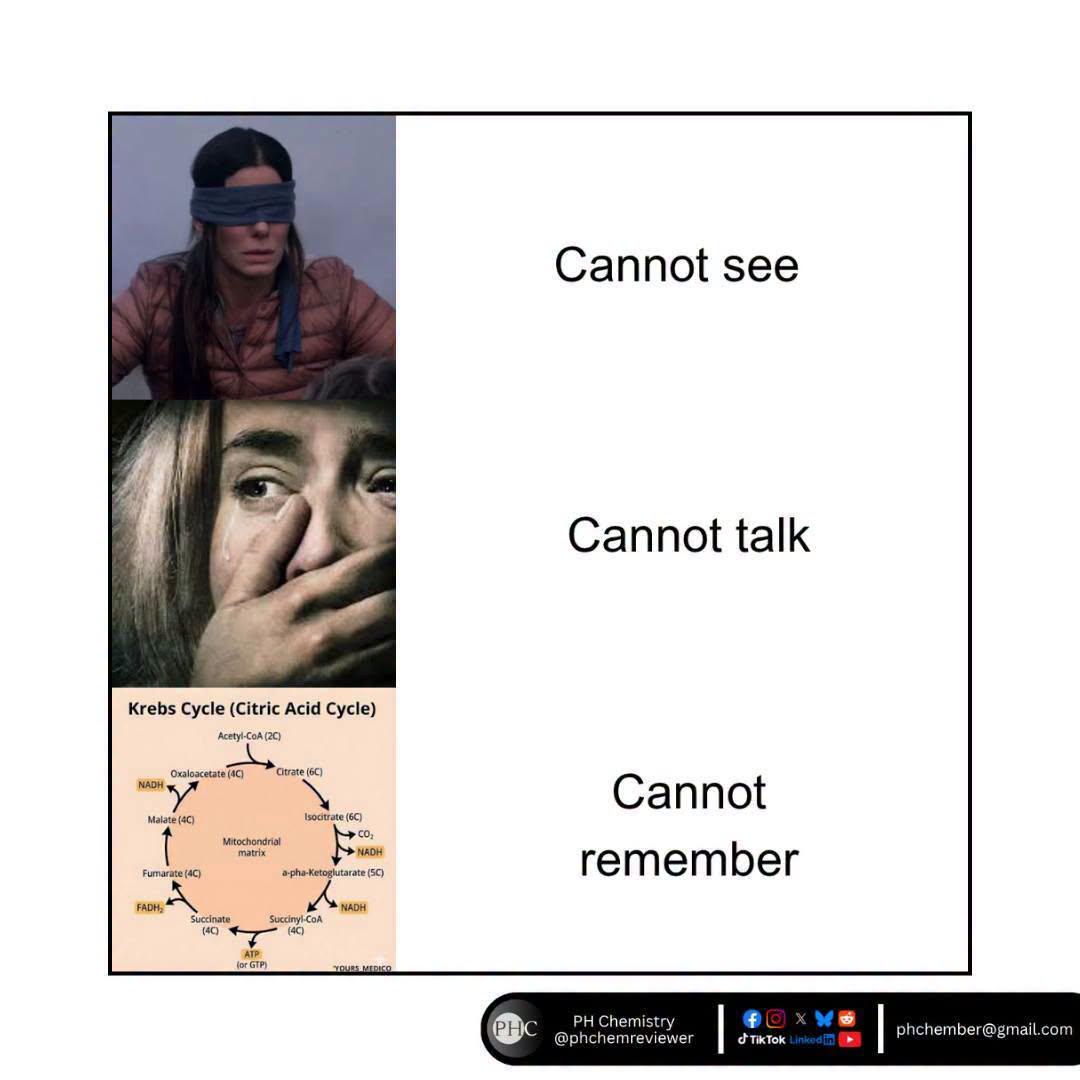
The Krebs Cycle is that one biochemistry topic that makes every biology student question their life choices. You walk into the exam thinking you've got it down, but the second you see that circular nightmare with its eight steps, multiple enzymes, and random molecules like α-ketoglutarate, your brain just... nopes out. Cannot see the logic. Cannot talk through the steps. Cannot remember if FADH₂ comes before or after succinyl-CoA. It's the metabolic pathway equivalent of trying to remember everyone's names at a party where they all look the same and keep changing positions. Sure, it's "just" cellular respiration—the thing keeping you alive—but memorizing it feels like your neurons are running on fumes instead of ATP.

Adding The Additive Identity To Any Number Doesn't Change It. Is He Stupid?

Adding The Additive Identity To Any Number Doesn't Change It. Is He Stupid?
Someone just asked the most mathematically pointless question ever: "You get to add 1 zero to any number in your life, what would you choose and why?" The response? "please dont do your worst." Too late. Someone added zero to the number of mosquitoes and now there are 10 quadrillion of them. Here's the beautiful irony: adding zero to ANY number doesn't change it at all—that's literally the definition of the additive identity! Zero is the mathematical equivalent of doing absolutely nothing. But adding a zero DIGIT to the end of a number? That multiplies it by 10. So instead of adding zero (which does nothing), they're adding a zero digit, which creates an apocalyptic swarm of bloodsuckers that would drain all human blood in approximately 3 seconds. The title perfectly captures the confusion between the additive identity property (x + 0 = x) and the act of appending a zero digit. Math pedantry meets existential mosquito dread. Chef's kiss. 🦟