
Mole Memes

Posts tagged with Mole
But That's Right, No?

But That's Right, No?
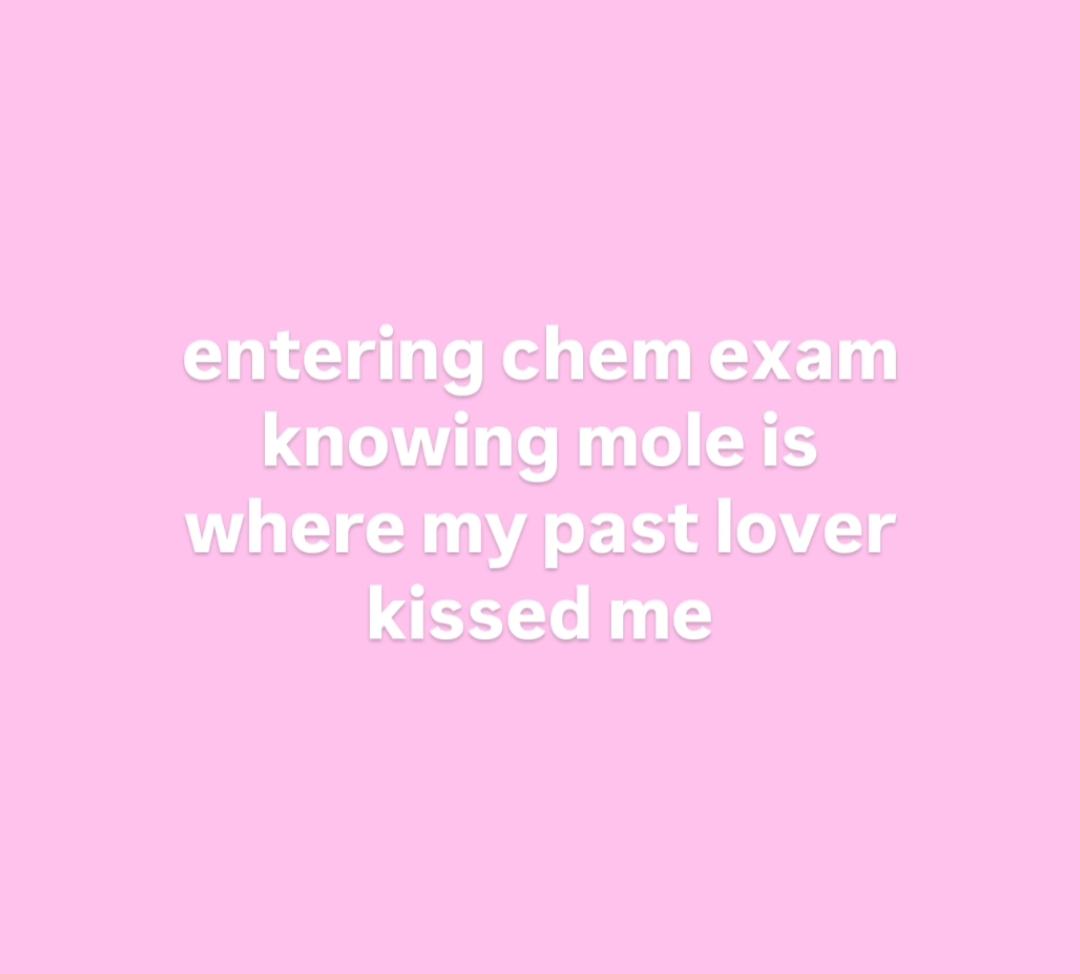
The beautiful confusion of chemistry students everywhere! In chemistry, a "mole" is a fundamental unit (6.022 × 10²³ particles) that haunts the dreams of every student. Meanwhile, this poor soul is sitting there thinking about skin moles and romantic encounters. The confidence with which they're ready to answer "where's a mole?" with anatomical precision is both hilarious and tragically wrong. This is exactly why chemists shouldn't date—we can't even agree on what a "mole" is without bringing Avogadro's number into it.

Always Use Metric Units

Always Use Metric Units
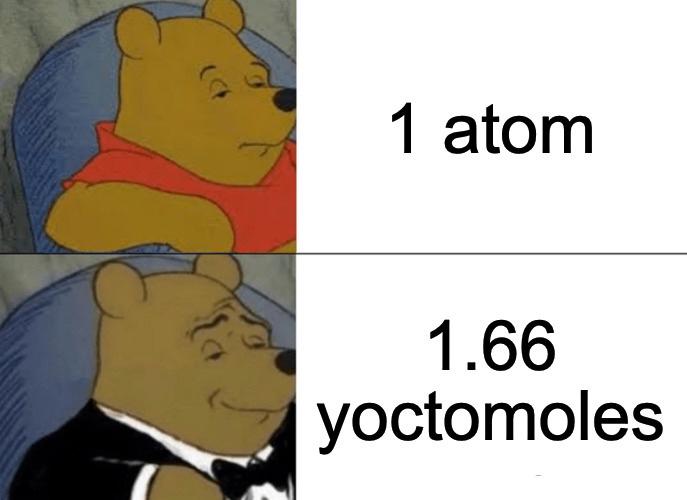
The sophisticated bear knows that saying "1 atom" is for amateurs. Real scientists express it as "1.66 yoctomoles" because nothing says "I have a PhD" quite like using the most obscure SI unit possible. This is the scientific equivalent of ordering coffee in Italian at Starbucks when everyone else just points and says "that one."

The Original Chemistry Influencer

The Original Chemistry Influencer
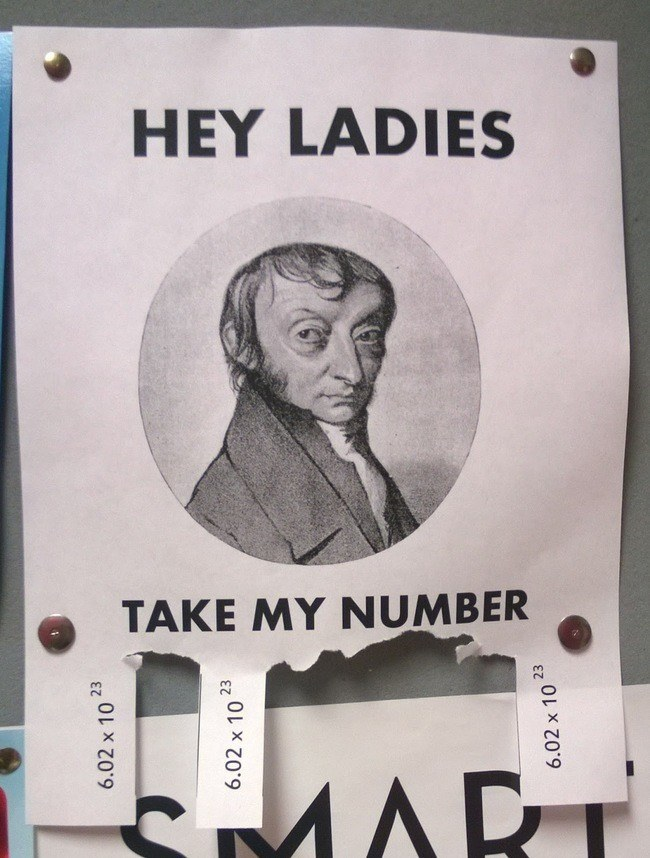
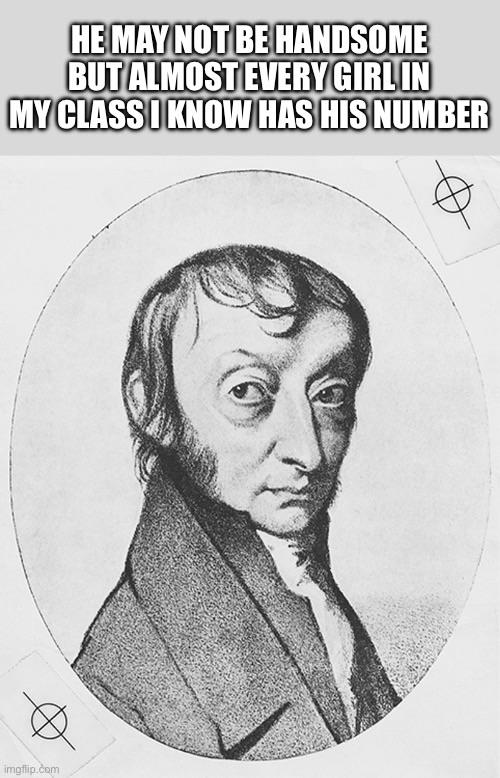
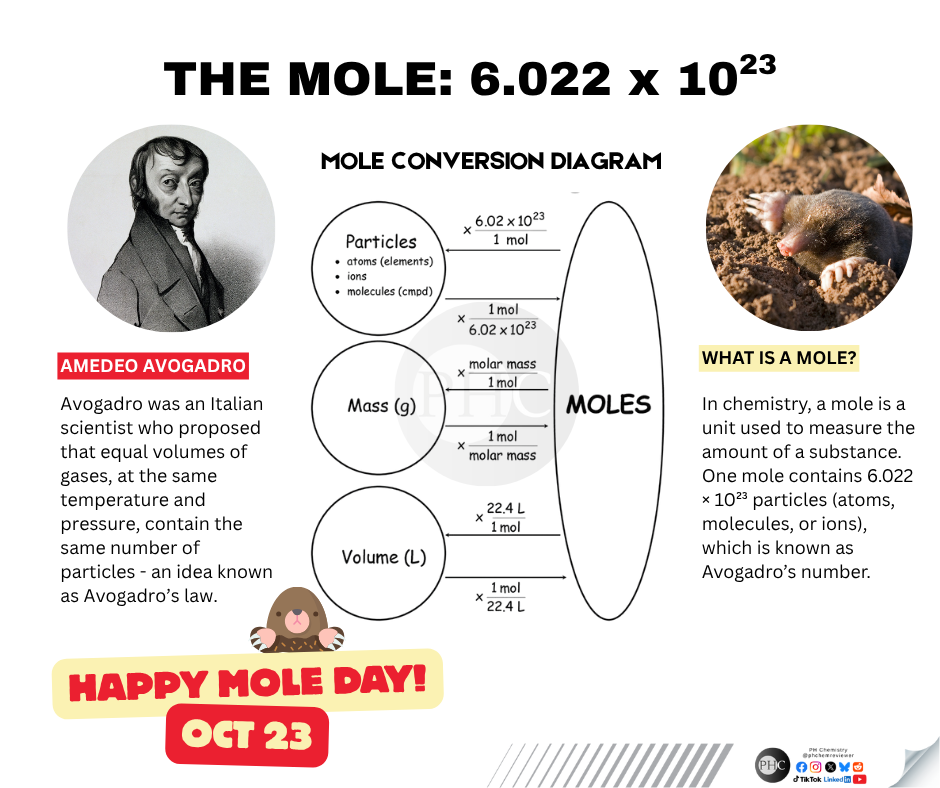
The original chemistry player. Amedeo Avogadro's constant (6.022 × 10 23 ) is literally in the possession of every chemistry student worldwide. His number gets passed around more than free pizza at department seminars. It's not his fault that 1 mole of anything contains an obscenely large quantity of particles—he just did the math and became immortal in the process. The ultimate "quantity over quality" flex in scientific history.

Avogadro's Guacamole Constant

Avogadro's Guacamole Constant
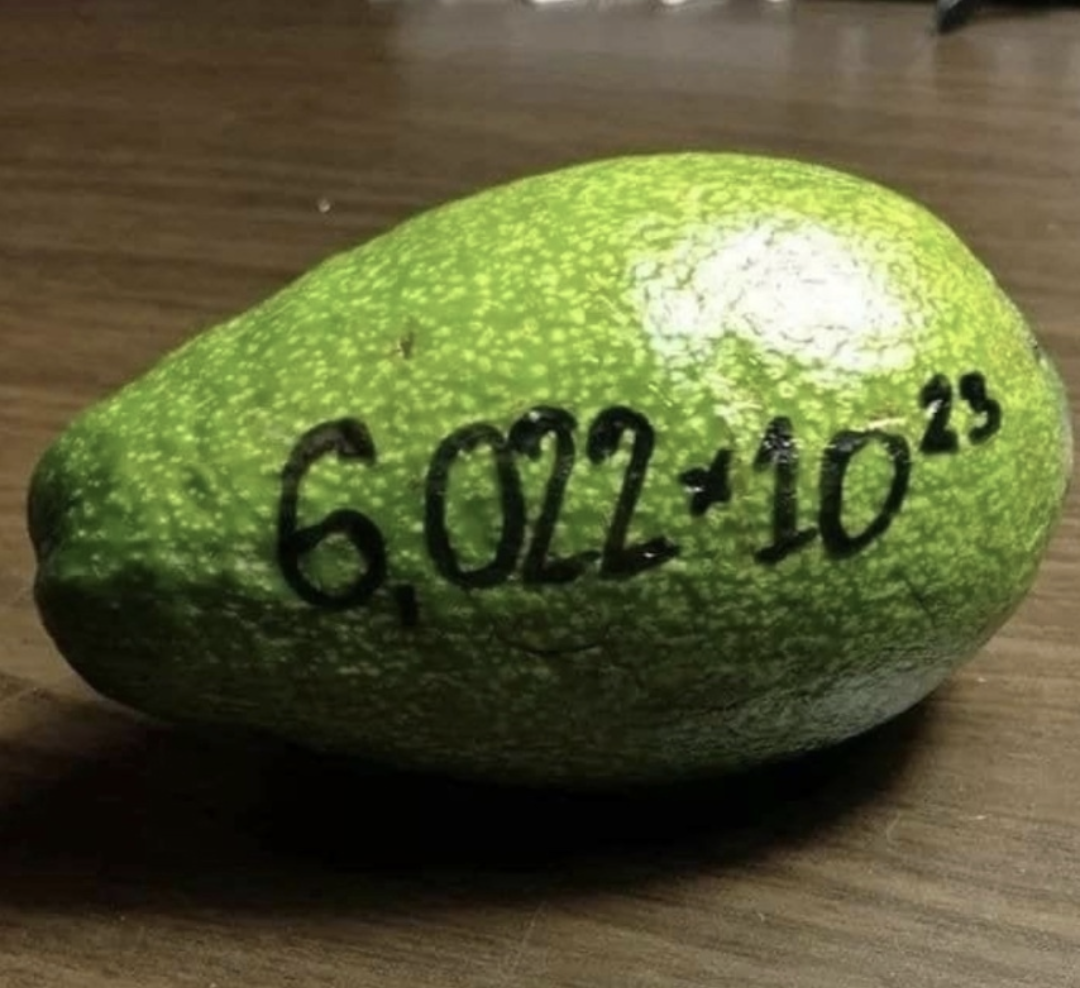
The ultimate physics-meets-nutrition joke! That's not just any avocado—it's sitting on Avogadro's number (6.02×10²³), the fundamental constant that represents the number of particles in one mole of a substance. Chemists everywhere are quietly chuckling at this pun-tastic visual representation of "Avocado's Number." For the record, one mole of avocados would weigh approximately 150 million metric tons—enough guacamole to fill several Olympic swimming pools. Now that's a party!

Chemistry Is A Scam

Chemistry Is A Scam
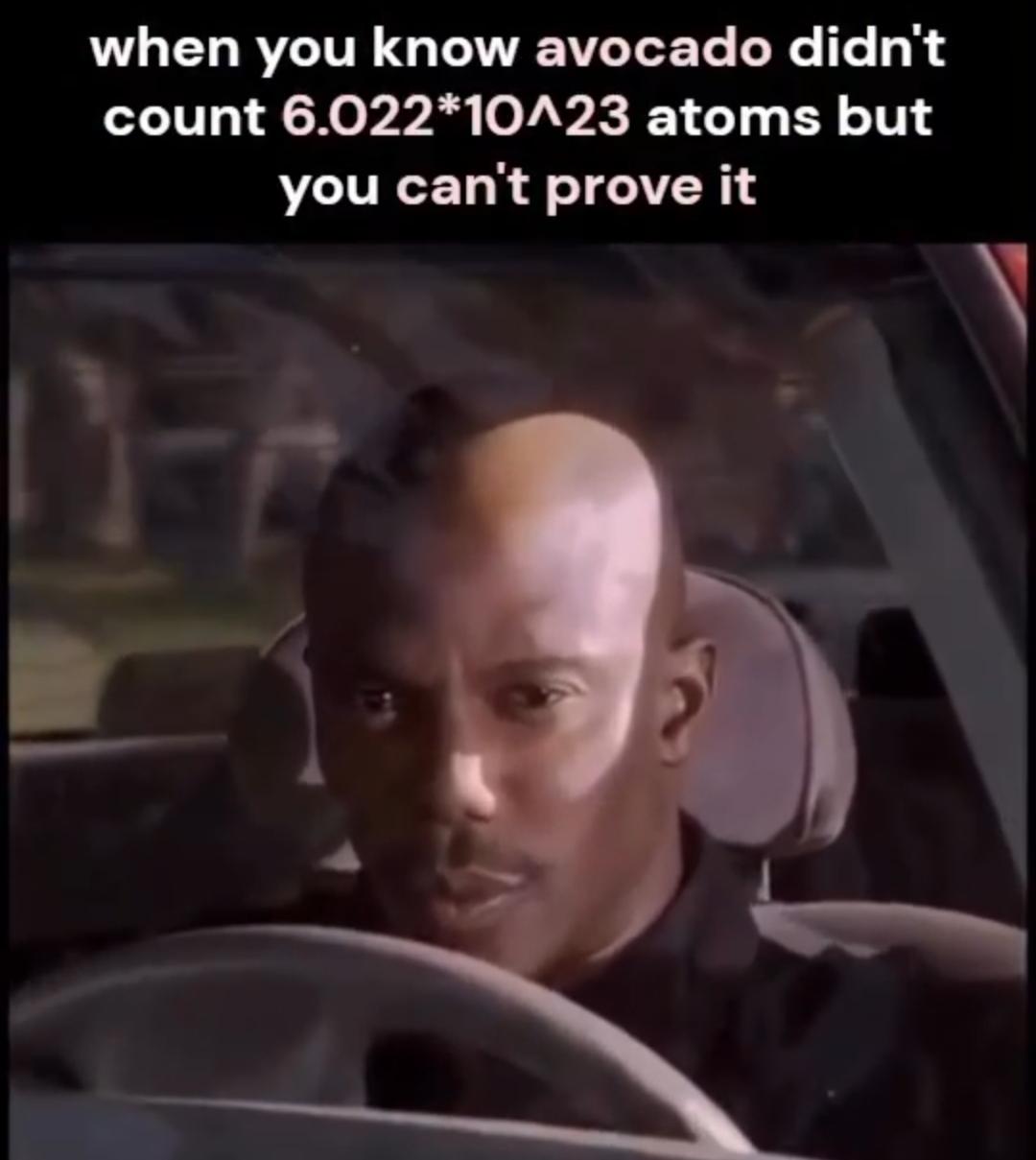
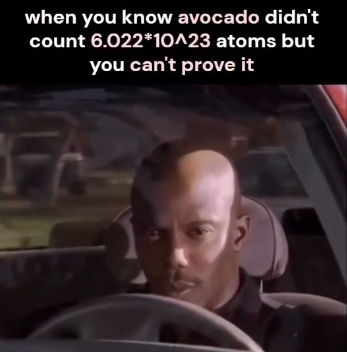
That feeling when you're convinced Avogadro's number is a conspiracy. 6.022×10²³ is suspiciously precise for something nobody can manually verify. Sure, we've all "accepted" this constant since 1811, but has anyone actually counted all those atoms? Exactly. The deep state of chemistry continues unchallenged while we blindly measure moles. Stay woke in the lab.

The Avocado Number Crisis

The Avocado Number Crisis
Just sitting here with the crushing realization that avocados have nothing to do with 6.022×10²³. Amedeo Avogadro never even met a guacamole in his life. The constant represents the number of particles in one mole of a substance, but try explaining that to your non-chemistry friends at brunch. They're over there ordering avocado toast while you're mentally calculating how many moles of coffee you need to survive this conversation.

Keep Calm And Count Your Moles

Keep Calm And Count Your Moles
Chemistry nerds unite! October 23rd (10/23) celebrates the magical 6.02 × 10 23 particles that make our chemical world go round. It's the only holiday where counting to one requires 602 sextillion steps! 🧪 The pun game is strong with this one—actual moles digging through dirt while we're digging through conversion problems. Avogadro's sitting there like "I just wanted to count gas particles, not become a holiday mascot." Next time someone asks how many atoms are in your coffee, you can confidently say "a mole-titude" and walk away feeling superior. Just remember: on Mole Day, the limit to your chemistry jokes is 6.02 × 10 23 .

Avocado's Number

Avocado's Number
The ultimate chemistry dad joke has arrived! Someone wrote Avogadro's number (6.022 × 10²³) on an avocado, creating the legendary "Avocado's Number." Chemistry students everywhere are simultaneously groaning and taking screenshots. This is what happens when you let scientists shop at grocery stores unsupervised. The number of molecules in one mole of substance equals exactly the number of times chemistry professors have made this pun since 1811.

The First Time Being Introduced To Mole

The First Time Being Introduced To Mole
That brief moment of clarity between total confusion states when 6.022 × 10 23 particles suddenly makes sense. The mole concept hits you like a ton of bricks, then vanishes just as quickly. Classic chemistry class amnesia - understanding Avogadro's number for exactly 7 minutes before your brain reboots to factory settings.

The First Time Being Introduced To Mole

The First Time Being Introduced To Mole
The chemistry student's journey with the mole concept is a wild emotional rollercoaster! First, you're completely baffled by this weird unit (6.022 × 10 23 of ANYTHING?!). Then comes that magical moment of clarity when your teacher explains it one-on-one and everything clicks! But wait... five minutes after class, your brain decides to factory reset, and you're back to square one wondering what in the periodic table just happened. It's the perfect representation of the chemistry learning cycle: confusion → brief understanding → confusion again. The struggle is real, but we've all been there!

The First Time You Get To Know Mole Definition

The First Time You Get To Know Mole Definition
Chemistry professors really expect us to memorize that a mole is 6.022 × 10²³ particles when they could just say "it's 12 grams of carbon-12." That's like defining a foot as "the distance light travels in 1.0136 nanoseconds" instead of just showing us a ruler. Classic chemistry move—making simple concepts unnecessarily complicated since 1811.

When You First Get To Know Mole Definition

When You First Get To Know Mole Definition
Chemistry teachers everywhere are screaming! The top panel shows the technically correct but utterly chaotic definition that mole is the number of atoms in 1 gram of hydrogen (which is approximately 6.022 × 10 23 ). Meanwhile, the bottom panel reveals the elegant, precise definition: a mole contains as many elementary entities as there are atoms in exactly 12 grams of carbon-12. It's like choosing between explaining directions using landmarks versus GPS coordinates. The precision-hungry chemist in all of us is nodding vigorously at the bottom panel right now.