

Metabolism Memes

Posts tagged with Metabolism
Size Matters! (Biology Or Physics?)

Size Matters! (Biology Or Physics?)
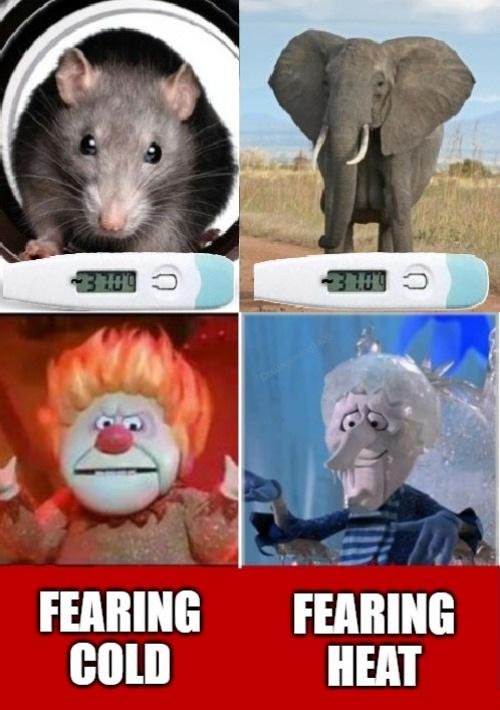
Plot twist: both thermometers read 37.8°C and suddenly we're all sweating about thermoregulation! Small creatures like mice are basically thermal drama queens—they've got a massive surface area relative to their tiny volume, so they lose heat faster than a gossip loses secrets. That's why they're absolutely TERRIFIED of the cold. Meanwhile, elephants are walking heat radiators with the opposite problem: tons of volume, relatively less surface area, so dumping excess heat is their daily struggle (hence those magnificent cooling-fan ears!). This is the square-cube law in action, baby! As you scale up, surface area increases by the square but volume (and mass) increases by the cube. It's why shrews need to eat nearly their body weight daily just to stay alive, and why elephants can chill in the savanna without spontaneously combusting. Physics meets biology in the ultimate size showdown! 🔥❄️

The Most Energy Consuming Organ Is

The Most Energy Consuming Organ Is
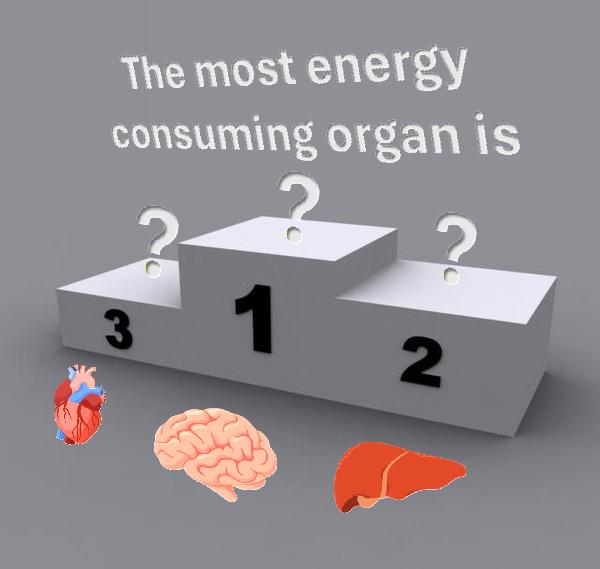
Plot twist: your brain is literally eating 20% of your body's total energy budget while only being 2% of your body weight. That's right—your squishy thinking machine is an absolute energy GUZZLER, burning through glucose like it's going out of style just to keep you scrolling through memes. The heart's working overtime pumping blood 24/7 without breaks (respect), and the liver's out here doing like 500 different metabolic jobs at once, but neither can compete with the brain's ridiculous caloric demands. Your neurons are firing constantly, maintaining ion gradients, synthesizing neurotransmitters, and apparently using all that energy to wonder why you walked into a room. So next time someone calls you a "big brain," just know they're technically calling you an inefficient energy hog. You're welcome! 🧠⚡

Cellular Chuds

Cellular Chuds
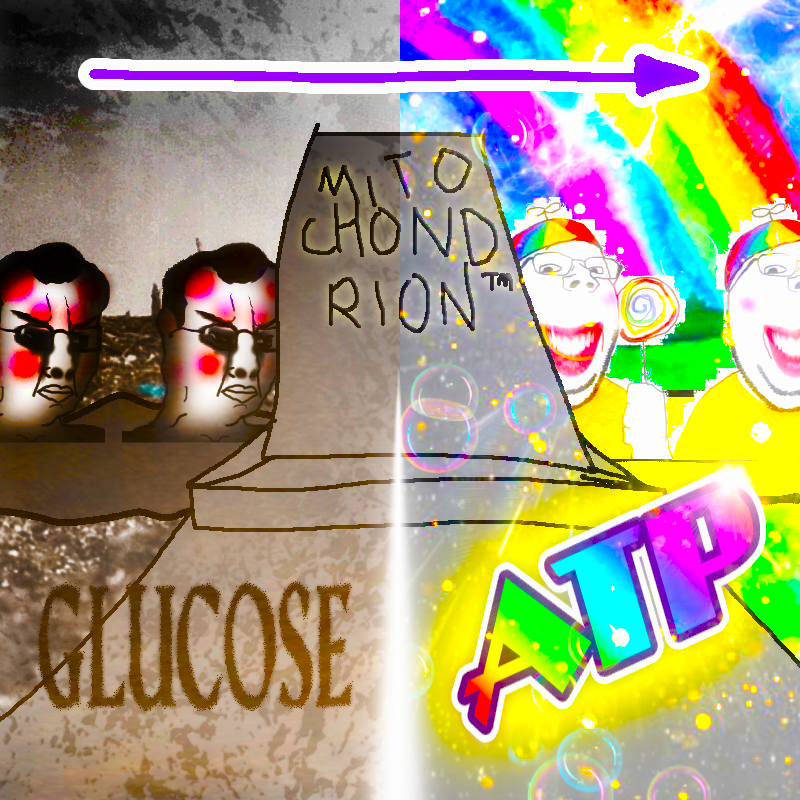
So glucose gets the sad, grainy, depressing aesthetic while mitochondria gets the full rainbow explosion treatment? Sounds about right. Glucose is basically just the delivery guy who shows up at your cellular doorstep, but the mitochondria? That's where the REAL party happens – the powerhouse converting that boring sugar into sweet, sweet ATP energy. The mitochondria literally transforms glucose's dull existence into pure cellular fireworks. It's like comparing the accountant who processes your paycheck to you actually spending that money on something fun. One's necessary but kinda bland, the other makes life worth living! Your cells know what's up.

Adenosine Triphosphate

Adenosine Triphosphate
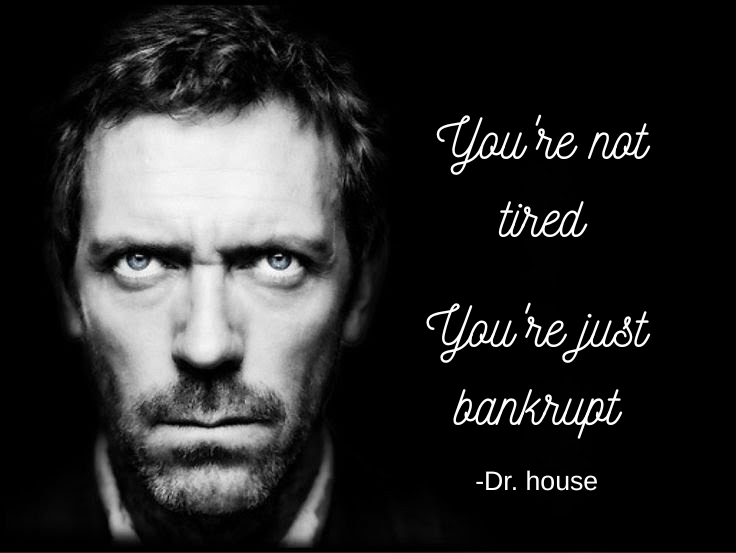
When your cells are running on fumes and you're dragging yourself through the day, Dr. House is here with some brutal biochemical truth: you're not tired, you're just ATP-depleted. Your mitochondria have declared bankruptcy and filed for Chapter 11. The energy currency of your cells has about as much value as Monopoly money right now. Every biochemistry student knows that ATP is what powers literally everything in your body—muscle contractions, nerve signals, protein synthesis—so when you run out, you're basically a biological paperweight. It's like trying to run a Ferrari on thoughts and prayers. Maybe try eating something or, you know, sleeping for once. Your cellular respiration is basically on life support.

Cells Be Like

Cells Be Like
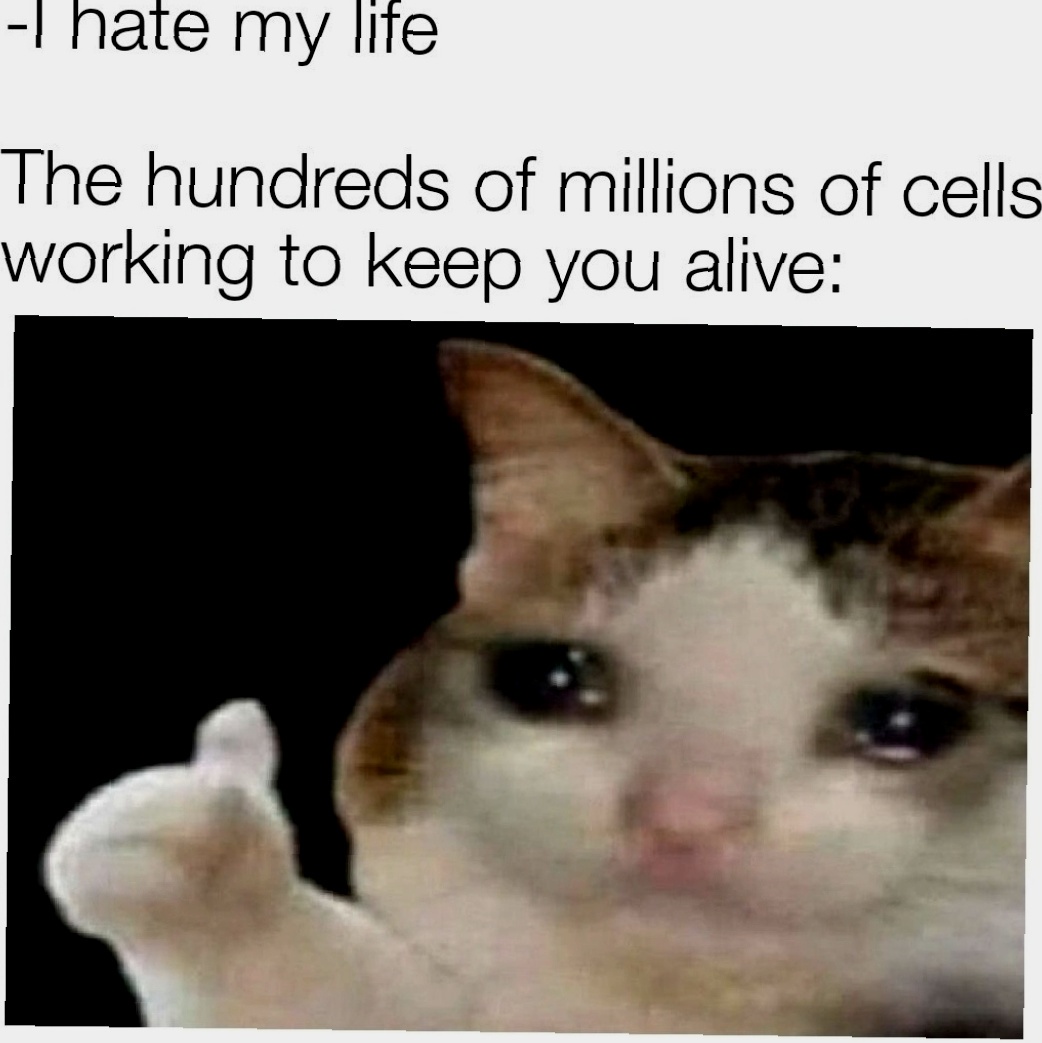
Your body is literally a microscopic workforce of trillions of cells doing 24/7 overtime—respiring, dividing, fighting pathogens, synthesizing proteins—just to keep your ungrateful self scrolling through memes at 2 AM. Meanwhile, you're up there complaining about your existence while they're down there giving you a literal thumbs up like "we got you, fam." The irony is beautiful: your cells are the ultimate team players, coordinating complex biochemical pathways without a single complaint, while you're out here having existential crises. They're pumping ions, maintaining homeostasis, and repairing DNA damage caused by your poor life choices, all while being absolute champs about it. Fun fact: The human body contains roughly 37.2 trillion cells, and every second, about 25 million of them are dividing to replace the ones that die. That's some serious dedication to keeping your depressed self functional.

Pyruvate? Acetyl-CoA? My Brain Left The Chat

Pyruvate? Acetyl-CoA? My Brain Left The Chat
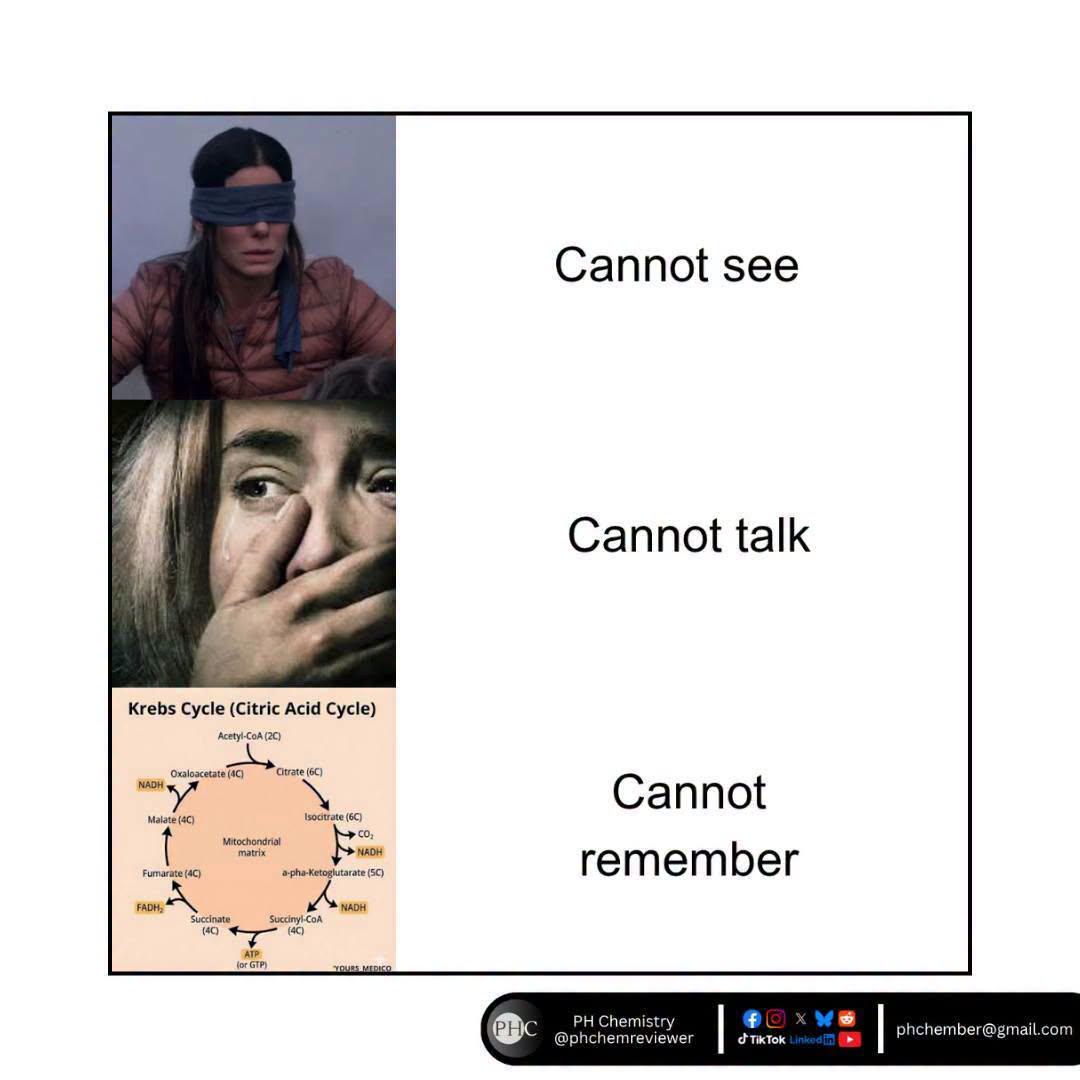
The Krebs Cycle is that one biochemistry topic that makes every biology student question their life choices. You walk into the exam thinking you've got it down, but the second you see that circular nightmare with its eight steps, multiple enzymes, and random molecules like α-ketoglutarate, your brain just... nopes out. Cannot see the logic. Cannot talk through the steps. Cannot remember if FADH₂ comes before or after succinyl-CoA. It's the metabolic pathway equivalent of trying to remember everyone's names at a party where they all look the same and keep changing positions. Sure, it's "just" cellular respiration—the thing keeping you alive—but memorizing it feels like your neurons are running on fumes instead of ATP.

Truly The Most Underrated Organ

Truly The Most Underrated Organ
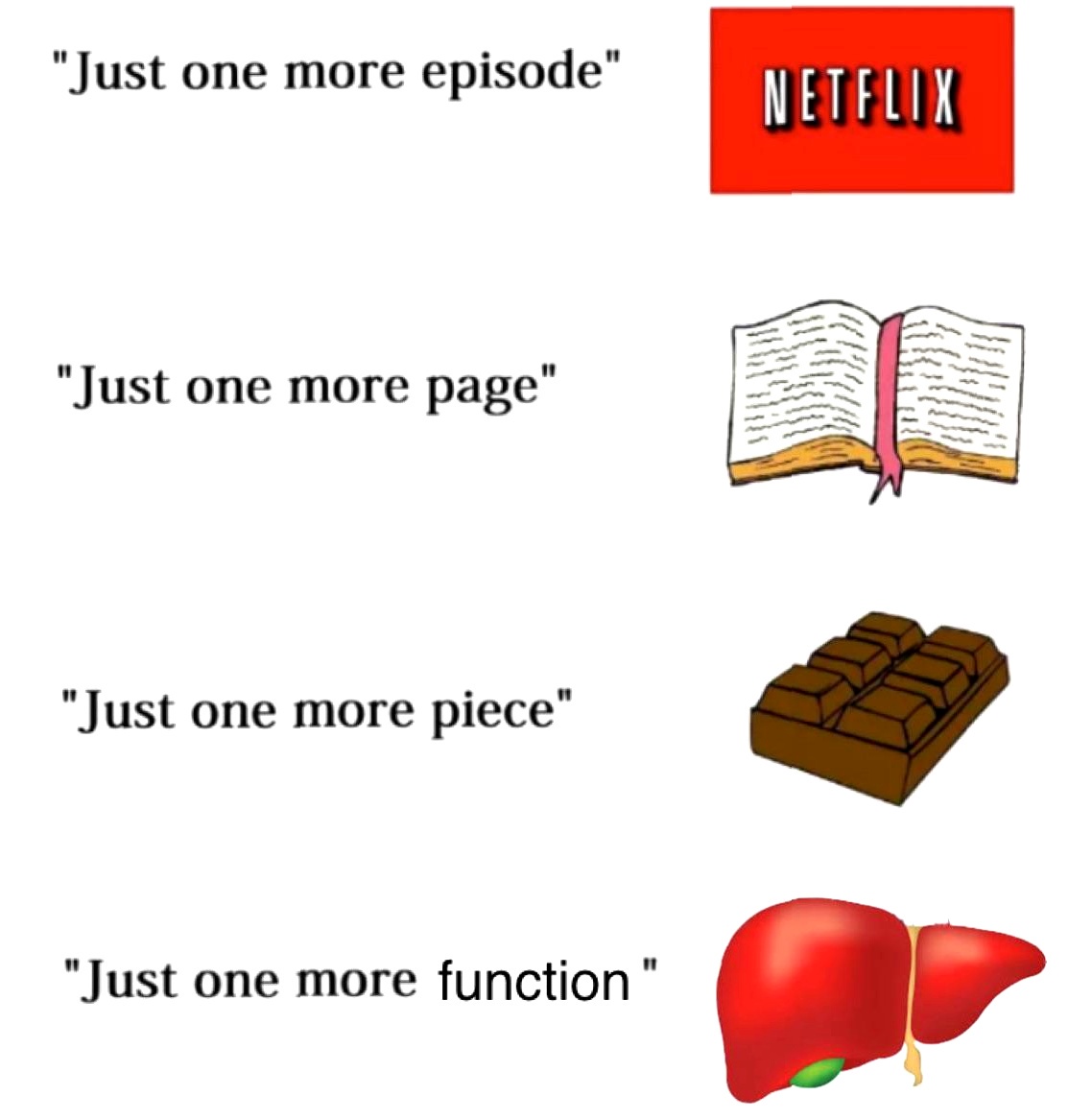
Your liver is out here performing over 500 different functions—detoxifying your blood, producing bile, storing vitamins, regulating blood sugar, synthesizing proteins, metabolizing drugs, and basically keeping you alive while you make questionable life choices. Meanwhile, you're over there like "just one more piece" of chocolate at 11 PM. While Netflix gets a "just one more episode," books get a "just one more page," and chocolate gets a "just one more piece," your liver is in the corner going "just one more function" for the 500th time today without a single thank you. It's literally the overachiever of your body that never sleeps, never complains, and has the audacity to regenerate itself even when you treat it like garbage. Fun fact: Your liver is the only internal organ that can completely regenerate from as little as 25% of its original mass. So yeah, it's basically the Wolverine of organs, which makes it even more tragic that we celebrate chocolate more than this absolute legend.

Entropy Meme

Entropy Meme
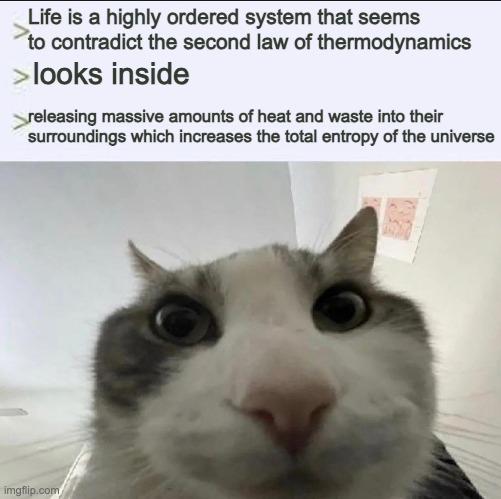
Plot twist: life never violated thermodynamics, we were just the chaos agents all along. The second law demands that entropy—basically disorder—increases in the universe, and at first glance, living organisms seem like rebels creating order from chaos. But zoom out slightly and you realize we're just highly efficient entropy generators. Every breath, every meal, every existential crisis is us converting organized chemical energy into heat and waste, dutifully increasing universal disorder like good little thermodynamic citizens. The crying cat perfectly captures that moment when you realize your entire existence is just a locally ordered pocket of complexity that's actually accelerating the heat death of the universe. You're not special, you're just a very elaborate way for the cosmos to make things messier. Thanks, biology! Fun fact: your body is about 25% efficient at converting food energy into useful work. The other 75%? Pure heat, baby. You're basically a space heater with anxiety.

Cellular Respiration Fuck Yes

Cellular Respiration Fuck Yes
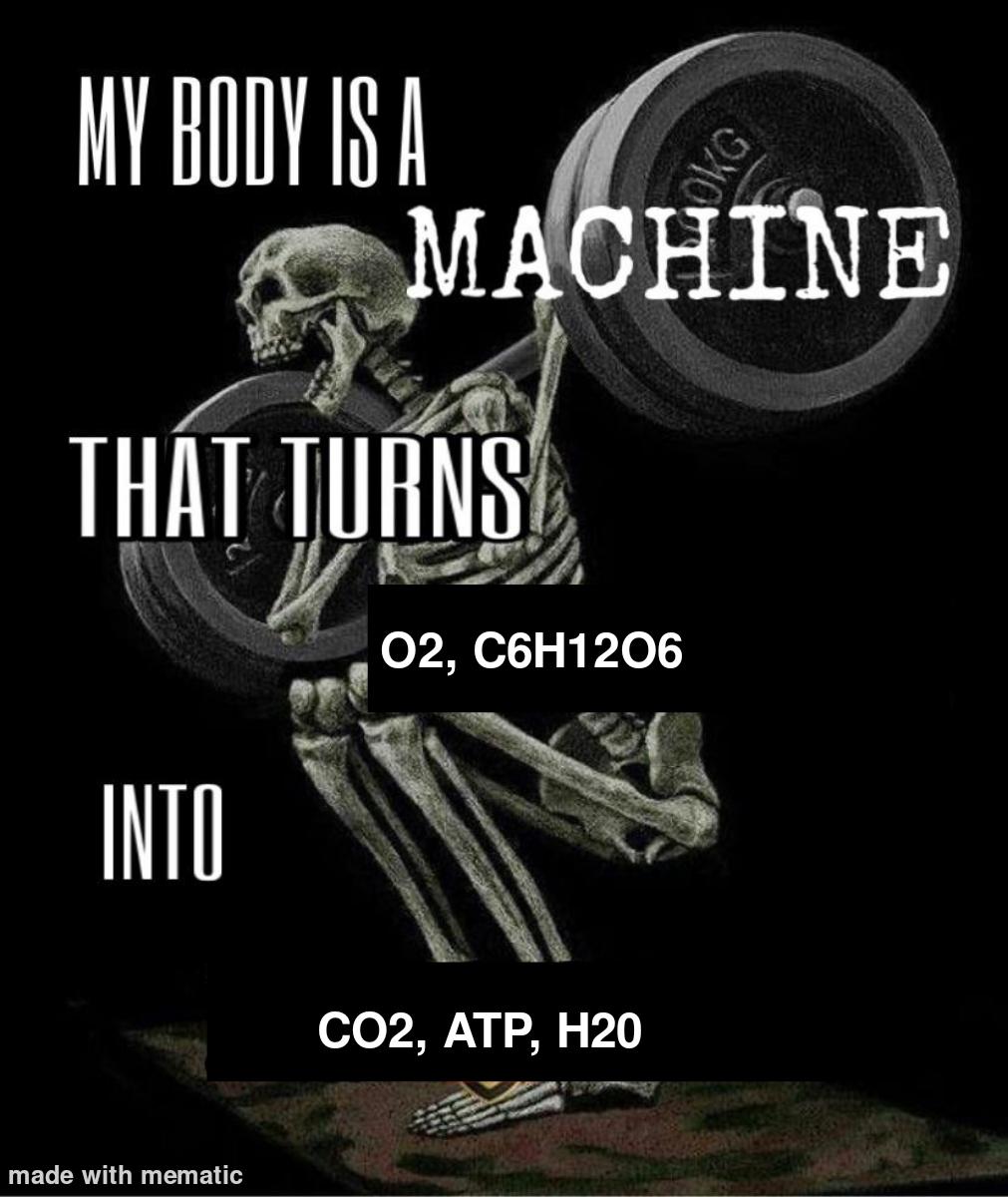
Your body really is just out here being an absolute BEAST of a biological machine. You're literally a skeleton riding a meat bicycle powered by ancient biochemistry, and honestly? That's metal as hell. This perfectly captures the raw power of cellular respiration—you chuck in some oxygen and glucose (C6H12O6 for the chemistry nerds), and your mitochondria go absolutely wild converting it into ATP (the energy currency your cells run on), carbon dioxide, and water. It's like having billions of tiny power plants in your cells, all working 24/7 to keep you alive and scrolling through memes. The skeleton pumping iron is just *chef's kiss* because every single muscle contraction, every thought, every heartbeat—it's all fueled by this same badass process. You're not just alive, you're a thermodynamic miracle crushing reps at the gym of existence!

What Are You Made Of?

What Are You Made Of?
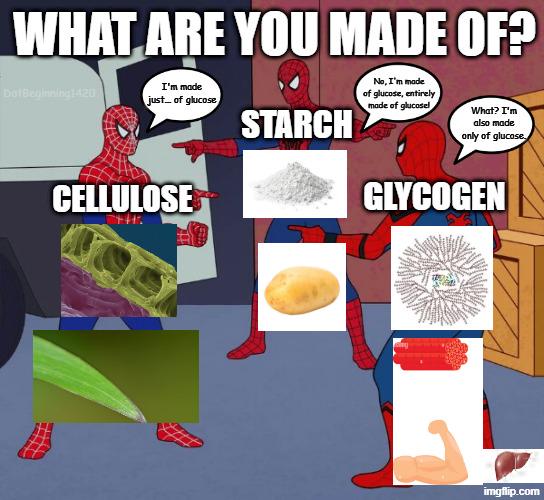
Spider-Man pointing at himself has never been more biochemically accurate. Three different polysaccharides walk into a bar and realize they're all just glucose with commitment issues. Cellulose is out here being all rigid and structural in plant cell walls, starch is the plant's savings account for energy, and glycogen is basically what happens when animals looked at starch and said "we can store glucose better than that." They're all polymers of glucose, just arranged differently—like three siblings who took wildly different career paths but still show up to the same family reunion. Cellulose has those β-1,4 linkages making it unbendable (which is why you can't digest wood, sorry), while starch and glycogen rock the α-1,4 bonds that your enzymes can actually break down. Glycogen just went extra with more branching because animals need their energy FAST. Nature really said "glucose is glucose" and called it a day.

What Else Can We Do With Sugar (Sucrose)?

What Else Can We Do With Sugar (Sucrose)?
Corporate brainstorming sessions in the sugar industry are apparently just as unhinged as in every other field. While two employees suggest legitimate applications (scaring people with side effects and biofuel development), the third guy's brilliant "sugar as pre-workout" idea gets him defenestrated faster than you can say "glycemic index." The boss knows that suggesting people consume MORE sugar before exercising is exactly how you create a customer base with type 2 diabetes. Nothing says "I don't understand basic metabolism" quite like pitching sugar as an energy booster to a company already dealing with public health backlash.

Good Old Friends Stick Together

Good Old Friends Stick Together
The cellular respiration gang shows up uninvited to every biology course like clockwork. First-year students thinking they're done with glycolysis after the first exam are met with the harsh reality that these metabolic pathways are the clingy exes of biology education. The Krebs cycle, oxidative phosphorylation, and their sidekick PPP (pentose phosphate pathway) keep reappearing semester after semester with increasing complexity. It's like trying to leave a party but the host keeps adding "just one more thing" about electron transport chains.