

Jupiter Memes

Posts tagged with Jupiter
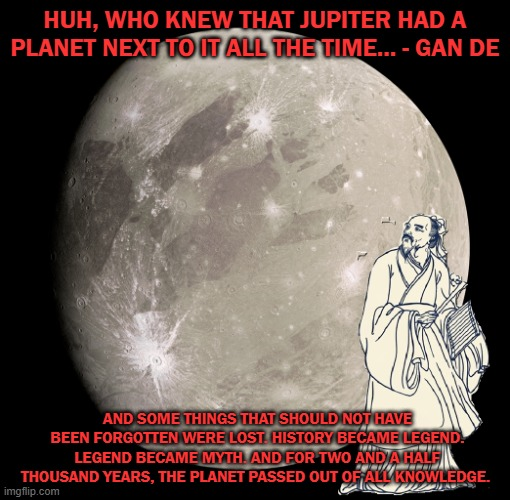
Chinese Astronomy Was Based

Chinese Astronomy Was Based
So here's a wild piece of astronomical history: Chinese astronomer Gan De documented Jupiter's moons around 364 BCE—nearly TWO THOUSAND YEARS before Galileo gets all the credit in 1610. The dude was literally observing Ganymede with his naked eye (which is technically possible under perfect conditions, though incredibly difficult). But because historical records got lost or dismissed as myth over the centuries, Western astronomy had no idea this knowledge even existed. The meme perfectly captures that moment when you realize someone figured out something groundbreaking ages ago, but then humanity collectively forgot about it and had to "rediscover" it millennia later. Talk about losing your homework on a cosmic scale. Ancient Chinese astronomers were out here doing serious observational work while keeping meticulous records, and we're only now giving them proper recognition. Makes you wonder what other scientific knowledge got yeeted into the void of lost history!

Possibility Of Life?

Possibility Of Life?
Europa, Jupiter's icy moon, has been teasing astrobiologists for decades with its subsurface ocean containing more water than all of Earth's oceans combined. Scientists are like "hey, let's check if there's life in that liquid water ocean beneath the ice shell!" and the cat's absolutely unhinged expression perfectly captures the collective excitement of the astrobiology community right now. That wide-eyed, slightly manic stare? That's exactly how NASA scientists look when discussing Europa's potential hydrothermal vents that could be pumping out the chemical energy needed for microbial life. The Europa Clipper mission launching soon is basically humanity's way of doing exactly what the meme suggests—peeking inside to see what's swimming around in there. Will we find alien fish? Probably not. Microbes? Maybe! Disappointment? Possibly! But that chaotic energy is what drives space exploration.

Be Grateful To Our Savior, Jupiter!

Be Grateful To Our Savior, Jupiter!
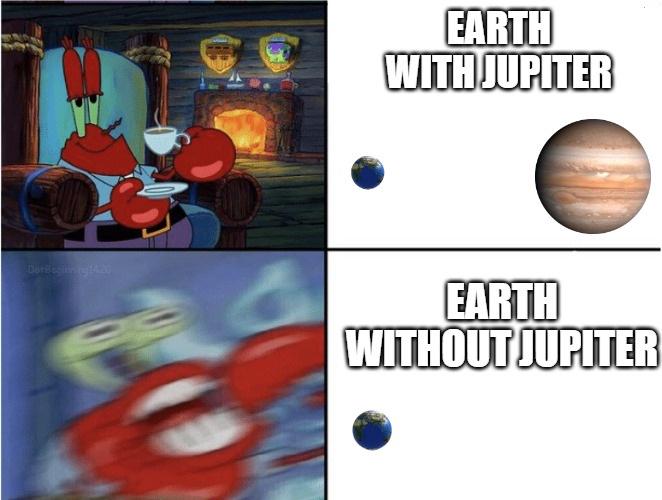
Jupiter is basically Earth's cosmic bodyguard, and this meme perfectly captures what would happen without our gas giant protector. Thanks to its absolutely massive gravitational pull (about 318 times Earth's mass), Jupiter acts like a celestial vacuum cleaner, attracting and deflecting asteroids and comets that would otherwise turn Earth into a cosmic shooting gallery. The top panel shows Earth chilling by the fireplace with Jupiter nearby—peaceful, cozy, safe. The bottom panel? Pure chaos. Mr. Krabs getting absolutely demolished represents what would happen to Earth if Jupiter wasn't there to take the hits or redirect space rocks away from us. Scientists estimate that without Jupiter, Earth would experience asteroid impacts at a rate hundreds of times higher than we currently do. Fun fact: Jupiter has been hit by some absolutely massive objects throughout its history, including Comet Shoemaker-Levy 9 in 1994, which broke into fragments and slammed into Jupiter with the energy of millions of nuclear bombs. Meanwhile, Earth was just vibing in the inner solar system, completely unaware of the disaster that could've been headed our way.

Sugar Daddy ❌️ Fridge✅️😭

Sugar Daddy ❌️ Fridge✅️😭
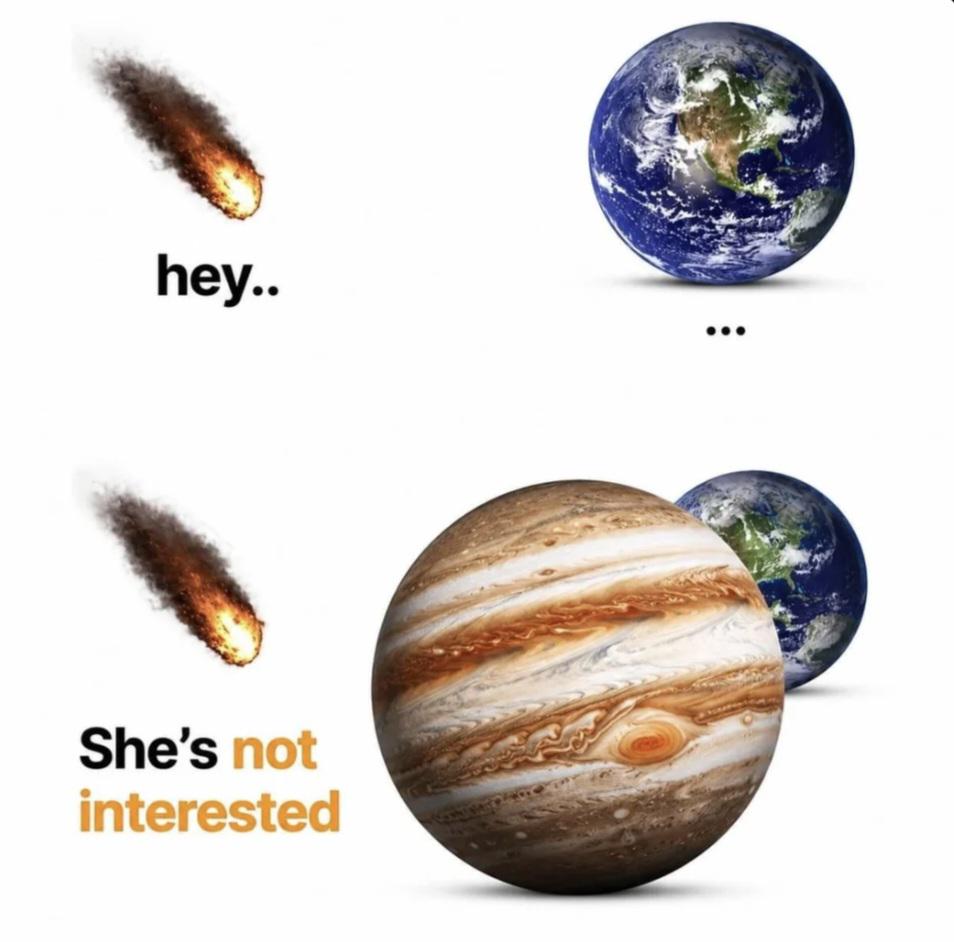
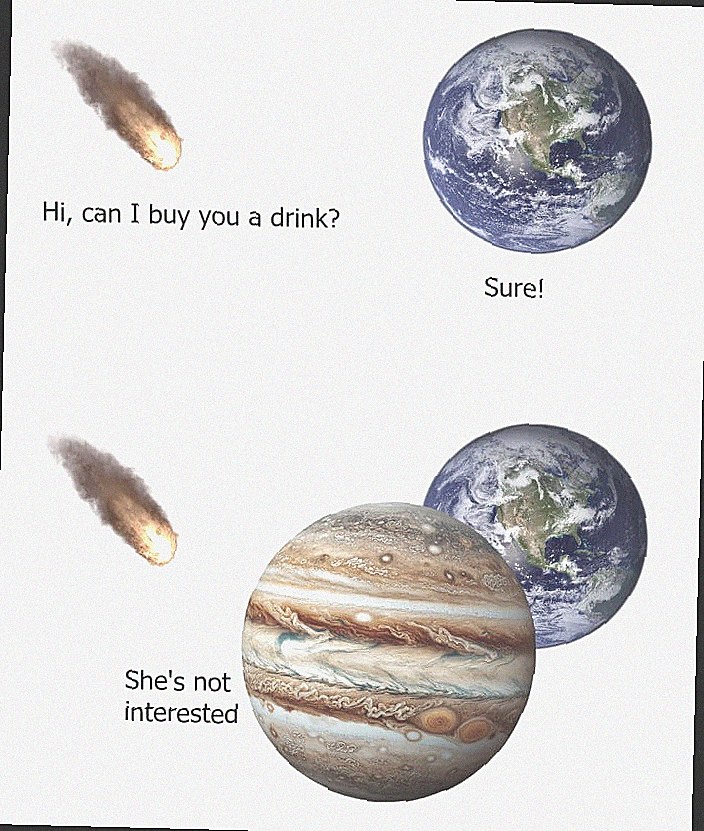
Jupiter really said "I got you, sis" and has been blocking asteroids and comets from hitting Earth for billions of years. With its absolutely massive gravitational field (318 times Earth's mass), Jupiter acts like the solar system's cosmic bodyguard, either yeeting dangerous space rocks into the sun or capturing them entirely. The asteroid's desperate "hey.." followed by Earth's cold shoulder while Jupiter casually steps in front is peak planetary wingman energy. Fun fact: scientists estimate Jupiter has prevented countless extinction-level impacts on Earth, making it literally the best roommate ever. No sugar daddy needed when you've got a gas giant bro who's been protecting you since day one. 💀

Jupiter

Jupiter...
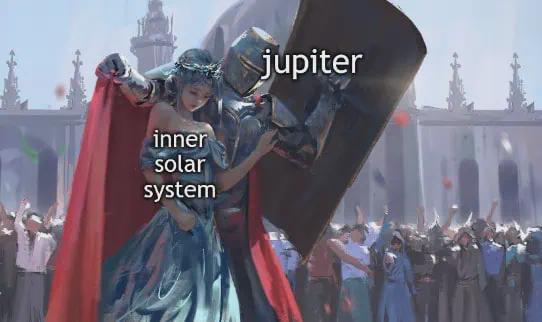
Jupiter really said "I'll take one for the team" and has been bodyguarding Earth for billions of years. With its absolutely monstrous gravitational pull, Jupiter acts like the solar system's bouncer, yeeting asteroids and comets away from the inner planets before they can cause any dinosaur-level extinction events. That mass? About 318 times Earth's. Those gravitational muscles? Unmatched. While Mars, Venus, and Earth are just vibing in the inner solar system, Jupiter's out there catching cosmic hands like it's nothing. The gas giant literally deflects or captures potentially catastrophic space rocks that would otherwise rain down on us. So yeah, Jupiter's basically the protective big sibling who beats up bullies in the cosmic schoolyard while we get to exist peacefully. Respect the king.

Is This Right?

Is This Right?
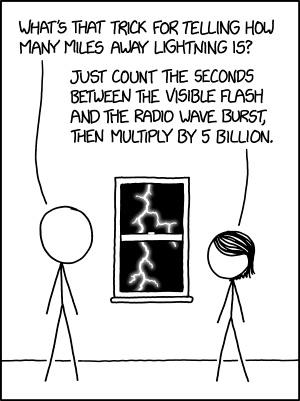
Someone clearly slept through their physics class and woke up with a PhD in creative mathematics. The actual method for calculating lightning distance is hilariously simple: count the seconds between the flash and thunder, then divide by 5 to get miles (or by 3 for kilometers). But sure, let's just multiply by 5 billion instead—because why would you want an answer that makes any sense when you could have FIVE BILLION MILES? That would put the lightning somewhere past Jupiter. At that point, you're not measuring a thunderstorm, you're tracking Zeus having a bad day in the outer solar system. The confidence in delivering completely nonsensical information is what really sells this. It's the academic equivalent of asserting that 2+2=potato with a straight face. This is why you should never ask your friend who "totally knows science stuff" for help with your homework.

Curved

Curved
When you're just a humble asteroid trying to shoot your shot with Earth, but then Jupiter swoops in like the ultimate cosmic wingman-turned-blocker. Poor space rock didn't stand a chance against that gas giant gravitational pull! Jupiter's basically been Earth's bouncer for billions of years, using its massive gravity to either yeet asteroids into the void or redirect them away from our blue marble. Talk about a planetary friend-zone situation – the asteroid gets curved harder than spacetime around a black hole. Jupiter's out here protecting Earth like an overprotective big brother who won't let anyone near their little sibling. Sorry buddy, maybe try Venus next time?

Rare Jupiter Transit Of The Sun

Rare Jupiter Transit Of The Sun
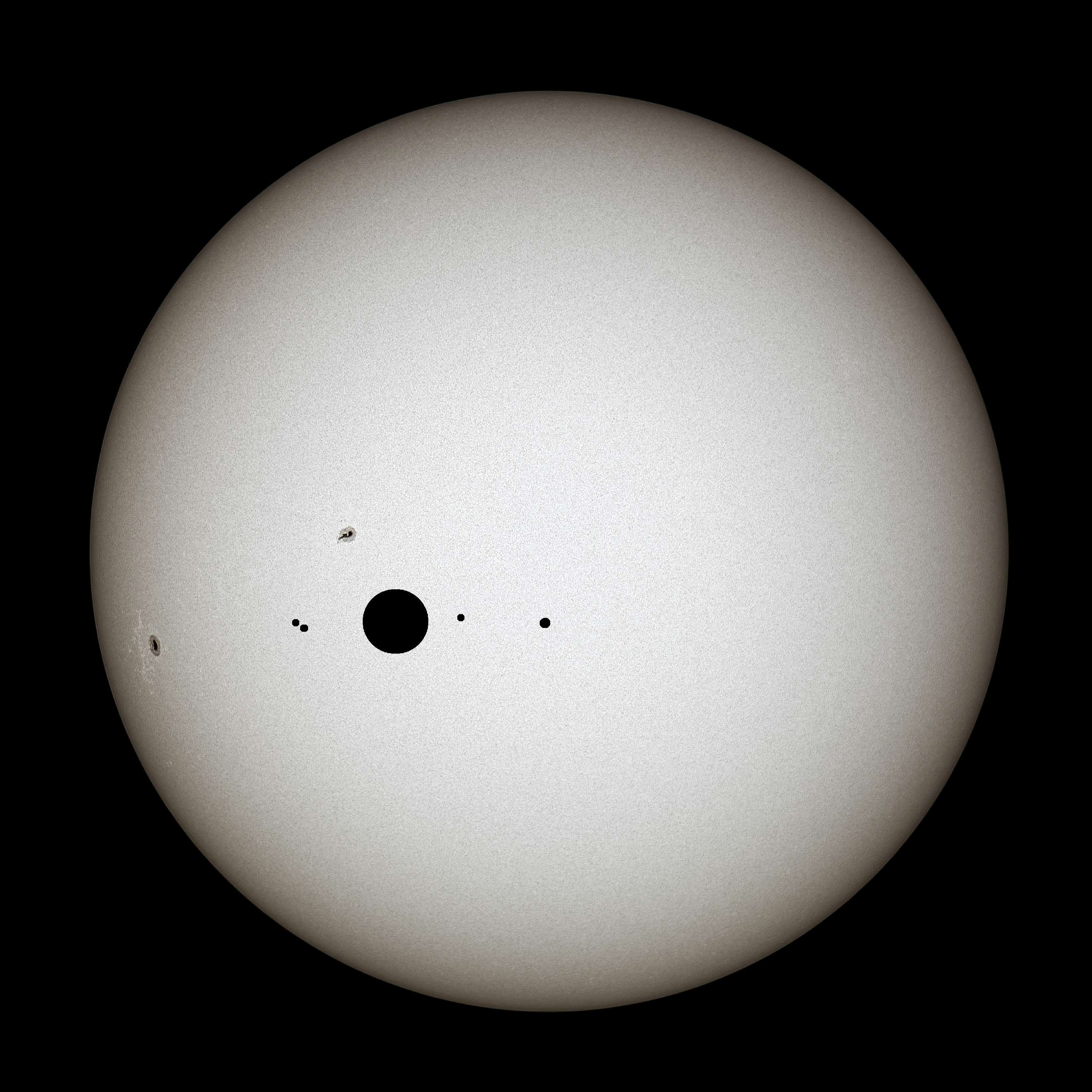
This is hilariously absurd on multiple levels. First off, Jupiter can't transit the Sun from Earth's perspective because it's an outer planet – transits only happen when inner planets (Mercury and Venus) pass between us and the Sun. But the real comedy gold here is the scale comparison: that massive black circle is supposedly Jupiter, which would make it look BIGGER than the Sun from our viewpoint. In reality, even though Jupiter is the solar system's chonkiest planet at about 11 times Earth's diameter, the Sun is still roughly 10 times wider than Jupiter. If Jupiter actually appeared this large relative to the Sun, we'd have way bigger problems than missing a rare astronomical event – like the complete breakdown of orbital mechanics and probably imminent planetary collision. The tiny sunspots scattered around just add to the comedic effect, as they're the actual Sun features that are genuinely visible during solar observation. It's like showing a chihuahua photobombing an elephant and calling it a "rare elephant transit of the chihuahua."

The Solar System Be Like

The Solar System Be Like
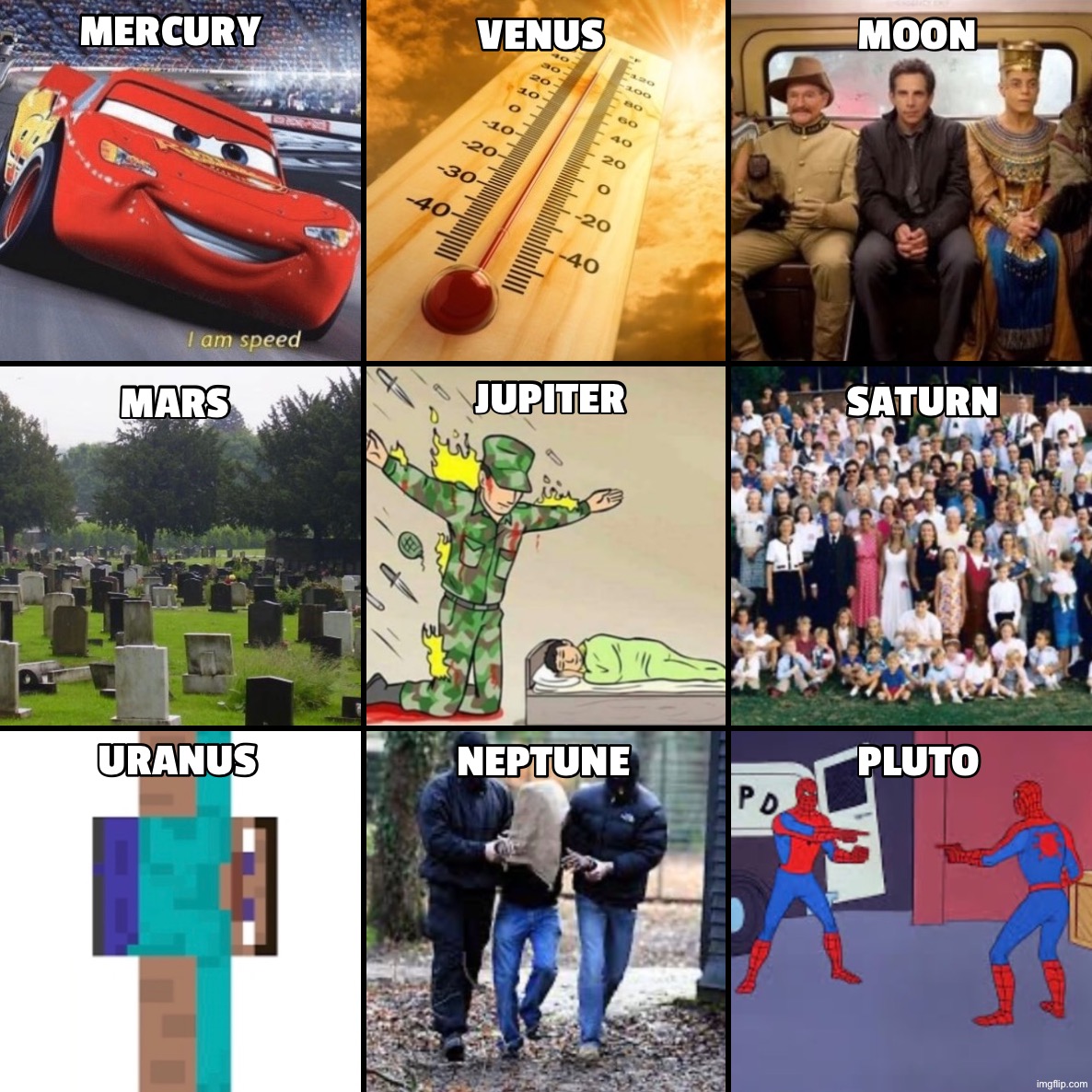
This meme absolutely nails the personality of each celestial body in our cosmic neighborhood. Mercury zooming around the Sun at 47 km/s? Lightning McQueen energy. Venus hitting 471°C with a crushing CO₂ atmosphere? That thermometer doesn't stand a chance. The Moon getting its historical trio of visitors (cowboy, scientist, pharaoh—representing different eras of humanity) is chef's kiss. Mars as a graveyard is painfully accurate—RIP to all those landers and rovers we've crashed there. Jupiter absolutely wrecking everything with its 95 Earths worth of mass while its moons just vibe in the background. Saturn showing off its 146 known moons like a proud parent at graduation. Uranus being... well, pixelated and awkward (because someone had to make the name joke). Neptune and its twin getting the Spider-Man pointing treatment since they're basically ice giant siblings. And Pluto? Still salty about that 2006 planetary demotion, pointing fingers at everyone who did it dirty. Each planet gets roasted based on its most defining characteristic, and honestly, they deserve it.

A Truly Miserable Existence

A Truly Miserable Existence
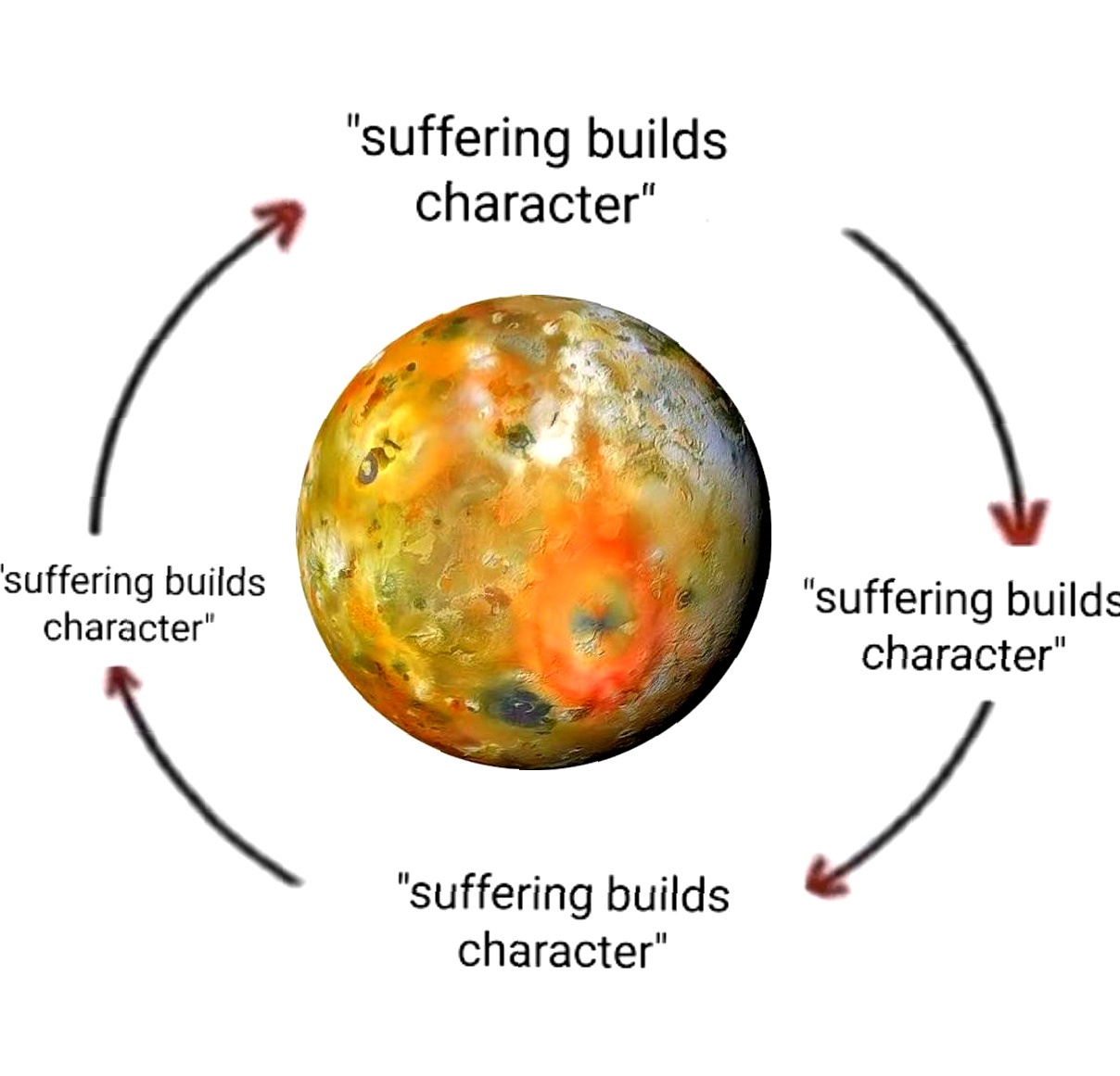
Jupiter's moon Io is basically the universe's punching bag, and it's stuck in an endless cycle of torment. See, Io is caught in a gravitational tug-of-war between Jupiter and its other moons (mainly Europa and Ganymede), which constantly squeezes and stretches the poor thing like cosmic Play-Doh. This process, called tidal heating, generates SO much internal friction that Io has become the most volcanically active body in our entire solar system—over 400 active volcanoes! So yeah, Io's entire existence is literally just getting crushed, erupting in volcanic fury, cooling down for a hot second, then getting crushed again. Rinse and repeat for billions of years. No peaceful lakes, no chill atmosphere, just perpetual geological screaming. It's like if your whole life was one continuous Monday morning, except the coffee machine is also a volcano. Talk about character development through trauma!

You're Our Slingshot

You're Our Slingshot
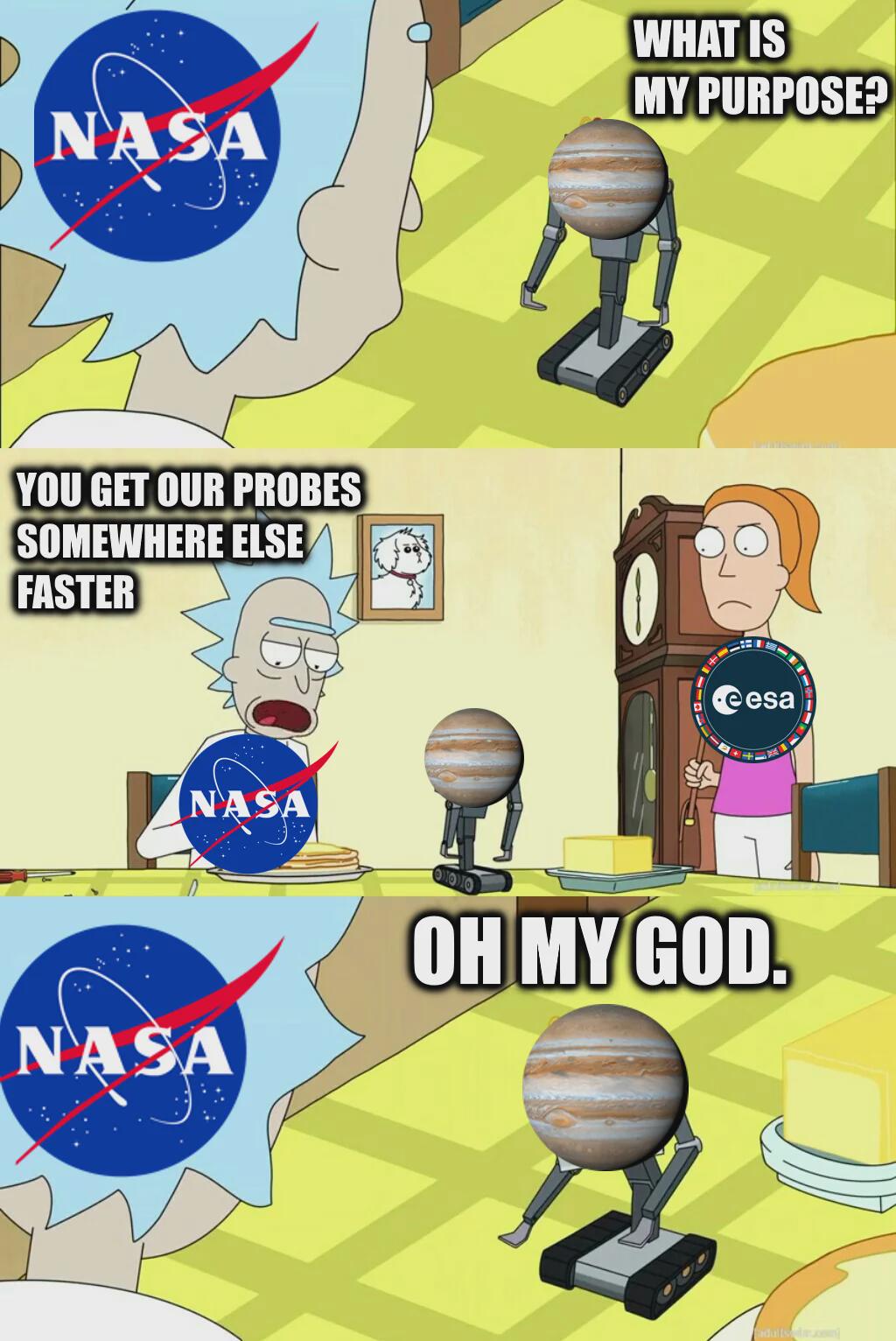
Jupiter's having an existential crisis, and honestly, who can blame it? The gas giant thought it was just vibing out there in the outer solar system, minding its own business with its 95 moons, but turns out NASA's been using it as a cosmic catapult this whole time. Gravitational assist maneuvers (or gravity slingshots) let spacecraft steal a tiny bit of a planet's orbital momentum to speed up without burning fuel. Jupiter's massive gravity well makes it the MVP of interplanetary shortcuts—missions like Voyager, Galileo, and Juno have all used Jupiter to yeet themselves across the solar system. ESA's just standing there awkwardly because they also use Jupiter for the same thing, making this planetary exploitation a truly international effort. Poor Jupiter. It's basically the universe's free Uber driver, and nobody even asked if it was cool with that.

Pookie Planet To The Rescue As Always

Pookie Planet To The Rescue As Always
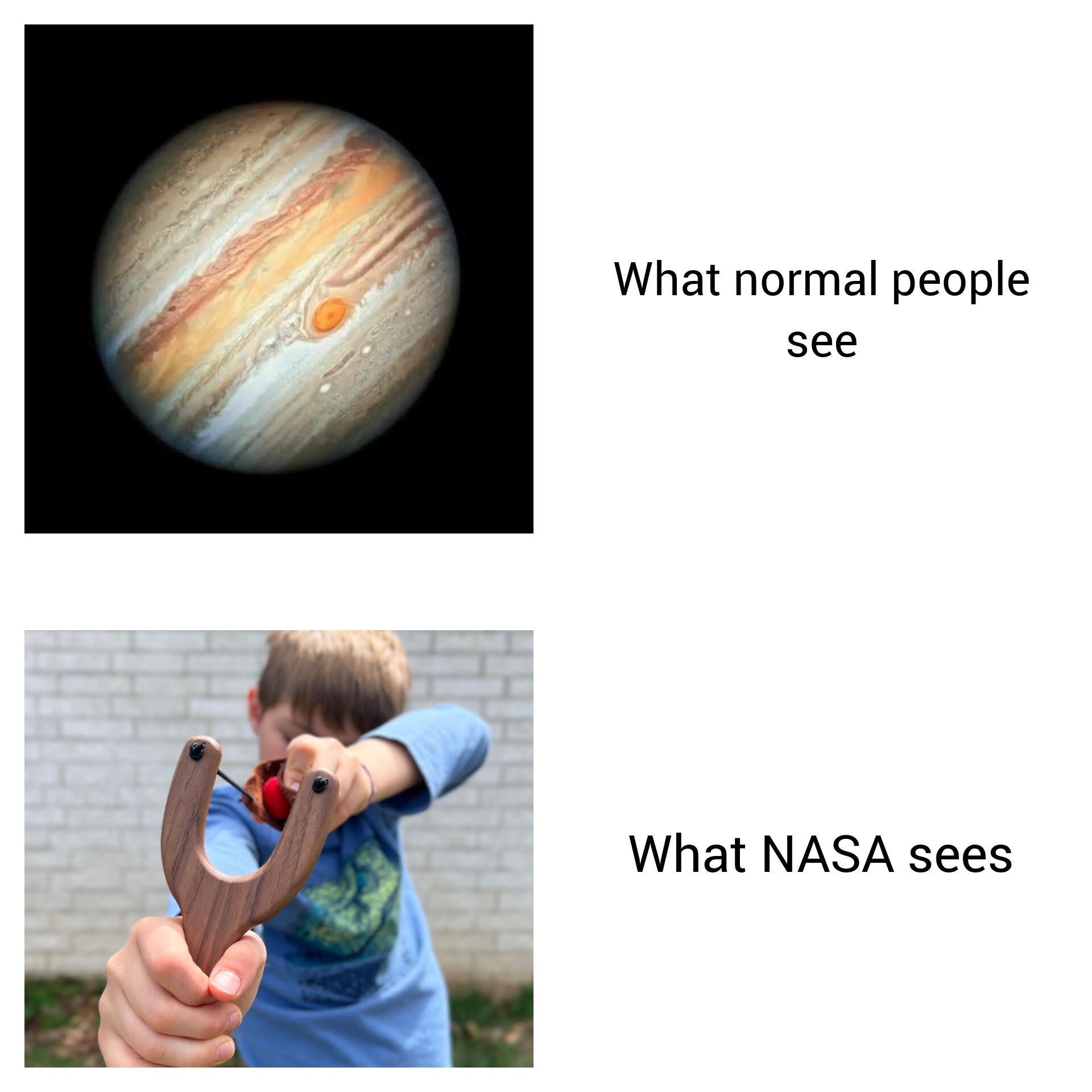
Jupiter really is the solar system's MVP bodyguard. While most folks just see a pretty gas giant with fancy stripes, NASA scientists see a massive cosmic slingshot that's been yeeting asteroids and comets away from Earth for billions of years. With a gravitational pull so strong it's basically the bouncer of our neighborhood, Jupiter catches or deflects space rocks that would otherwise turn us into the dinosaurs 2.0. That gravitational field is about 2.5 times stronger than Earth's, and it's positioned perfectly in the outer solar system to intercept incoming threats. So yeah, normal people see a planet, but planetary scientists see our ride-or-die bestie who's been taking bullets (literally flaming space bullets) for us since day one. The Shoemaker-Levy 9 comet impact in 1994? Jupiter took that hit like a champ, with impact scars bigger than Earth itself. Absolute legend behavior.