
Chemist humor Memes

Posts tagged with Chemist humor
The Preferred IUPAC Name Is Lame

The Preferred IUPAC Name Is Lame
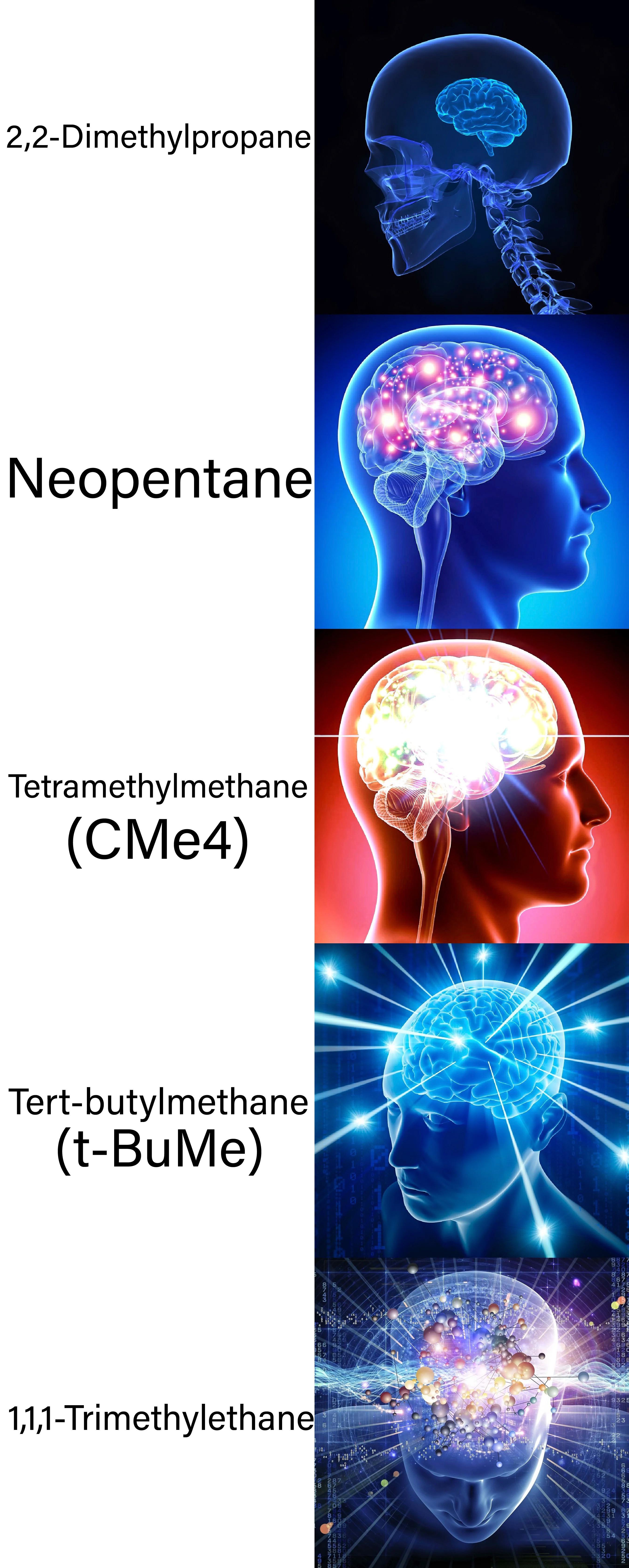
This is what happens when chemists get bored with IUPAC's systematic naming conventions and decide to flex their creativity. The meme shows the evolution of a chemist's brain as they use increasingly cooler nicknames for the exact same molecule (C₅H₁₂). Starting with the formal "2,2-Dimethylpropane" (boring, no brain activity), then progressing to "Neopentane" (brain lighting up), then the shorthand "Tetramethylmethane (CMe₄)" (brain getting hotter), followed by "tert-butylmethane (t-BuMe)" (brain reaching enlightenment), and finally the rebel "1,1,1-Trimethylethane" (cosmic brain explosion). It's like watching someone transform from "formal email to professor" to "3 AM text to lab partner." The molecule hasn't changed at all—just the chemist's willingness to thumb their nose at IUPAC conventions. Who needs systematic naming when you can sound cool instead?

Benzene Ring, Am I Doing This Chemistry Right?

Benzene Ring, Am I Doing This Chemistry Right?
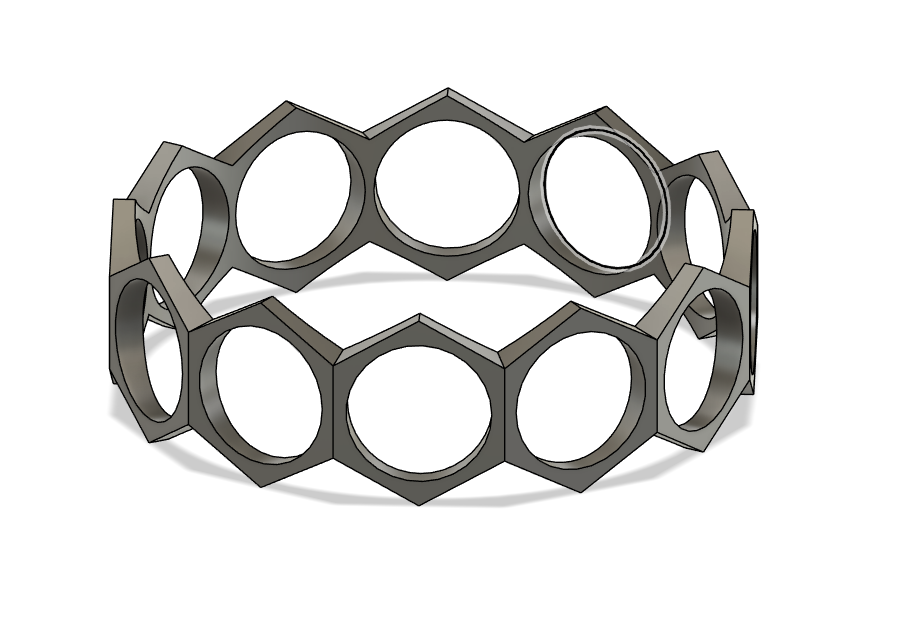
When your jewelry designer friend asks what you want for your birthday and you mumble "something with benzene rings" while half-asleep. Now you're committed to wearing molecular orbital theory to dinner parties. The ultimate conversation starter for chemists and confused non-chemists alike. Just don't try to explain resonance structures while wearing it - your hand gestures might accidentally propose marriage to the waiter.

Totally Unbiased Solvent Tier List

Totally Unbiased Solvent Tier List
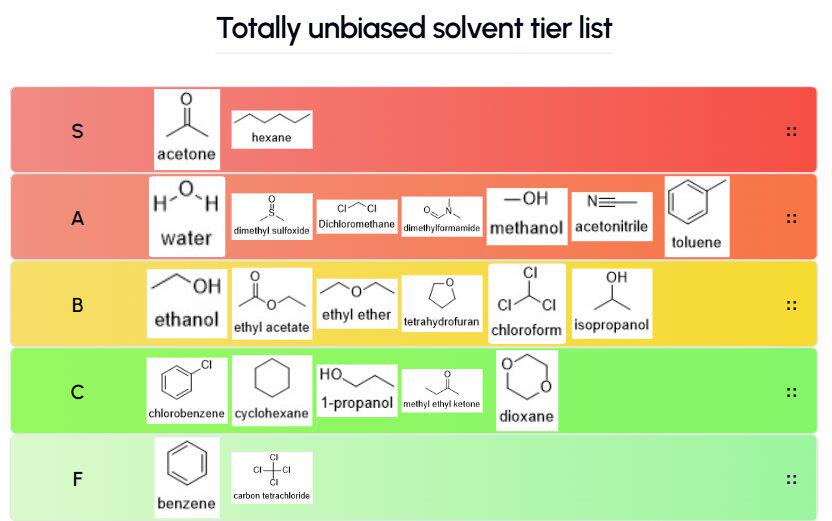
Just a chemist ranking solvents like they're video game characters. Notice how acetone and hexane made it to S-tier while benzene is down in F for "forbidden unless you want cancer." The creator clearly has a toxic relationship with toluene, keeping it in A-tier despite its headache-inducing fumes. And poor carbon tetrachloride is in F-tier jail with benzene because apparently, destroying your liver isn't "lab-friendly." This is basically what happens when you let a grad student rank chemicals based on how many times they've saved their experiments.

Dihydrogen Monoxide: The Silent Killer

Dihydrogen Monoxide: The Silent Killer
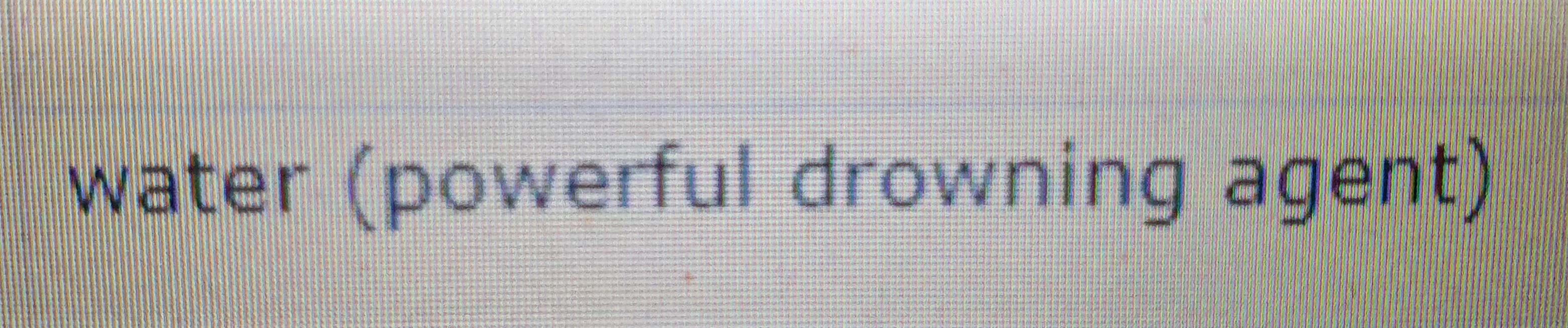
Classic chemist humor at its finest! The meme plays on the scientific-sounding name "dihydrogen monoxide" (H₂O) to make ordinary water sound like a dangerous chemical compound. Labeling it as a "powerful drowning agent" is technically true but deliberately alarmist—like warning people that oxygen is a major component in combustion reactions. This type of scientific wordplay is exactly what chemistry teachers use to teach critical thinking about chemical nomenclature versus public perception. Next time someone offers you dihydrogen monoxide, remember you're just 60% made of this "dangerous" substance!

Even Less Biased Solvent Tier List

Even Less Biased Solvent Tier List
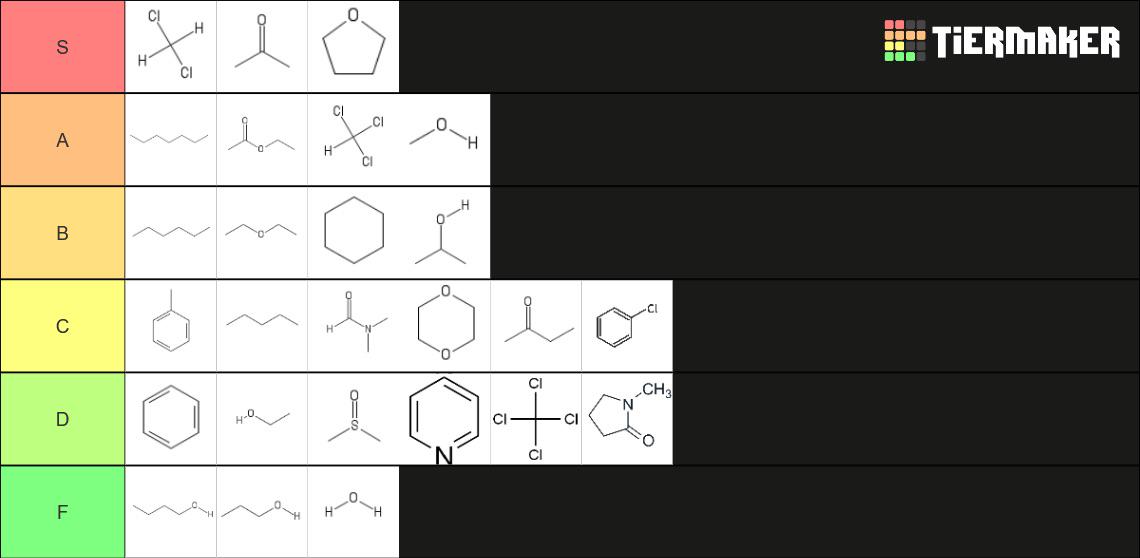
Chemists ranking solvents is like people arguing about pizza toppings, but with more hazardous materials involved. This tier list reveals the secret hierarchy that exists in every lab! The S-tier features the lab rockstars: dichloromethane (because who doesn't love a solvent that might be carcinogenic but dissolves EVERYTHING?), acetone (the lab's makeup remover), and THF (tetrahydrofuran, for when you want your reaction to work AND explode if you're not careful). Meanwhile, water got banished to F-tier because apparently being the "universal solvent" and "essential for life" isn't impressive enough for chemistry snobs. The creator of this list probably still has PTSD from that time water ruined their air-sensitive reaction. The best part? The "less biased" in the title suggests there was an EVEN MORE biased version. Imagine being so passionate about solvents that you need multiple drafts to tone down your dichloromethane fanaticism!

Too Sensitive To Measure Its Sensitivity

Too Sensitive To Measure Its Sensitivity
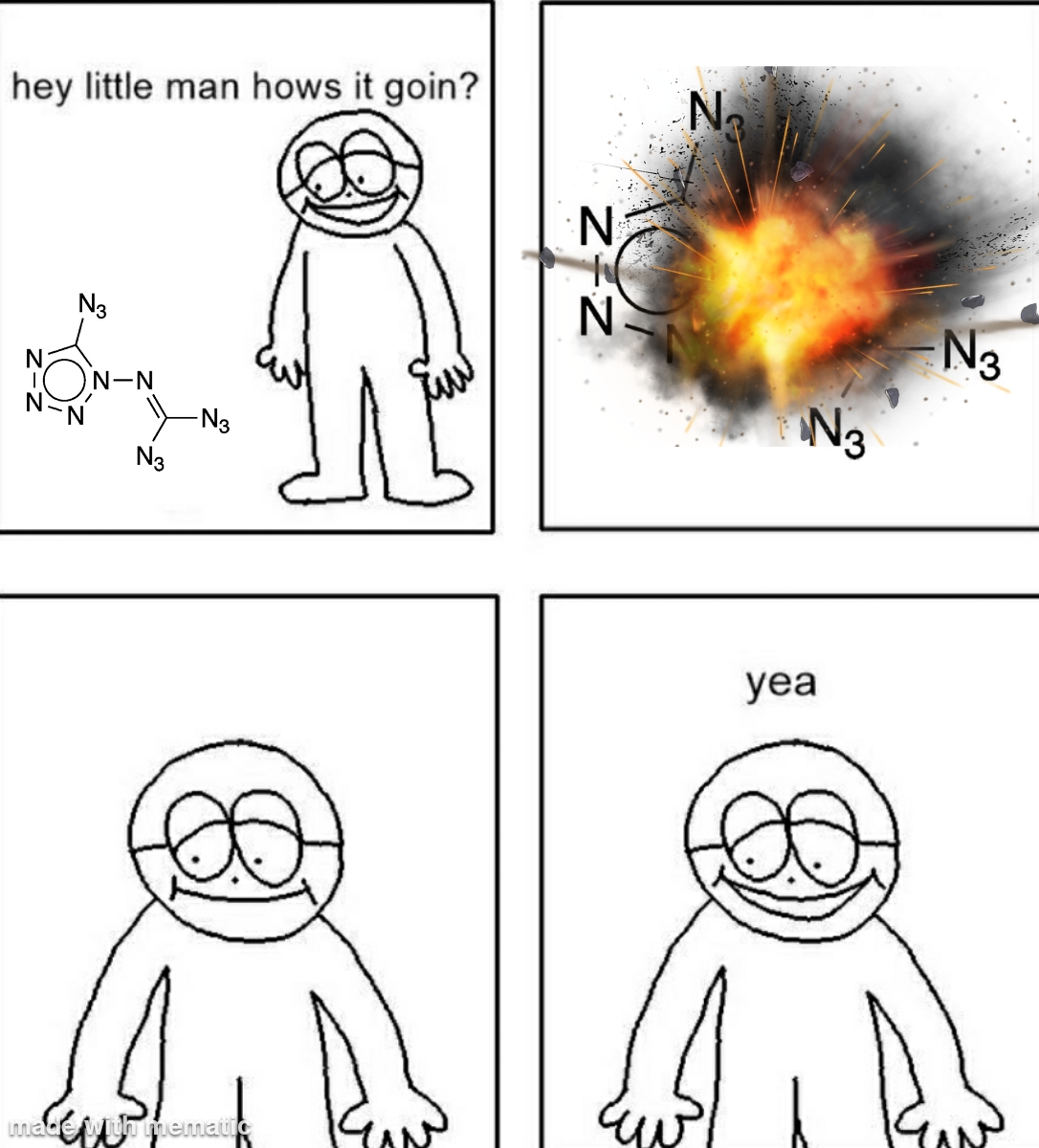
Ever notice how chemists casually chat with compounds that would send the rest of us to the emergency room? That's azidotetrazole, possibly the most sensitive explosive known to chemistry. Touch it wrong? BOOM. Breathe on it? BOOM. Look at it sideways? BOOM. The compound is so unstable that chemists joke it could detonate if you even think about measuring its sensitivity. Yet here's our cartoon buddy having a friendly conversation with certain death, like it's just another Tuesday in the lab. Chemistry's version of playing with fire—except this fire plays back.

That's A Lot Of Palladium

That's A Lot Of Palladium
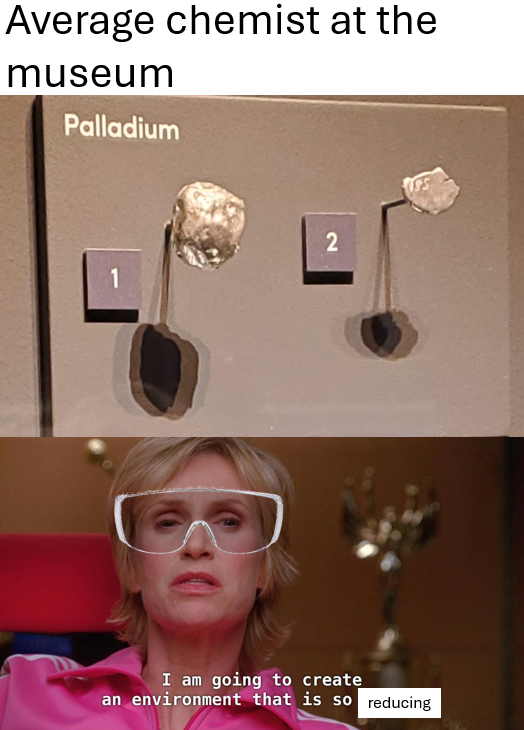
Museum displays of precious metals are the ultimate tease for chemists. Two samples of palladium just sitting there, begging to be used as catalysts for cross-coupling reactions, and all we can do is stare through the glass. The bottom image captures that primal chemist urge to create a "reducing environment" — a chemistry double entendre referring both to the reduction reactions palladium catalyzes and the threatening tone of making the environment "so reducing" that those samples might just... disappear into someone's lab coat. Precious metal theft: the only crime where you calculate the yield percentage afterward.

Chemists Be Like: Needs More Nitrite

Chemists Be Like: Needs More Nitrite
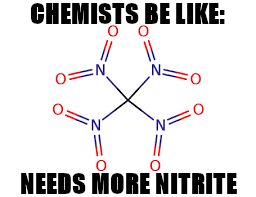
That moment when your molecule is already an explosive nightmare but you're still thinking "hmm, not dangerous enough." This structure is basically nitroglycerin's evil twin - a tetranitro compound that's one lab accident away from rearranging your ceiling tiles. Chemists really do have that special brand of madness where they look at something that could level a building and think "but what if we added MORE reactive groups?" Safety goggles won't save you from this one, folks.