

Astronomy Memes

Posts tagged with Astronomy
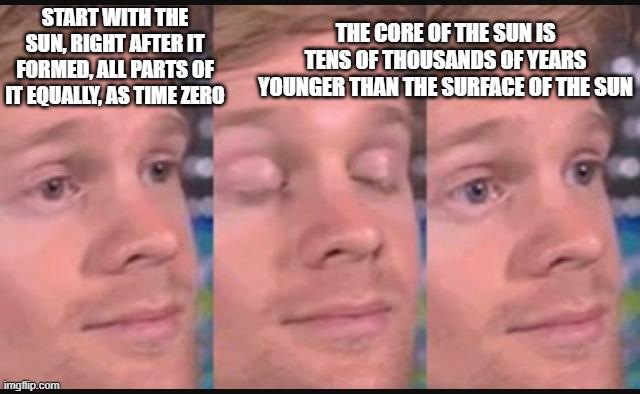
Alright, Time To Bust Out My Tensor Equations...

Alright, Time To Bust Out My Tensor Equations...
So you're casually explaining stellar evolution and drop the fact that the Sun's core—where nuclear fusion is going absolutely bonkers—is actually tens of thousands of years younger than its surface. Wait, what? Yeah, because photons generated in the core take an absurdly long random walk through the radiative zone, bouncing around like they're in the world's worst pinball machine for roughly 100,000-200,000 years before they finally reach the surface. Meanwhile, the core keeps churning out fresh photons like "time zero" never ended. This counterintuitive reality breaks people's brains because we think of the Sun as this unified blob, but nope—different layers exist at different "ages" depending on how you define time. The core is constantly being "born" while the surface is showing off ancient light. Cue the existential crisis face in panel two, because now you need general relativity, radiative transfer equations, and possibly a stiff drink to fully wrap your head around stellar structure. Fun fact: Those photons don't travel in straight lines—they get absorbed and re-emitted trillions of times, which is why your tan today is technically from fusion reactions that happened during the last ice age. You're welcome for that nightmare fuel.

One Of These Is Not Quite Like The Others

One Of These Is Not Quite Like The Others
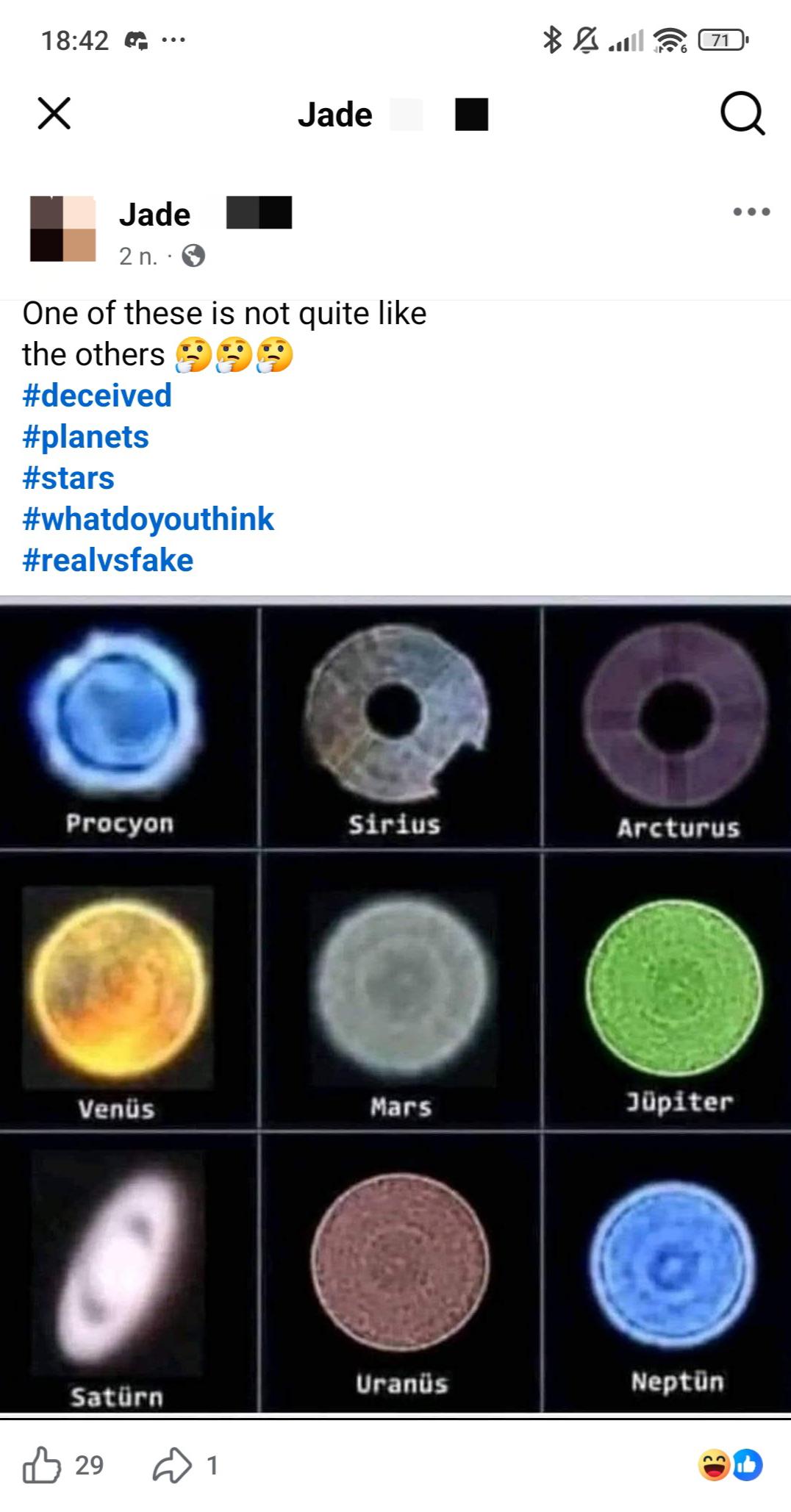
Someone decided to play "spot the difference" with celestial objects and just casually threw in what appears to be microscope slides or eyeball close-ups. We've got Procyon, Sirius, and Arcturus looking suspiciously like iris scans at an ophthalmologist's office. Meanwhile Venus, Mars, Jupiter, Saturn, Uranus, and Neptune are just sitting there being actual planets like they're supposed to. The hashtags #deceived and #realvsfake really sell the conspiracy energy here. Plot twist: stars aren't actually giant eyeballs in space watching us. They're massive balls of plasma undergoing nuclear fusion. Though honestly, given how surveillance technology is going, I wouldn't be shocked if someone tried to pitch "cosmic iris recognition" as the next big thing. Pro tip: if your astronomy textbook shows stars that look like they need Visine, maybe get a refund.

Prepare For A Long "I Don't Know"

Prepare For A Long "I Don't Know"
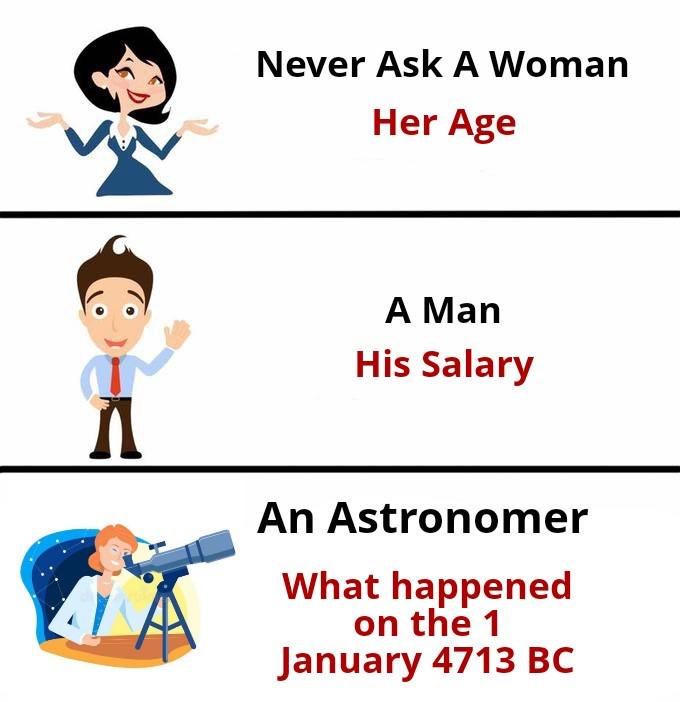
You know those social taboos about asking women their age and men their salary? Well, astronomers just raised the stakes. Ask them about a random date nearly 7,000 years ago and watch them spiral into an existential crisis about incomplete historical records, the limitations of astronomical observations before telescopes existed, and the fact that nobody was exactly keeping detailed sky journals in 4713 BC. Fun fact: January 1, 4713 BC is actually the start of the Julian Day system, a continuous count of days used by astronomers. But asking what specifically happened in the sky on that exact day? That's like asking a historian what someone ate for breakfast on a Tuesday in ancient Mesopotamia. The records just don't exist, my friend. Cue the awkward silence and a dissertation-length explanation about why we can't possibly know.

Planetary Facts Be Like:

Planetary Facts Be Like:
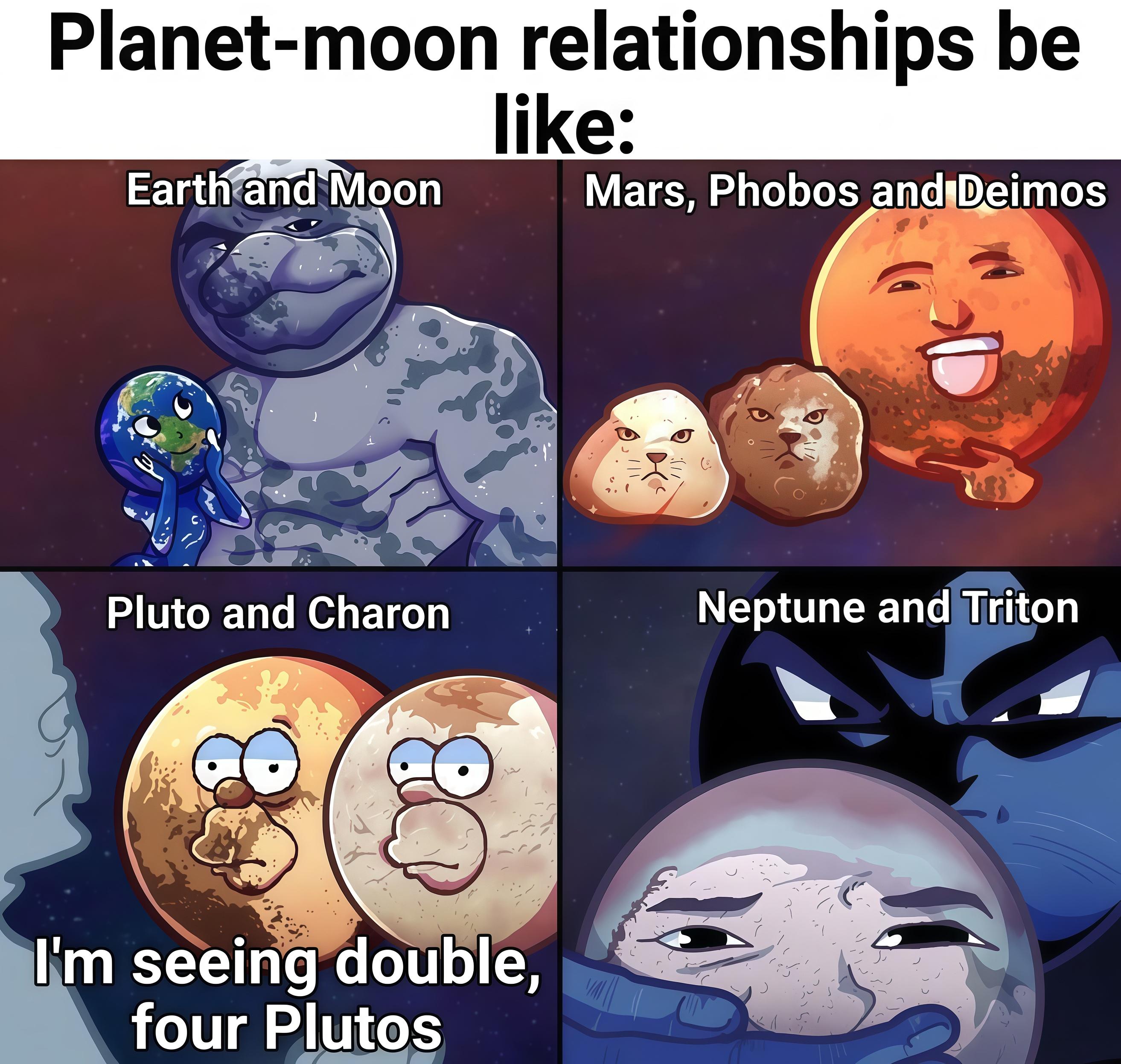
The solar system's relationship dynamics are wild. Earth and Moon have that wholesome, protective vibe going on—just a planet taking care of its single loyal companion. Meanwhile, Mars is living its best life with Phobos and Deimos looking absolutely furious about something (probably their impending doom since they're slowly spiraling into Mars). Pluto and Charon are having an existential crisis because Charon is so massive relative to Pluto that they basically orbit each other—hence "seeing double, four Plutos." And then there's Neptune with Triton, who orbits backwards because Neptune literally captured it from the Kuiper Belt. Talk about a complicated relationship. Triton's giving major "I didn't choose this family" energy while Neptune looms ominously in the background.

Solar Eclipse Meme

Solar Eclipse Meme
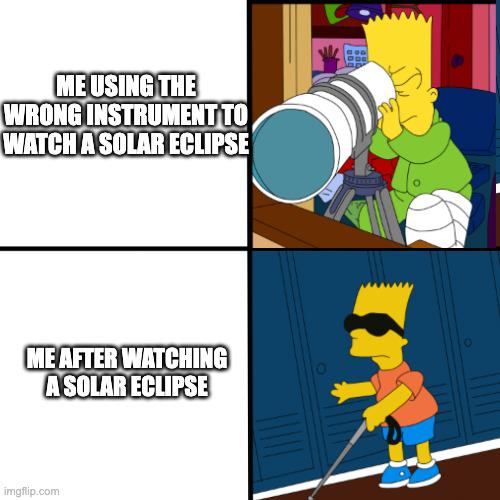
Look, we've all been there. You're excited about the eclipse, you grab what looks like a perfectly good telescope, and boom—instant retinal damage speedrun. The sun doesn't care about your enthusiasm or your expensive optics. It will absolutely fry your eyeballs without proper solar filters. Using a telescope or binoculars to look at the sun is basically like concentrating all that solar radiation into a laser beam aimed directly at your retinas. It's the optical equivalent of sticking your hand in a blender because you wanted to feel the breeze. The sunglasses in the second panel? Yeah, those are doing absolutely nothing now except making you look cool while blind. Pro tip: Always use eclipse glasses or proper solar filters. Your future self will thank you for still being able to see literally anything.

Strategic Shift In Cosmology Research

Strategic Shift In Cosmology Research
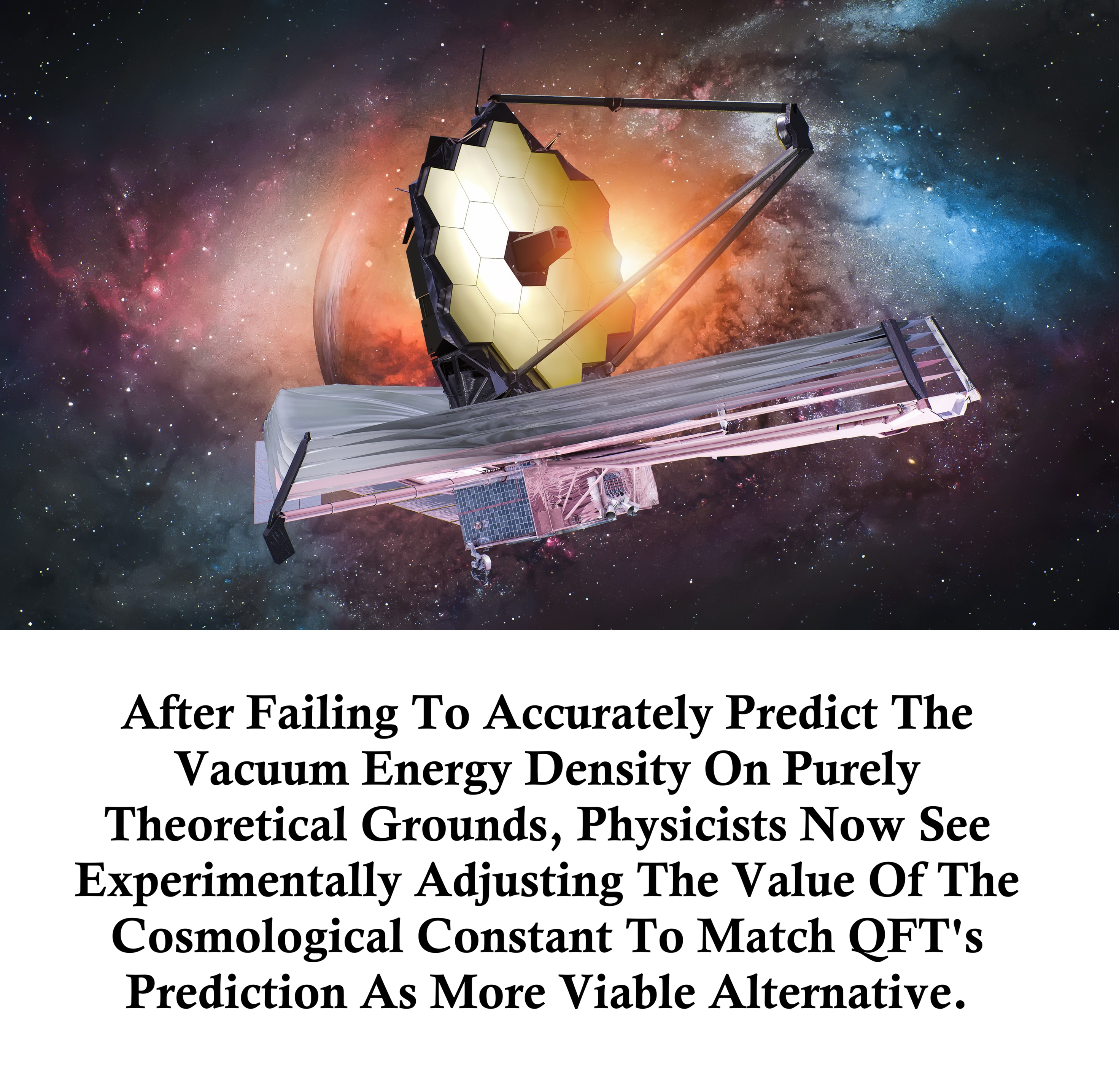
When your theoretical calculations can't predict the vacuum energy density (off by about 120 orders of magnitude—literally the worst prediction in physics history), just casually pivot to "experimental adjustments" instead. Nothing says scientific integrity like reverse-engineering the cosmological constant to fit what the James Webb Space Telescope is actually seeing. For context: vacuum energy density is basically how much energy exists in "empty" space, and physicists thought they could calculate it from quantum field theory. Spoiler alert—they were off by a factor of 10 120 , which is like predicting someone's height as 1 nanometer when they're actually the size of the observable universe. So now instead of admitting defeat, we're just... tweaking the numbers until they match observations. Very scientific. Very elegant. It's giving "I didn't fail the test, I just discovered an alternative grading system."

My Horsehead And Upscaled Using DLSS 5

My Horsehead And Upscaled Using DLSS 5
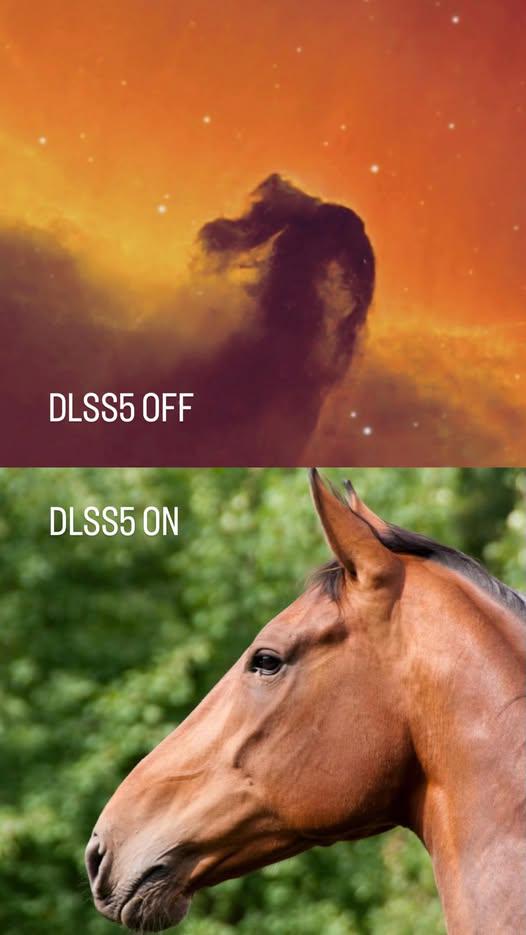
So you spent hours capturing the majestic Horsehead Nebula through your telescope, carefully stacking frames and processing data, only to have some AI upscaling tech turn your cosmic masterpiece into... a literal horse. DLSS5 took "enhance image quality" a bit too literally here. The Horsehead Nebula, one of the most iconic dark nebulae in Orion, gets hilariously transformed from an ethereal cloud of interstellar dust into something you'd find grazing in a field. This perfectly captures the ongoing tension between astrophotographers who painstakingly process their images and the rise of AI upscaling that sometimes... misses the mark. When your neural network has been trained on too many Earth-based images and not enough space dust, you get results that are technically sharper but astronomically wrong. At least now we know what the nebula would look like if it decided to pursue a career in dressage.

Chinese Astronomy Was Based

Chinese Astronomy Was Based
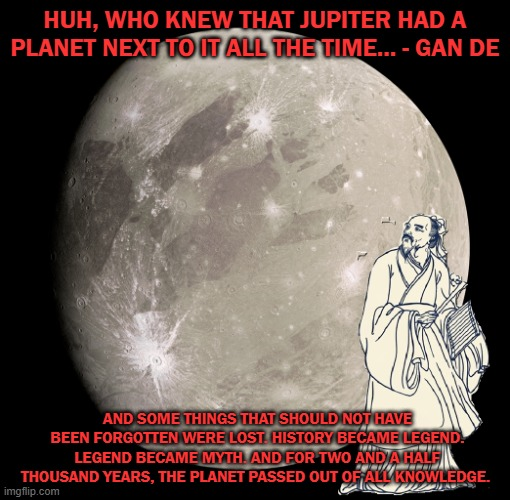
So here's a wild piece of astronomical history: Chinese astronomer Gan De documented Jupiter's moons around 364 BCE—nearly TWO THOUSAND YEARS before Galileo gets all the credit in 1610. The dude was literally observing Ganymede with his naked eye (which is technically possible under perfect conditions, though incredibly difficult). But because historical records got lost or dismissed as myth over the centuries, Western astronomy had no idea this knowledge even existed. The meme perfectly captures that moment when you realize someone figured out something groundbreaking ages ago, but then humanity collectively forgot about it and had to "rediscover" it millennia later. Talk about losing your homework on a cosmic scale. Ancient Chinese astronomers were out here doing serious observational work while keeping meticulous records, and we're only now giving them proper recognition. Makes you wonder what other scientific knowledge got yeeted into the void of lost history!

Pluto's Revenge: The Bruises Tell A Story

Pluto's Revenge: The Bruises Tell A Story
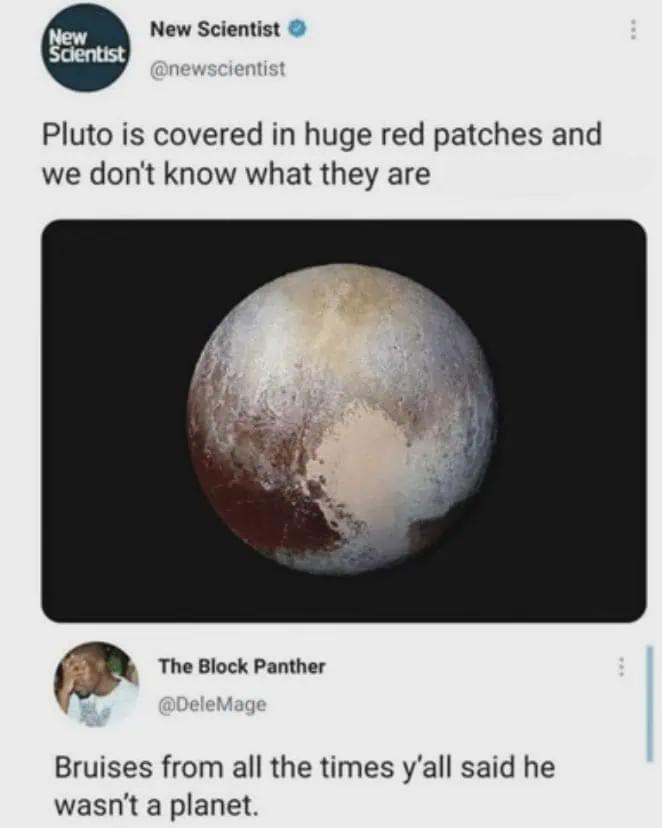
New Scientist drops a casual tweet about mysterious red patches on Pluto, and someone immediately roasts the entire astronomical community with one devastating reply. The joke? Those aren't mysterious geological features—they're BRUISES from getting beaten up after being demoted from planet status in 2006! Poor Pluto got downgraded to "dwarf planet" by the International Astronomical Union, and apparently it's been holding a grudge ever since. Scientists are out here trying to do serious planetary science, analyzing tholins and methane ice formations, while Pluto's just sitting at the edge of the solar system looking battered and betrayed. The comedic timing is chef's kiss—turning legitimate scientific curiosity into an emotional trauma narrative. Those reddish regions are actually caused by complex organic molecules called tholins, but honestly? The bruise theory hits harder. 💔

When You Date The Daughter Of Carl Sagan

When You Date The Daughter Of Carl Sagan
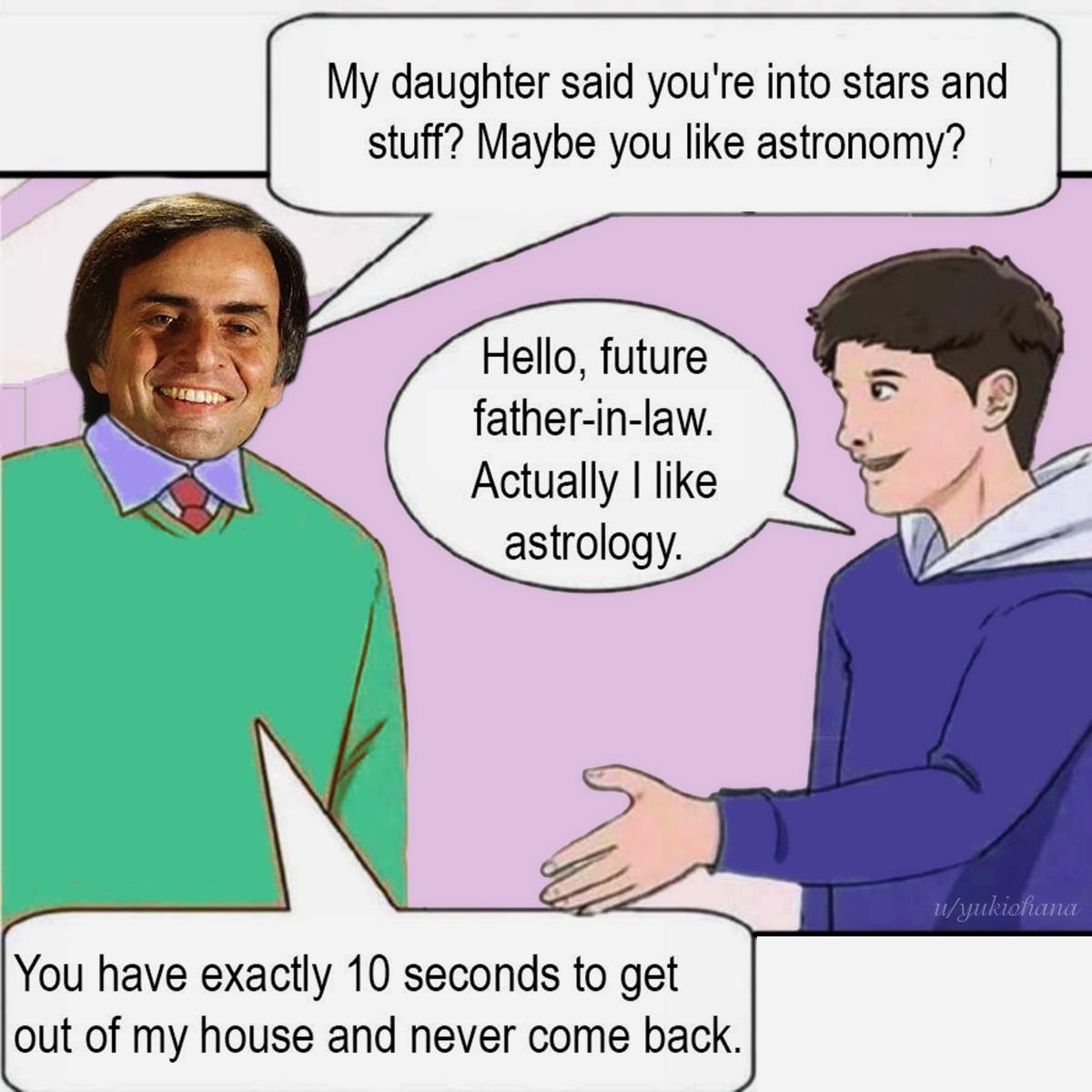
Imagine meeting Carl Sagan—legendary astronomer, science communicator, and destroyer of pseudoscience—and confidently announcing you're into astrology. That's like telling Gordon Ramsay you microwave your steaks. This poor soul just walked into the home of a man who spent his entire career championing scientific skepticism and critical thinking, only to reveal he believes Mercury retrograde affects his love life. Carl Sagan famously wrote "The Demon-Haunted World" specifically to combat this kind of thing—astrology being one of his prime examples of pseudoscience that confuses astronomy (the actual study of celestial objects) with fortune-telling based on arbitrary star patterns. The boyfriend basically just told a firefighter he's really into arson. No wonder he's getting the express eviction! Fun fact: Sagan once said astrology claims that "the constellations in the sky which happened to be behind the sun when you were born somehow imprint your character." He was... not a fan. This relationship was dead before it started.

Astrologists Confirm Giant Cat Controls Solar System

Astrologists Confirm Giant Cat Controls Solar System
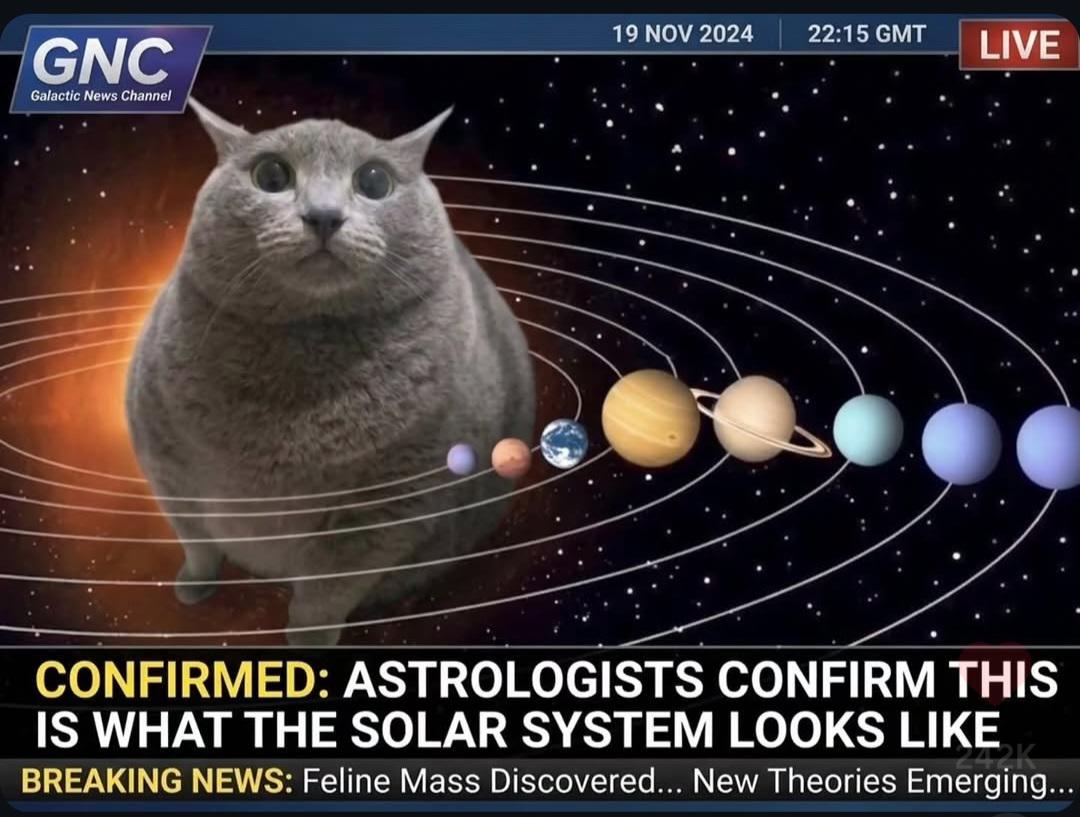
Breaking news from the Galactic News Channel: turns out the solar system isn't held together by gravity, but by a massive celestial feline just vibing in Mercury's orbit. The "astrologists" (not astronomers, mind you) have finally cracked the code. Mercury's been looking extra round lately because it's actually just trying to avoid eye contact with the cosmic chonk. The ticker casually mentions "Feline Mass Discovered" like it's just another Tuesday in space research. Saturn's rings? Cat toy. Jupiter's Great Red Spot? Laser pointer incident from 1665. The Sun itself looks appropriately concerned about its new neighbor who's approximately 47 times larger than Jupiter and runs on pure chaos energy. Fun fact: If a cat this size actually existed in our solar system, its gravitational field would immediately yeet all the planets into oblivion. But at least we'd go out knowing the universe has excellent taste in memes.

Cosmic Particle Came In Clutch

Cosmic Particle Came In Clutch
Speedrunners rejoice! Back in 2013, a cosmic ray bit-flip literally saved a Super Mario 64 speedrunner's attempt by causing an upward warp that shouldn't have been possible through normal gameplay. The runner was competing against DOTA_TeaBag when this astronomical intervention occurred, and it's become one of the most legendary moments in speedrunning history. Cosmic rays are high-energy particles from space that can actually flip bits in computer memory—turning a 0 to a 1 or vice versa. While usually these cause crashes or errors, this time the universe decided to be a bro and helped Mario defy physics instead. The probability of this happening at exactly the right moment? Astronomically low. But that's what makes it so beautifully absurd. So yeah, sometimes you don't need better gaming skills—you just need the cosmos to yeet a particle at your RAM at precisely the right millisecond. Science: 1, Normal gameplay: 0.