

Plants Memes

Posts tagged with Plants
Photosynthe 6

Photosynthe-6
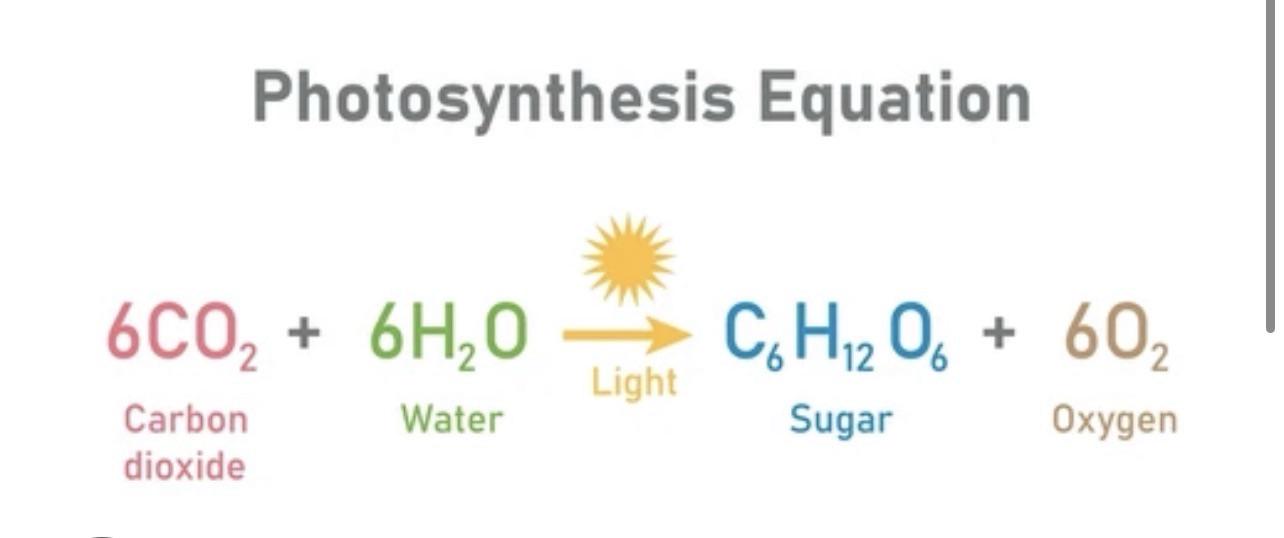
Plants really said "let me just multiply everything by 6 to make it look more official." The photosynthesis equation is basically nature's recipe for turning sunlight into snacks, but someone decided we needed the bulk version. Sure, one CO₂ plus one H₂O would work conceptually, but then you wouldn't get that sweet, sweet glucose molecule (C₆H₁₂O₆) at the end. So we scale everything up by 6 to balance the books—because chemistry doesn't do IOUs. It's like going to Costco: you can't just buy one roll of paper towels, you gotta commit to the 24-pack. Plants are out here doing bulk photosynthesis while we're still figuring out how to keep a succulent alive.

Bamboo Seeds

Bamboo Seeds
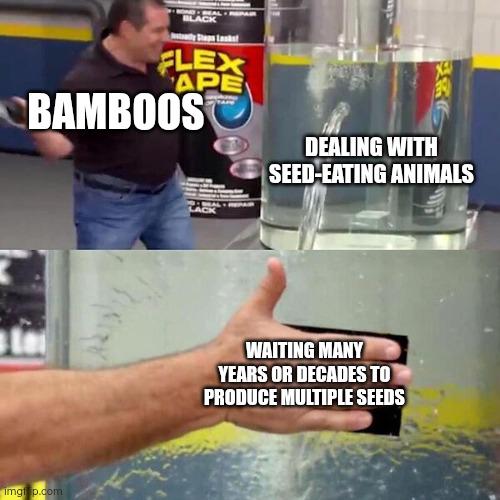
Bamboo has one of the wildest reproductive strategies in the plant kingdom. Some species can grow vegetatively for 60-120 YEARS before flowering once, producing massive amounts of seeds, and then dying. It's called masting, and it's basically nature's version of "go big or go home." So yeah, bamboo is out here playing the long game—casually photosynthesizing for decades while dealing with pandas munching on it, only to drop a seed bomb once in a lifetime. Meanwhile, it's absolutely drowning in Flex Tape trying to keep seed-eating animals at bay because when you finally reproduce after a century, you REALLY don't want rodents ruining the party. Fun fact: When bamboo forests all flower simultaneously (they're often synchronized across entire regions), it can cause rodent population explosions from all the available food, which then leads to crop failures and famine in surrounding areas. Nature is metal.

What Is The Largest Kingdom By Biomass?

What Is The Largest Kingdom By Biomass?
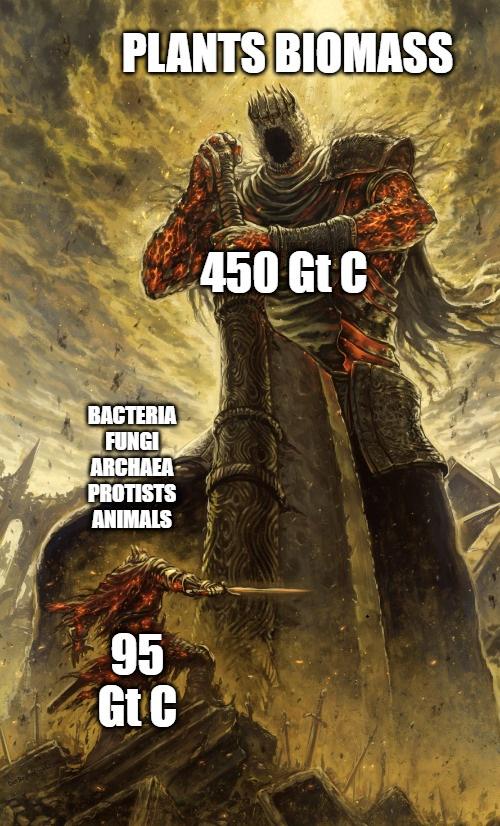
Plants really said "I'm about to end this man's whole career" and then dominated Earth's biomass for 450 million years straight. With approximately 450 gigatons of carbon, plant biomass absolutely dwarfs everything else on the planet. Meanwhile, bacteria, fungi, archaea, protists, and animals combined clock in at a measly 95 gigatons of carbon—getting absolutely bodied by our photosynthesizing overlords. The visual of plants as some godlike titan casually crushing all other kingdoms is *chef's kiss* accurate. Sure, bacteria are everywhere and outnumber us by astronomical margins, but when it comes to sheer mass? Plants are the heavyweight champions. Trees alone carry most of that weight—literally just standing there, being massive, converting CO₂ into cellulose like it's no big deal. Fun fact: humans represent only about 0.06 gigatons of that 95 Gt C total, meaning we're basically a rounding error in Earth's biomass spreadsheet. Humbling, isn't it?

Carnivorous Plants

Carnivorous Plants
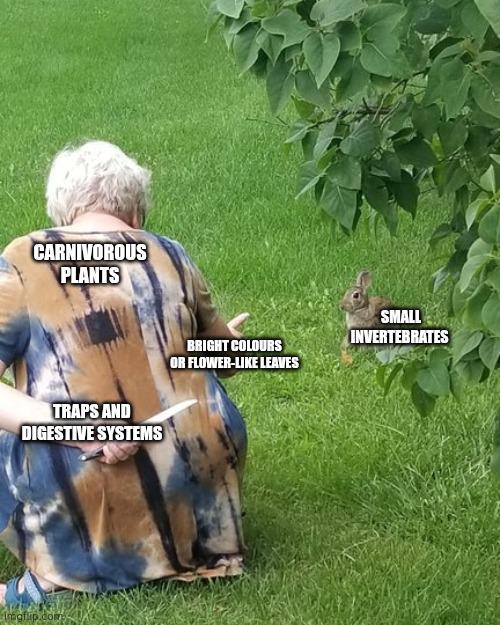
So carnivorous plants really went all out with the evolutionary bells and whistles—complex trapping mechanisms, enzymes that can dissolve chitin, modified leaves that look like something from a horror movie—and then they're out here hunting fruit flies and gnats. Meanwhile, they're completely ignoring the obvious stuff that makes them plants: pretty colors and flower-like structures to attract prey. It's like building a submarine with laser cannons and then using it exclusively to catch minnows. The resource allocation here is genuinely baffling from an efficiency standpoint, but I guess when you evolve in nutrient-poor soil, you work with what you've got.

Plants And Herbivores

Plants And Herbivores
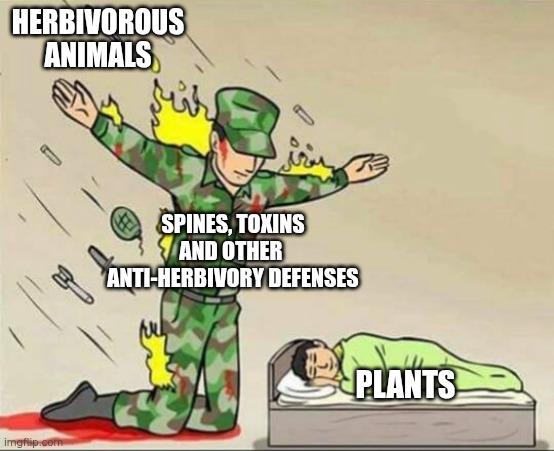
Plants spent millions of years evolving chemical warfare, physical barriers, and elaborate defense mechanisms to avoid being eaten. Then they just... gave up and accepted their fate as salad. Herbivores show up with their specialized digestive systems, and plants are like "yeah okay, you got me." Meanwhile they're still on fire from all those defenses that ultimately accomplish nothing except making herbivores slightly more determined. Evolution's greatest participation trophy goes to plant defense systems that work about as well as a "please don't eat me" sign.

Photosynthesis

Photosynthesis
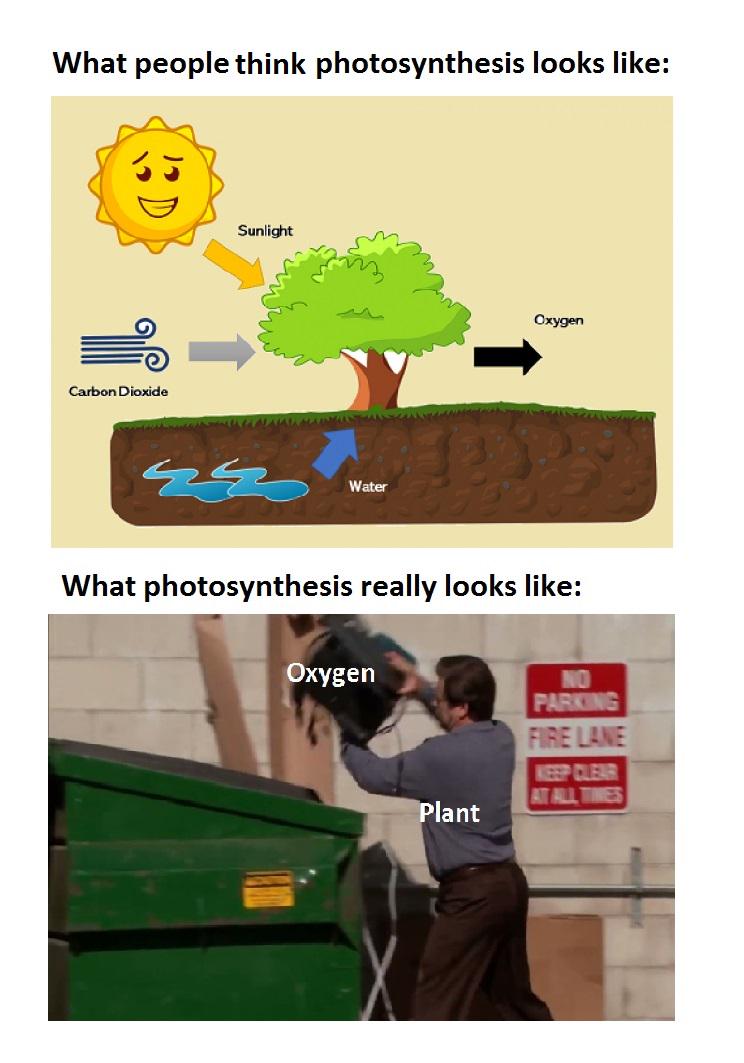
Everyone's out here drawing cute diagrams with happy suns and peaceful trees gently converting CO₂ and water into oxygen like it's some kind of botanical spa day. Meanwhile, plants are actually just violently yeeting oxygen into the atmosphere like they're trying to get rid of evidence. That dumpster perfectly captures the chaotic energy of chloroplasts working overtime to dump their waste product (which, fun fact, is literally toxic to the plant itself). We're basically breathing plant garbage, and somehow we've convinced ourselves it's a beautiful symbiotic relationship. Nature's greatest PR campaign, honestly.

How To Survive The Dry Season

How To Survive The Dry Season
Plants don't mess around when it comes to drought survival. Tropical species get slapped by "The Dry Season" and just stare it down like it's a minor inconvenience. Meanwhile, they're secretly deploying an impressive arsenal of adaptations - succulent tissues to hoard water, tough evergreen leaves that laugh at dehydration, or deciduous strategies that basically say "wake me when there's water." It's botanical natural selection at its finest - evolve or die of thirst. Nature's version of bringing the right tools to a climate fight.

Botanical Battle Royale

Botanical Battle Royale
The jungle is basically Game of Thrones but with chlorophyll! 🌿 Tropical rainforests are BRUTAL battlegrounds where plants engage in an epic struggle for survival. With dense canopies blocking 95% of sunlight, these leafy warriors are literally fighting to the death for a patch of sunshine and some sweet, sweet nutrients. That's why we see such wild adaptations - strangler figs that assassinate host trees, vines that climb over competitors, and plants that evolved cups to catch rainwater and insects! Some even release chemicals to poison the soil around them. Talk about playing dirty! Next time you're enjoying a peaceful nature walk, remember you're actually witnessing thousands of years of tactical botanical warfare. Nature isn't just beautiful—it's savage!

Plants Versus Animals: The Ultimate Nutrient Heist

Plants Versus Animals: The Ultimate Nutrient Heist
Plants: *creates elaborate biochemical factories, converts sunlight into sugar, develops complex root systems to extract minerals from soil, and evolves specialized structures over millions of years* Animals: *just eats the plants* Talk about evolutionary efficiency! While plants are out there performing photosynthetic wizardry worthy of a Nobel Prize, sheep just munch grass and call it a day. It's like comparing someone who builds a computer from scratch to someone who just buys it pre-assembled from Best Buy. Nature's ultimate shortcut!

The Botanical Wingman

The Botanical Wingman
The botanical dating service nobody asked for! This meme brilliantly turns pollination into an R-rated wingman scenario. In reality, bees transfer pollen (plant sperm) between flowers, enabling plant reproduction. But instead of the clinical biology textbook explanation, we get this hilarious interpretation where the bee offers to be the ultimate plant wingman by getting pollen on its face and bumping into the female flower. Nature's reproduction system reimagined as a bro-code conversation is peak botanical comedy.

Botanical Class Warfare

Botanical Class Warfare
Roses acting like drama queens over slightly alkaline soil while dandelions are out here thriving in literal concrete cracks. Classic botanical hierarchy! Roses need their perfect pH 6.0-6.5 environment or they throw a tantrum, meanwhile dandelions are the cockroaches of the plant world - they'll grow through nuclear fallout if given half a chance. Next time your garden fails, remember: you didn't fail at gardening, you just accidentally selected for plants with aristocratic sensibilities.

She Has A Point

She Has A Point
Evolutionary biology at its finest! The dandelion quietly disperses thousands of seeds with minimal effort while the peacock goes ALL OUT with a ridiculous feather display just to impress one potential mate. Nature's perfect illustration of "work smarter, not harder." Plants figured out reproduction efficiency millions of years before animals even showed up to the evolutionary party! The difference between plant and animal reproductive strategies couldn't be more hilariously stark - one's playing the numbers game while the other's basically nature's equivalent of a desperate Tinder profile.