Habitability Memes

Posts tagged with Habitability

Kentucky Planet At It Again

Kentucky Planet At It Again
So astronomers have discovered thousands of potentially habitable exoplanets, but there's this one absolute menace called KyPlanet that keeps stealing the spotlight. While other candidates like J1407b, Kepler-22b, Kepler-452b, and K2-18b are just chilling with their respectable habitability scores, KyPlanet is out here causing chaos in the exoplanet community like some kind of celestial serial killer. The joke plays on how certain discoveries or planets get way more media attention and hype than others, even when there are equally (or more) interesting candidates. KyPlanet has become the drama queen of exoplanets, leaving a trail of "blood" (metaphorically speaking—the overshadowed attention other planets deserve) behind it. It's like that one planet that keeps getting all the research funding while the others are like "hey, we're potentially habitable too!" Fun fact: The "Kepler" planets are named after the Kepler Space Telescope that discovered them, and K2-18b made headlines for having water vapor in its atmosphere. But apparently none of that matters when KyPlanet enters the room with its scythe!

Fourth Fraud From The Sun

Fourth Fraud From The Sun
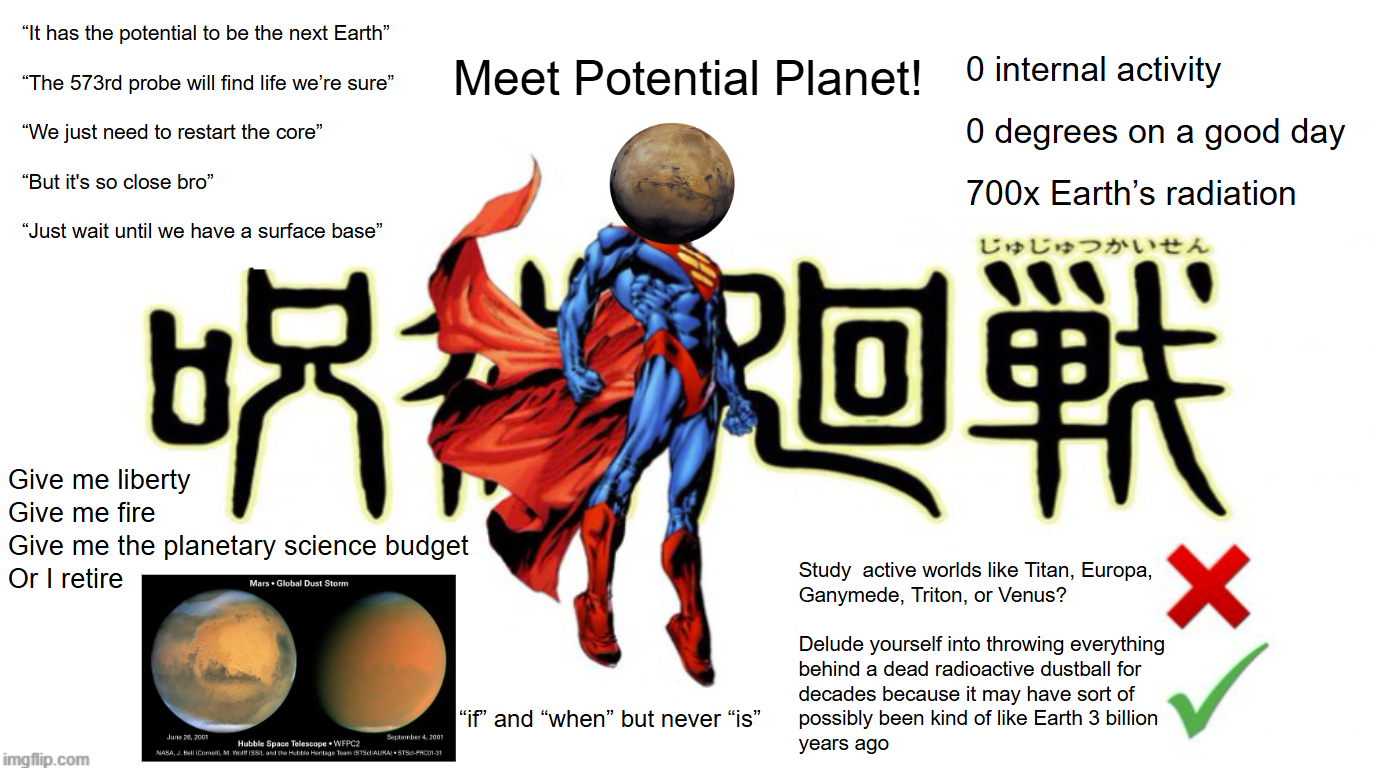
Mars has been the ultimate scientific catfish for decades. We keep hyping it up as "Earth 2.0" while conveniently ignoring that it's a frozen, radiation-blasted desert with zero internal activity and temperatures that make Antarctica look like Cancun. Meanwhile, we've got actual geologically active moons like Europa and Enceladus literally shooting water geysers into space screaming "HELLO WE HAVE SUBSURFACE OCEANS" and we're like "nah, let's send probe #573 to the red rock because it's 'close.'" The brutal truth? Mars gets 700x more radiation than Earth, has no magnetic field to protect anything, and was probably only habitable for like 500 million years tops—3 billion years ago. But hey, it photographs well and Elon likes it, so here we are planning to "restart the core" like we're in a bad 2003 sci-fi movie. The planetary science community has basically turned Mars into a jobs program while the actually interesting worlds with real astrobiological potential sit there waiting for their turn. Fun fact: Europa's subsurface ocean contains more water than all of Earth's oceans combined. But sure, let's focus on the planet that's essentially a giant rusty parking lot.

Damn These Red Dwarfs

Damn These Red Dwarfs
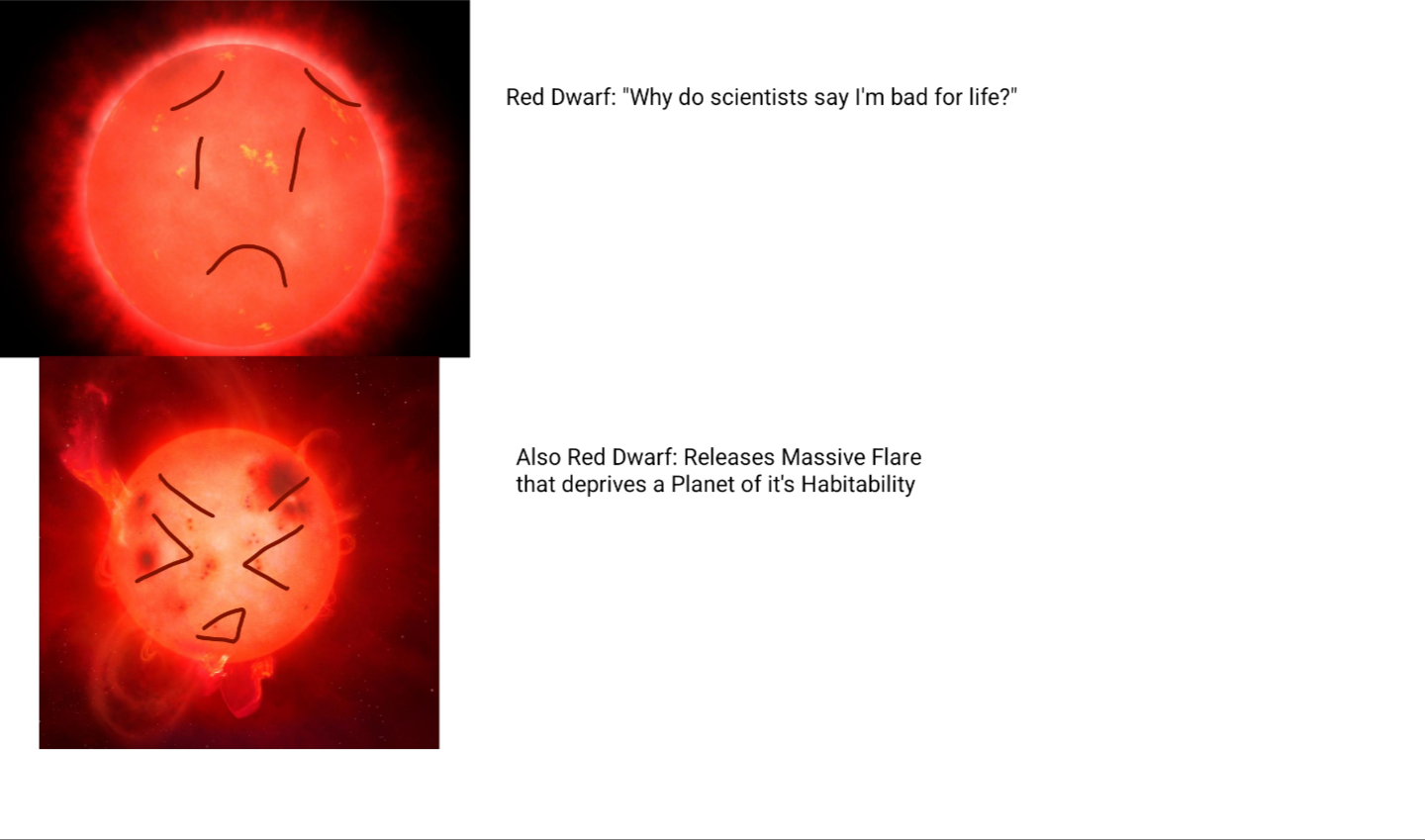
The cosmic irony of red dwarf stars in one perfect meme. These stars act like that one friend who asks why nobody likes them, then immediately demonstrates exactly why. Red dwarfs are the universe's biggest hypocrites—wondering why scientists don't consider them good candidates for hosting life while simultaneously unleashing apocalyptic flares that would strip any nearby planet faster than a freshman strips electrons from sodium. The kicker? These temperamental little stars live for trillions of years, giving them plenty of time to repeatedly sterilize any planet unfortunate enough to orbit them. Talk about a toxic relationship!

No Chances For Life Around Red Dwarfs

No Chances For Life Around Red Dwarfs
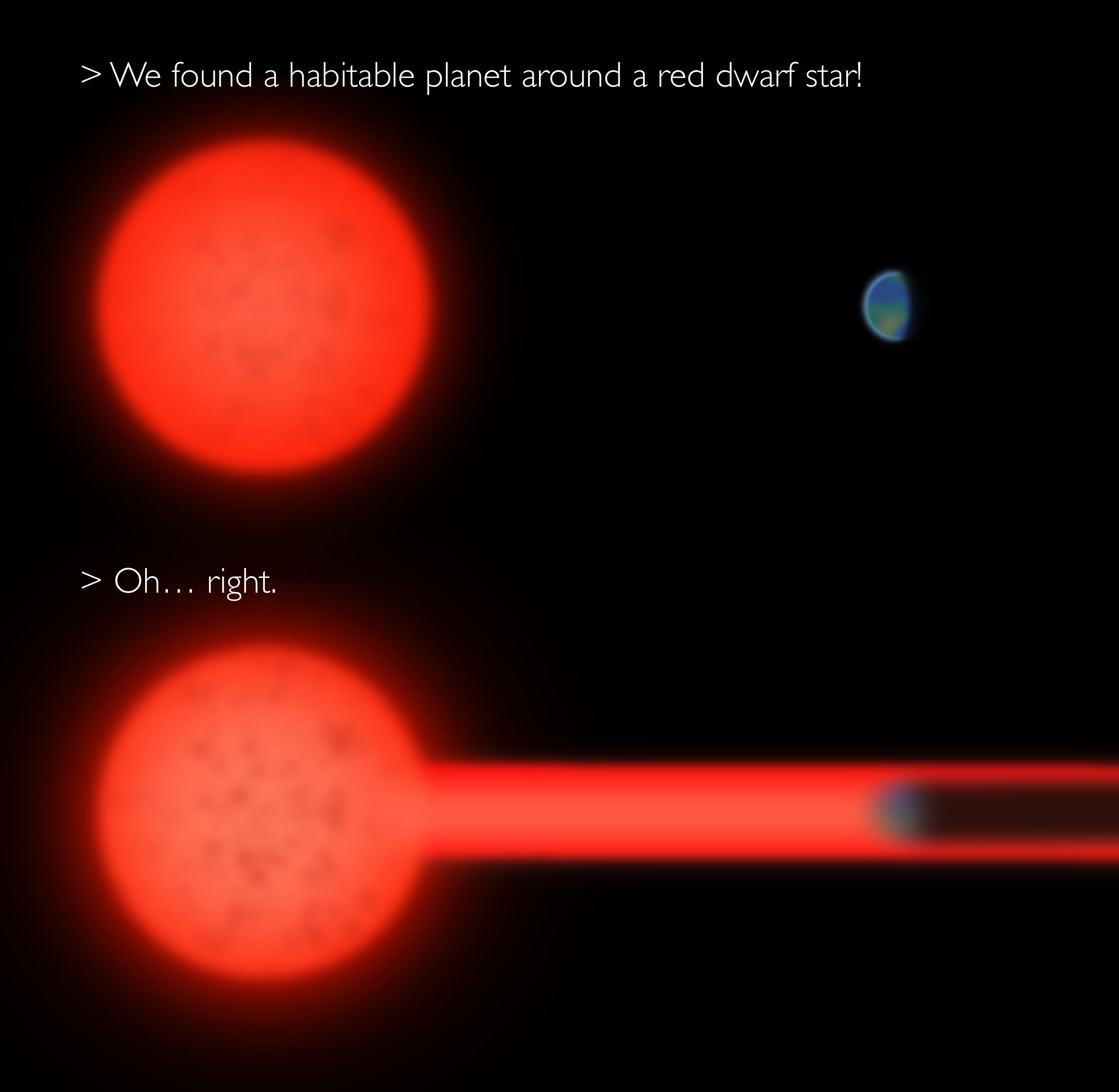
The initial excitement of finding a "habitable" planet around a red dwarf star quickly evaporates when the astronomers remember one tiny detail - red dwarfs are notorious for unleashing catastrophic stellar flares that would absolutely barbecue any nearby planets! That hopeful little blue-green world in the first panel is about to get the cosmic equivalent of a death ray in the second panel. It's like getting excited about finding the perfect beach house, then realizing it's directly in the path of every hurricane ever. Red dwarfs may be the most common stars in our galaxy, but they're basically the overprotective parents of stellar systems - "No one gets to live near my planets without getting FRIED!"

K-Stars Are The Best Stars

K-Stars Are The Best Stars
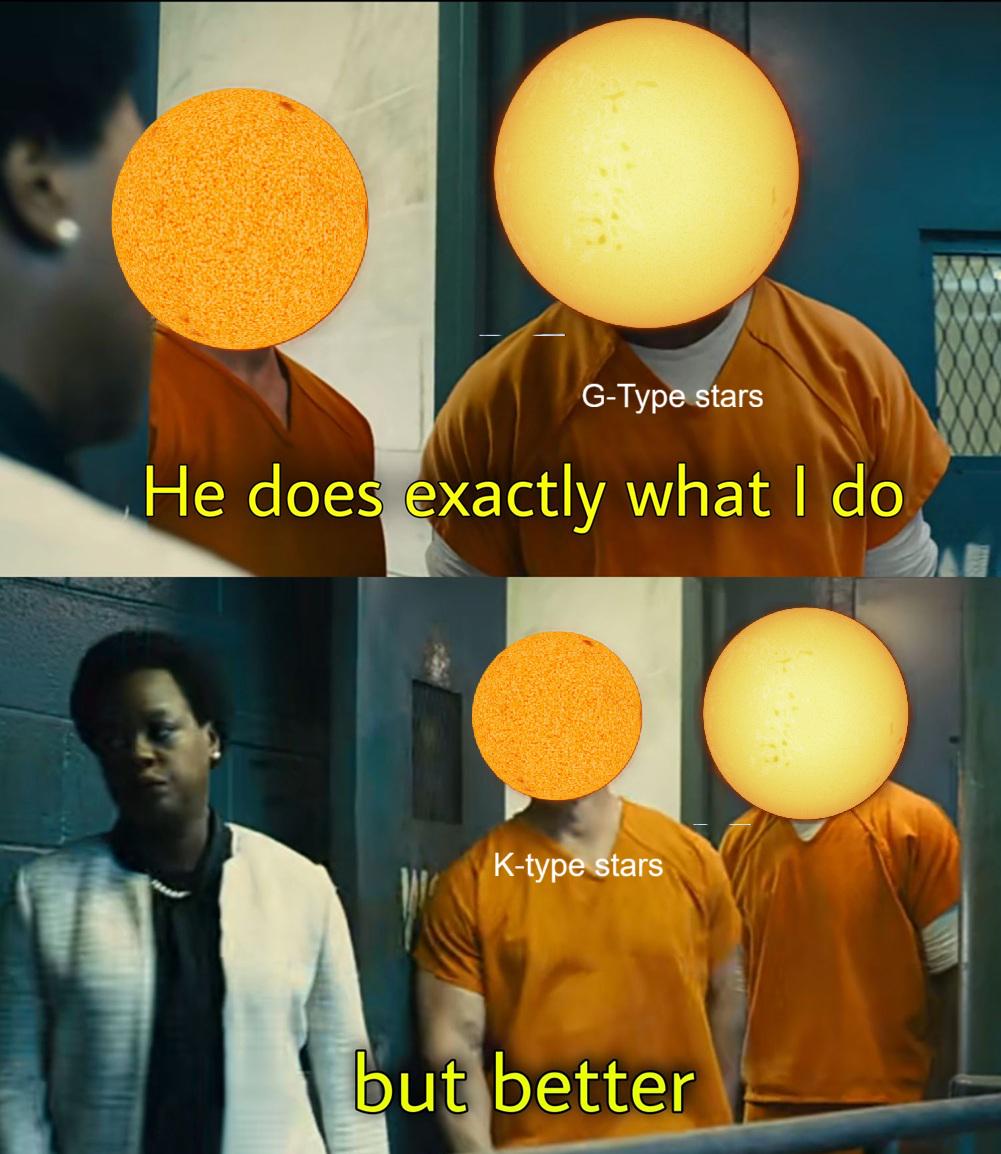
Stellar classification humor at its finest! G-type stars (like our sun) think they're hot stuff, but K-type stars are basically saying "hold my beer." While G-types get all the fame for hosting Earth, K-types are actually more stable, live longer, emit less harmful UV radiation, and might be better candidates for habitable planets. It's like comparing that flashy professor who publishes in Nature once and never shuts up about it versus the quiet workhorse who actually gets meaningful research done. The astronomical equivalent of "same job description, superior performance review."