 Academia
 Ai
 Astronomy
 Biology
 Chemistry
 Climate
 Conspiracy
 Earth-science
 Engineering
 Evolution
 Geology
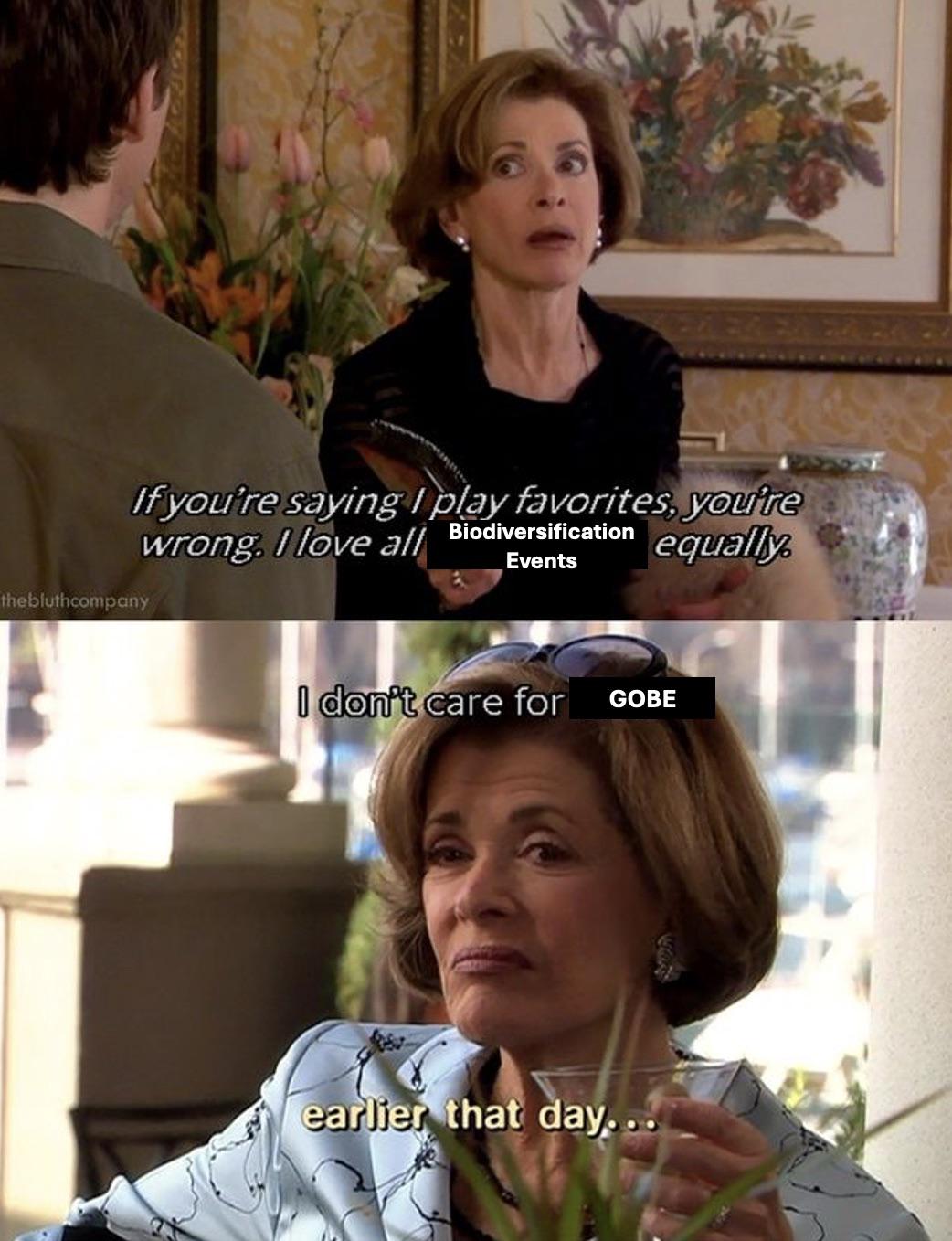
Every evolutionary biologist's nightmare: someone asking which mass extinction was their favorite. The correct answer? All of them, obviously. The Permian-Triassic wipeout that deleted 96% of marine species? Chef's kiss. The K-Pg event that yeeted the dinosaurs into oblivion? Absolute cinema. The Late Devonian that devastated marine life? Pure art.
But then someone brings up the GOBE—the Great Ordovician Biodiversification Event—where life actually exploded in diversity instead of collapsing, and suddenly you're that person at the party who's like "actually, I prefer when things DON'T go extinct." It's the evolutionary equivalent of saying you prefer rom-coms over horror movies. Technically valid, but where's the drama?
Fun fact: The GOBE happened around 470 million years ago and tripled marine biodiversity, giving us corals, brachiopods, and a whole lot of weird invertebrates that would make H.R. Giger jealous. It's literally the opposite energy of mass extinctions, which is probably why it gets less hype. Death sells better than diversification, apparently.